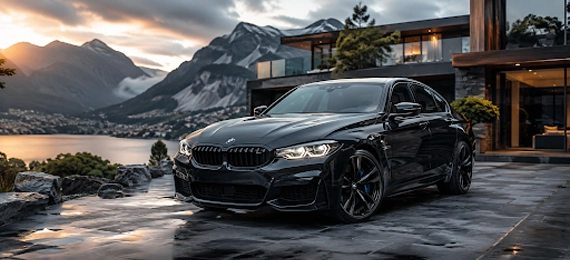
You’ll never guess how close the ultimate luxury car brand came to building kitchens instead of track monsters.
When you see that iconic blue-and-white roundel zooming down the highway, your brain instantly jumps to tire-shredding performance, sleek German engineering, and executive luxury. But the history of Bayerische Motoren Werke is packed with bizarre pivots, accidental marketing myths, and classified engineering projects. These surprising facts about BMW will completely change how you look at the Ultimate Driving Machine.
Let’s drop the clutch and dive into the strangest, fastest, and most fascinating secrets behind the Bavarian giant.
What do the blue and white quadrants on the center of the BMW logo actually represent?
- A. A spinning airplane propeller in a blue sky
- B. The traditional regional colors of the state of Bavaria
- C. Clear skies and snow-capped Alpine mountains
- D. The coat of arms of the original founder's family
What Are the Most Surprising Facts about BMW?
1. The BMW Logo is Definitely Not a Spinning Airplane Propeller
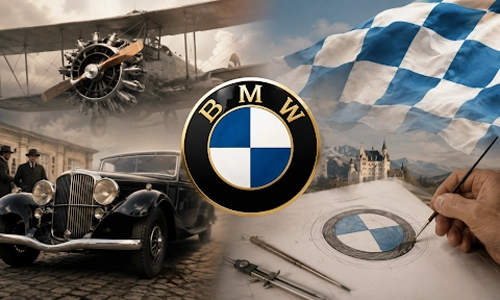
The iconic roundel design actually mimics the state colors of Bavaria, not a rotating aircraft engine.
For decades, well-meaning car enthusiasts have repeated the ultimate “zombie fact”: that the inner quadrants of the BMW badge represent white propeller blades slicing through a blue sky. It makes sense on paper, considering the company’s early history. However, BMW Group Classic has officially confirmed this is pure marketing folklore. When the brand registered its logo in 1917, the designers used the blue and white panels to honor the Bavarian flag. Because it was illegal at the time to use state sovereignty symbols on commercial trademarks, they simply inverted the order of the colors. The propeller myth was born later, thanks to a 1929 advertisement that superimposed the logo onto an airplane engine to boost sales. BMW loved the romantic image so much that they simply didn’t bother correcting anyone for 90 years!
2. The BMW Founders Started with Airplanes, Not Automobiles
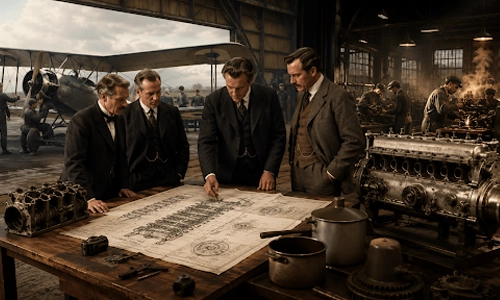
The original company was built exclusively to construct thunderous aircraft engines for World War I.
If you look back at the bmw founders—primarily Karl Rapp, Gustav Otto, Franz Josef Popp, and Camillo Castiglioni—none of them set out to build luxury sports sedans. In 1913, Karl Rapp formed Rapp Motorenwerke, which evolved into BMW in 1917. They built high-altitude aero engines, like the legendary BMW IIIa inline-six. When Germany signed the Treaty of Versailles in 1919, the country was strictly forbidden from manufacturing aircraft engines. Facing total bankruptcy, the company had to pivot instantly to survive. Before they ever touched a car chassis, they manufactured air brakes for railway cars, small industrial engines, and even pots, pans, and agricultural equipment.
3. The BMW First Car Was Actually a Relabeled British Economy Vehicle
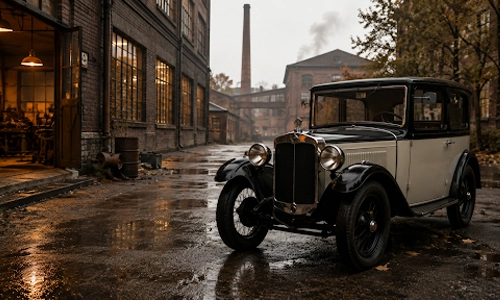
The first production car to wear the BMW badge was a tiny, licensed copy of an Austin Seven.
Purists might want to shield their eyes for this one. The bmw first car was not an engineering marvel engineered from scratch in Munich. In October 1928, BMW bought an automobile factory in Eisenach, Germany, which was building a small car called the Dixi 3/15. The Dixi was simply a British-designed Austin Seven built under a special license. In July 1929, after making a few clever upgrades—like swapping the controls over to the left side and adding four-wheel cable brakes—the company released the vehicle as the BMW 3/15 PS DA-2. It had a tiny 747cc engine, pushed out a whopping 15 horsepower, and maxed out at a terrifyingly loud 47 mph (75 km/h).
4. Mercedes-Benz Almost Bought a Failing BMW in 1959
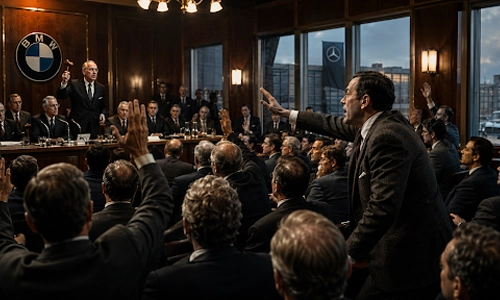
A massive financial crisis nearly resulted in BMW becoming a minor subsidiary of its fiercest rival.
By the late 1950s, BMW was bleeding cash faster than a blown head gasket. Their luxury cars were too expensive to sell in high volumes, and their microcars weren’t profitable enough. Sensing blood in the water, Daimler-Benz (the parent company of Mercedes) launched a hostile takeover bid during a dramatic shareholder meeting in December 1959. Just as the deal was about to close, a group of small shareholders and local dealerships revolted, delaying the vote. Seeing their passion, a wealthy industrialist named Herbert Quandt stepped in at the final second, increased his financial stake, and saved the independent company. That dramatic rescue set up the greatest automotive rivalry in history.
5. They Built the World’s Fastest Motorcycle in 1937
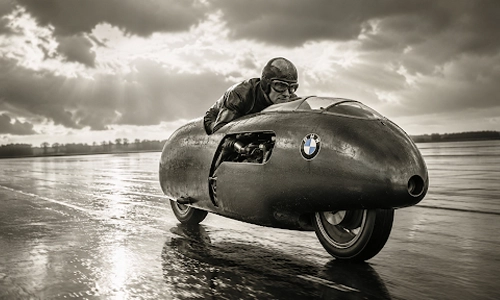
BMW dominated early land-speed records with a supercharged two-wheeler that hit 173.6 mph.
Long before the legendary M3 or M5 sport sedans tore up asphalt, BMW was a terrifyingly dominant force on two wheels. In 1937, a daring German rider named Ernst Henne strapped himself into a highly aerodynamic, supercharged 500cc BMW motorcycle. He blasted down a closed German autobahn at an astonishing 173.68 mph (279.5 km/h). That mind-boggling speed record stood entirely unbroken for 14 consecutive years, cementing the brand’s reputation for unbeatable engine reliability.
6. The “M” Racing Stripes Have a Secret Corporate Backstory
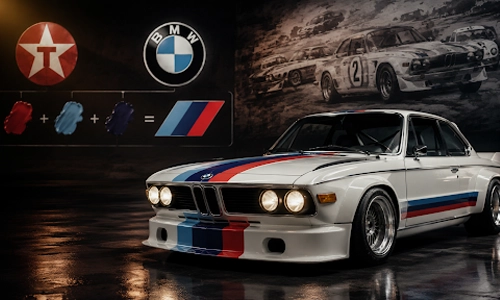
The famous light blue, dark blue, and red racing livery was created to woo an American oil sponsor.
The three slanted stripes of the BMW M division are recognized globally as symbols of high performance. But the color choice wasn’t purely artistic. In the early 1970s, when BMW was launching its official factory racing team, they desperately wanted to secure a lucrative sponsorship deal with Texaco. Designers added the bright red stripe to the livery as a direct compliment to Texaco’s corporate logo. They placed a light blue stripe on the opposite side to match the Bavarian flag, and blended the two into a rich purple (later updated to dark navy blue) in the middle. The Texaco deal fell through at the last minute, but the livery looked so incredibly sharp that BMW kept it anyway.
7. The Iconic “Kidney Grille” Debuted Way Back in 1933
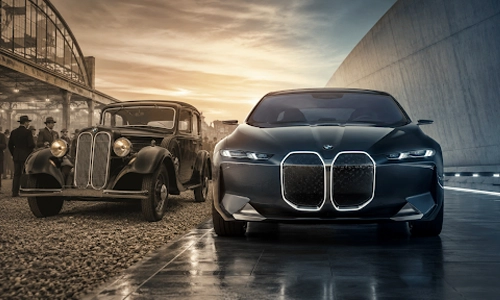
The signature front grille split design has been an unbroken styling tradition for nearly a century.
No matter how much BMW exterior designs shift over the generations, the split front grille remains an absolute visual anchor. This legendary “kidney grille” first appeared at the 1933 Berlin Motor Show on the front of the elegant BMW 303. Originally, the tall, narrow split design was highly functional, perfectly curved to maximize airflow across the car’s radiator block. Today, even on modern electric vehicles that don’t require traditional front radiators, the shape is preserved purely as a proud stylistic fingerprint.
8. They Created the World’s First Electric Concept Car in 1972
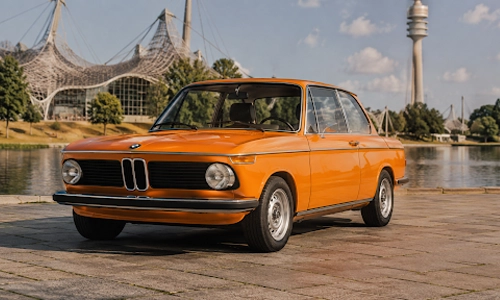
The bright orange BMW 1602e served as a zero-emission support vehicle at the Munich Olympic Games.
Tesla who? BMW was experimenting with real-world electrification more than 50 years ago. For the 1972 Summer Olympic Games in Munich, engineers converted a standard combustion coupe into the experimental 1602e. It was packed with 12 standard lead-acid batteries that weighed a massive 770 pounds. While it only produced about 42 horsepower and had a meager range of 19 miles, it successfully drove ahead of long-distance marathon runners to film the races without suffocating the athletes with tailpipe exhaust.
9. A Standard BMW Formula 1 Engine Once Hit 1,400 Horsepower
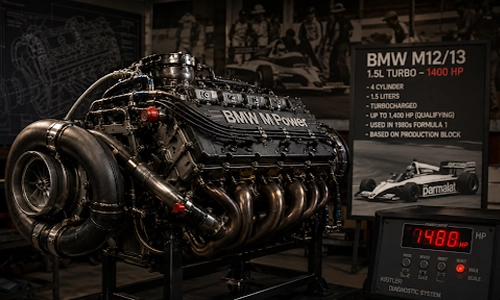
In the 1980s, engineers tuned a tiny four-cylinder production engine block to unimaginable power levels.
During the wild, unregulated turbocharging era of 1980s Formula 1 racing, the BMW M12/13 engine became the stuff of absolute track legend. Amazingly, the engineers didn’t forge this engine block from custom aerospace materials; they used the exact same basic iron block found in everyday, family-sized road cars. By strapping on a massive turbocharger running on specialized rocket fuel, the tiny 1.5-liter engine belted out an estimated 1,400 horsepower during qualifying trim—so much raw power that it literally maxed out the diagnostic scales of the workshop equipment.
10. The Famous BMW Z1 Had Disappearing Vertical Doors
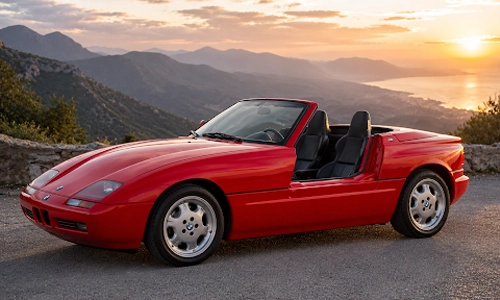
The quirky 1989 roadster featured unique doors that slid straight down into the side sills.
If you think modern car doors are getting a bit too complicated, look back at the ultra-rare BMW Z1 roadster from 1989. Instead of swinging outward or popping upward like a Lamborghini, the Z1’s doors dropped vertically down into the car’s body panels at the push of a button, working much like a window glass mechanism. Even wilder? The entire body structure was wrapped in high-tech plastic panels that could be completely unbolted and swapped out, allowing owners to theoretically change the entire color of their car in under an hour.
11. BMW Secretly Designed the Heart of the Legendary McLaren F1
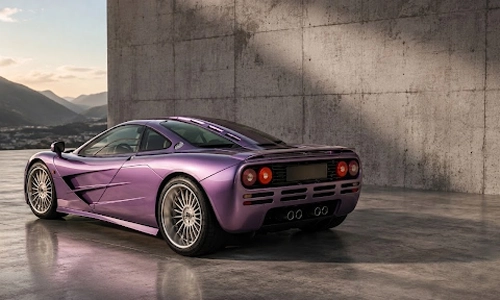
The greatest supercar of the 20th century was powered by a bespoke, naturally aspirated BMW V12.
When McLaren engineer Gordon Murray set out to build the ultimate, no-compromises supercar in the early 1990s, he asked several manufacturers to build him a highly specific, lightweight engine. Honda turned him down, but BMW’s legendary engine builder Paul Rosche stepped up. He custom-designed a magnificent 6.1-liter V12 engine block designated the S70/2. Producing 618 horsepower without the help of modern turbochargers, this BMW-engineered masterpiece propelled the McLaren F1 to a record-breaking 240.1 mph, making it the fastest naturally aspirated production car ever built.
Frequently Asked Questions
What does BMW stand for?
BMW stands for Bayerische Motoren Werke, which translates to Bavarian Motor Works.
What was the first car made by BMW?
The BMW 3/15 PS (released in 1929), which was a licensed, modified version of the British Austin Seven.
Is the BMW logo a spinning propeller?
No. The blue and white quadrants represent the state colors of Bavaria. The propeller connection was just a clever 1929 ad campaign.
Who founded BMW?
BMW grew out of Rapp Motorenwerke, founded by Karl Rapp, and was later driven to success by Gustav Otto, Franz Josef Popp, and Camillo Castiglioni.
Crossing the Finish Line
From narrow brushes with bankruptcy to setting untouched land-speed records, BMW’s journey is proof that the road to becoming an automotive icon is rarely a straight line. The brand didn’t just build cars; they engineered a legacy out of pivots, happy accidents, and pure mechanical obsession.
The next time you see those iconic kidney grilles or glimpse that blue-and-white Bavarian badge in your rearview mirror, you’ll know the wild history riding behind it.