
Standing on the rim of the Grand Canyon feels like peering into Earth’s autobiography. Layer upon layer of rock stretches across the horizon like pages in a stone-bound history book. But beyond the breathtaking views lies a treasure trove of mind-bending trivia, ancient mysteries, and geological marvels. If you think it’s just a big hole in Arizona, prepare to upgrade that description dramatically. Here are the most fascinating facts about Grand Canyon that reveal why this natural wonder continues to astonish scientists, historians, and millions of visitors every year.
1. The Grand Canyon Is Older Than You Think
One of the most surprising historical facts about the Grand Canyon is its age. Scientists estimate that parts of the canyon are nearly 6 million years old, but the rocks exposed within its walls are far older, some dating back nearly 2 billion years.
To put that into perspective, those rocks formed long before dinosaurs ever walked the Earth. When you look at the canyon walls, you’re literally looking back in time.
How Old Is the Grand Canyon?
- A. About 6 Million Years
- B. About 7 Million Years
- C. About 8 Million Years
- D. None of the Above
So if you’ve ever wondered how old is the Grand Canyon in Arizona, the answer depends on whether you mean the canyon itself or the ancient rock layers it reveals.
2. The Colorado River Sculpted It
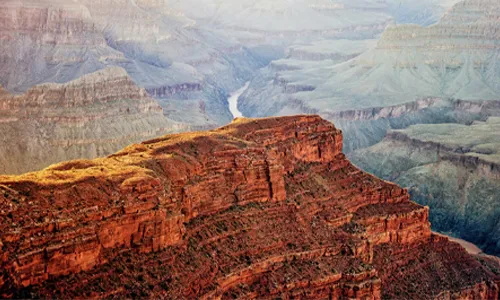
How was the Grand Canyon formed? The primary artist was the Colorado River. Over millions of years, the river carved its way through solid rock, gradually deepening and widening the canyon.
But it wasn’t working alone. Uplift of the Colorado Plateau, erosion from wind, rain, and ice, and even landslides contributed to shaping this dramatic landscape. Think of it as nature’s slowest but most determined sculptor.
3. It’s Bigger Than Most People Imagine
The Grand Canyon stretches approximately 277 miles long, up to 18 miles wide, and over a mile deep in certain places.
It’s so vast that weather conditions can differ dramatically between the North Rim and South Rim on the same day. You could be standing in sunshine on one side and watching storm clouds gather on the other.
4. It Is One of the Seven Natural Wonders of the World
The significance of the Grand Canyon reaches far beyond Arizona. It is widely recognized as one of the Seven Natural Wonders of the World.
Its scale, geological diversity, and dramatic beauty have made it one of the most studied and photographed natural landmarks on Earth.
5. Humans Have Lived There for Thousands of Years
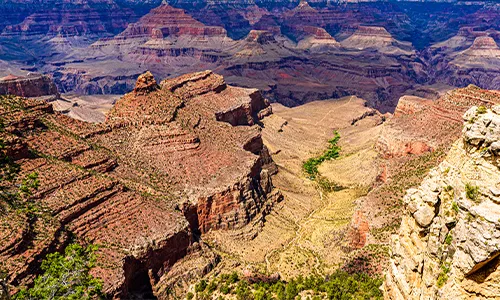
What is the history of the Grand Canyon beyond geology? Human history in the region dates back at least 12,000 years.
Native American tribes, including the Hopi, Navajo, Havasupai, and Hualapai, have deep cultural and spiritual ties to the canyon. For many tribes, it is not just a landmark but a sacred place intertwined with origin stories and traditions.
6. It Became a National Park in 1919
President Woodrow Wilson signed legislation establishing Grand Canyon National Park in 1919. Today, it attracts nearly five million visitors annually.
Interestingly, Theodore Roosevelt played a major role in protecting the canyon before it became a national park. He once urged Americans to leave it “as it is.”
7. Fossils Are Hidden in Its Walls
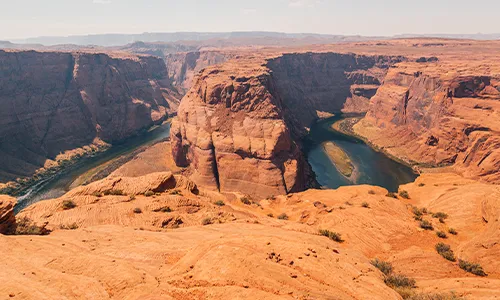
Among the lesser-known facts about Grand Canyon is that fossils of ancient marine creatures have been discovered in its rock layers.
This reveals that the region was once covered by shallow seas hundreds of millions of years ago. Imagine ocean waves where desert cliffs now stand.
8. It Has Its Own Ecosystem Layers
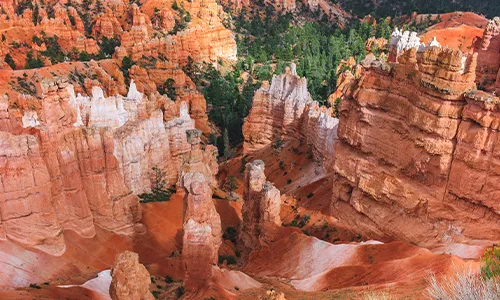
Because of its depth, the canyon creates distinct climate zones. The rim may be cool and forested, while the inner canyon can feel like a desert furnace.
This vertical variation supports diverse plant and animal life, from elk and mule deer to desert reptiles and rare birds.
9. The Grand Canyon Is Still Growing
Erosion hasn’t stopped. The Colorado River continues to carve away at the canyon’s base, although at a much slower rate than in the past. Nature never clocks out.
10. Why the Grand Canyon Is Important
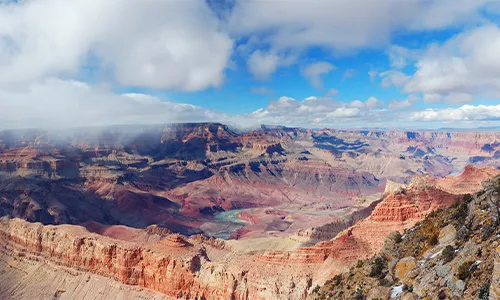
Why the Grand Canyon is important goes beyond tourism. It provides scientists with a rare geological record that helps explain Earth’s history. Its layered rock formations reveal information about climate changes, ancient life, tectonic activity, and the evolution of landscapes over billions of years. It is essentially a natural laboratory.
11. It’s Not the Deepest Canyon in the World
While massive, it isn’t the deepest canyon globally. That title belongs to Yarlung Tsangpo Grand Canyon in Tibet. Still, few places match the Grand Canyon’s combination of depth, width, accessibility, and geological storytelling.
12. There Are No Dinosaur Fossils in the Canyon
Here’s a surprising twist. Although the canyon’s rocks are ancient, they predate dinosaurs. That means you won’t find dinosaur fossils in the exposed layers. The canyon showcases even older chapters of Earth’s story.
13. It Once Had a Thriving Mining Industry
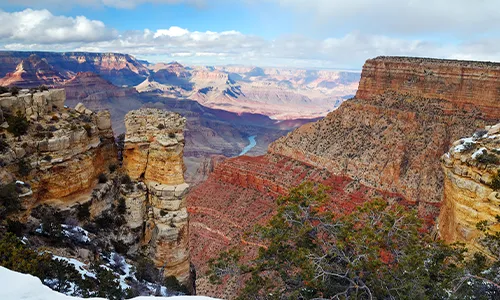
Before full federal protection, parts of the canyon were mined for copper and other minerals. Conservation efforts eventually prioritized preservation over extraction, shaping its future as a protected national treasure.
14. The Skywalk Extends Over the Edge
On the West Rim, visitors can step onto the Grand Canyon Skywalk, a glass bridge that extends 70 feet beyond the canyon’s edge. Standing there feels like floating above time itself.
15. It Plays a Major Role in American Identity
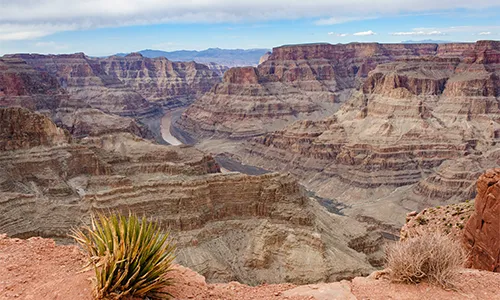
The significance of the Grand Canyon is deeply woven into American culture. It represents natural grandeur, conservation efforts, and the spirit of exploration. Artists, writers, filmmakers, and photographers have drawn inspiration from its vastness for generations.
FAQs
1. Why the Grand Canyon is important to the world?
Why the Grand Canyon is important goes far beyond tourism. It is one of the most complete geological records on Earth, exposing nearly two billion years of rock history. Scientists study it to understand ancient climates, tectonic movements, and the evolution of life.
Its cultural value is equally powerful, as Native American tribes consider it sacred land with deep spiritual roots.
2. What is the history of the Grand Canyon?
When asking what is the history of the Grand Canyon, we have to look at both geology and humanity.
Geologically, the canyon was carved primarily by the Colorado River over millions of years. Human history stretches back at least 12,000 years, with Indigenous tribes such as the Hopi, Navajo, Havasupai, and Hualapai calling the region home long before European explorers arrived.
In 1919, it officially became a U.S. National Park, marking a major moment in American conservation history.
3. How was the Grand Canyon formed?
How was the Grand Canyon formed is one of the most searched questions about this landmark.
The short answer: water and time.
The Colorado River gradually carved through uplifted rock layers of the Colorado Plateau. Over millions of years, erosion from flowing water, rainfall, wind, and seasonal flooding widened and deepened the canyon into the massive formation we see today.
4. How old is the Grand Canyon in Arizona?
If you’re wondering how old is the Grand Canyon in Arizona, the answer has layers.
The canyon itself is estimated to be around 5 to 6 million years old. However, the rock formations inside it are much older, some dating back nearly 2 billion years.
That means the canyon exposes some of the oldest visible rocks in North America.
5. What are some historical facts about the Grand Canyon?
Here are a few key historical facts about the Grand Canyon:
- Native American tribes lived in and around the canyon for thousands of years.
- Spanish explorers first documented it in 1540.
- President Theodore Roosevelt helped protect it in the early 1900s.
- It became Grand Canyon National Park in 1919.
- It was designated a UNESCO World Heritage Site in 1979.
These milestones highlight both its cultural and environmental importance.
6. What is the significance of the Grand Canyon today?
The significance of the Grand Canyon today includes scientific research, tourism, conservation efforts, and cultural preservation.
It attracts millions of visitors annually, supports local economies, and remains a symbol of natural beauty and environmental protection in the United States.
Its layered rock formations continue to provide invaluable data to geologists studying Earth’s ancient past.
7. Is the Grand Canyon still changing?
Yes, it is. The Colorado River continues to erode the canyon floor, although the process happens slowly. Flash floods, landslides, and weather patterns also contribute to its ongoing transformation. In geological terms, the canyon is very much alive.
8. How deep and wide is the Grand Canyon?
The Grand Canyon is about 277 miles long, up to 18 miles wide, and over one mile deep in certain areas. Its immense scale is one reason why it remains one of the most studied and admired landscapes in the world.
9. Why do scientists study the Grand Canyon so extensively?
Scientists study the canyon because it acts like a vertical timeline of Earth’s history. Each visible rock layer represents a different era, helping researchers understand changes in climate, sea levels, and tectonic activity over billions of years. It is essentially a giant open-air geology textbook.
10. What makes the Grand Canyon unique compared to other canyons?
While there are deeper canyons in the world, few combine the Grand Canyon’s scale, accessibility, layered geology, biodiversity, and cultural heritage. Its visibility of ancient rock strata makes it particularly unique from a scientific standpoint.
The Grand Canyon is not just a scenic overlook. It is a living archive of geological transformation, human history, and environmental significance. From its ancient rock layers to its modern conservation efforts, every inch tells a story.
These facts about Grand Canyon prove that it is far more than a tourist attraction. It is a masterpiece millions of years in the making, still evolving, still inspiring, and still humbling anyone who stands at its edge.