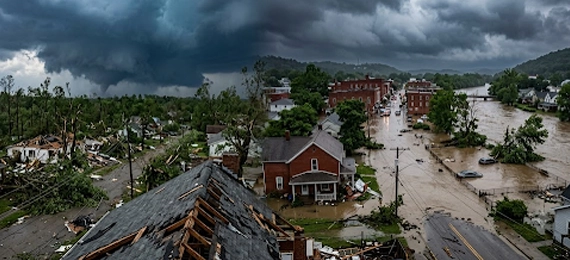
The worst weather event in the state’s history is the Great Flood of 1913, though the 1974 Xenia tornado and the Great Blizzard of 1978 are considered close runners-up in terms of sheer destructive power.
You’ll never guess how quickly a quiet, mild Midwest afternoon can flip the script and become a historic weather anomaly. When we think of monumental weather, our minds usually jump to coastal hurricanes or Tornado Alley. But the Buckeye State has a wild, unpredictable climate history that has forced the entire country to rethink how we handle severe weather. From skies turning green to rivers swallowing entire valleys, natural disasters in Ohio have left behind incredible stories of resilience. Let’s dive into the five most unbelievable weather events to ever strike the state.
What Are the Most Unforgettable Natural Disasters in Ohio?
1. The Great Flood of 1913 Forced the Creation of Modern Flood Control
What is officially considered the worst natural disaster in Ohio history?
- A. The 1974 Xenia Tornado
- B. The Great Flood of 1913
- C. The 1978 Blizzard
- D. The 2012 Derecho
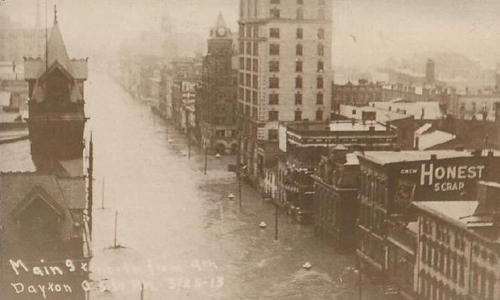
In March 1913, a freakish alignment of weather patterns dumped massive, unrelenting rain over a frozen Ohio landscape. Because the ground was totally solid and heavily deforested, it couldn’t absorb a single drop. The resulting runoff swelled the Great Miami and Muskingum rivers to catastrophic levels. The flood claimed over 420 lives and caused such unimaginable financial ruin that Ohio pioneered the Conservancy Act. This groundbreaking legislation led to the dry dam and reservoir systems that still protect the state’s river valleys today.
2. The 1974 Xenia Tornado Was the Deadliest of the Infamous “Super Outbreak”
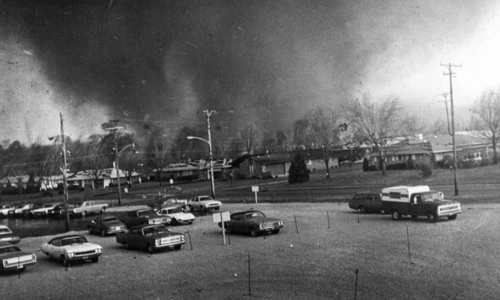
On April 3, 1974, a monstrous weather system unleashed 148 confirmed tornadoes across the US and Canada in a mere 24 hours. The absolute worst of the bunch—a terrifying F5 monster—took direct aim at Xenia, Ohio. Packing winds over 260 mph, it leveled schools, destroyed thousands of homes, and claimed 32 lives. It was so intense that meteorologist Ted Fujita, the actual creator of the Fujita scale, personally surveyed the wreckage to categorize it.
3. The Great Blizzard of 1978 Shut Down the Entire Ohio Turnpike for the First Time
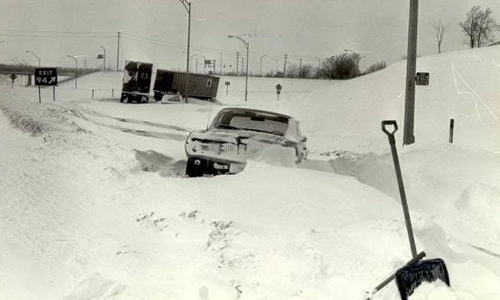
A snow day is one thing; a “white hurricane” is another. In late January 1978, a rare severe blizzard locked the state in a deep freeze. Winds hit 70 mph, pushing wind chills down to a lethal 60 degrees below zero. The barometric pressure dropped so violently (hitting 28.28 inches in Cleveland) that it broke non-hurricane records. Snowdrifts piled up to 25 feet high, swallowing semi-trucks whole and forcing Governor James Rhodes to deploy the Ohio National Guard in helicopters to rescue stranded citizens.
4. The 2012 Derecho Knocked Out Power for over a Million Ohioans in Minutes
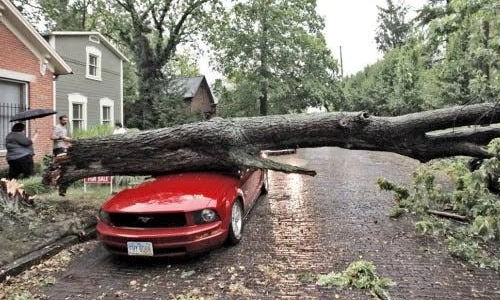
If you haven’t heard of a “derecho,” it’s essentially an inland hurricane made of straight-line winds. In June 2012, a rapidly moving wall of thunderstorms swept across the Midwest. Hitting Ohio with 80+ mph wind gusts, it snapped trees like toothpicks and decimated the power grid. Over a million residents lost electricity during a scorching heatwave, leading to massive, state-wide emergency declarations.
5. The 1924 Lorain Tornado Is Actually the Deadliest Single Tornado in State History
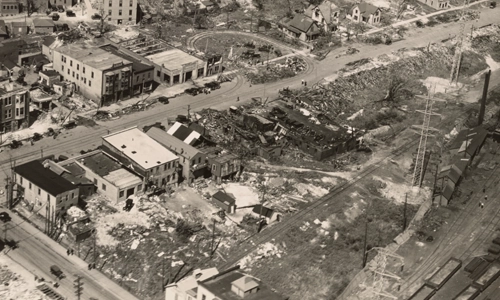
While Xenia is the most famous, the deadliest tornado happened decades earlier. On June 28, 1924, a massive funnel formed over the waters of Lake Erie before sweeping directly into the coastal towns of Sandusky and Lorain. It destroyed the State Theatre in Lorain and resulted in 85 tragic fatalities. Because it struck before modern weather tracking, residents had practically zero warning.
Devastating Weather Events Over the Past Century
While certain cataclysmic events define Ohio’s historical memory, the state’s volatile geography has seen a far more extensive timeline of extreme weather. The following table expands on these defining moments, mapping out a broader history of Ohio’s most destructive floods, severe tornado outbreaks, and historic winter storms
Floods and Water Disasters
| Year | Event Name | Areas Hardest Hit | Impact & Key Facts |
| 1913 | The Great Flood of 1913 | Statewide (Dayton, Columbus, Hamilton) | Ohio’s deadliest natural disaster. Over 428 people died in the state after 3-4 days of relentless rainfall. Dayton was completely submerged under 10–20 feet of water, destroying over 20,000 homes. This event triggered the creation of modern flood-control systems. |
| 1937 | The Great Ohio River Flood | Southern Ohio border (Cincinnati, Portsmouth) | Record rainfall caused the Ohio River to reach an unprecedented crest of 80 feet in Cincinnati. It left 100,000 people in the tri-state area homeless and flooded 12 square miles of Cincinnati, though the death toll in Ohio was kept relatively low (around 10) due to prior evacuations. |
| 1959 | The 1959 Statewide Floods | Central & Southwest Ohio (Chillicothe, Columbus, Newark) | The most widespread flooding in the state since 1913. Heavy rain fell on deeply frozen ground, causing instant runoff that resulted in 16 deaths, 50,000 evacuations, and over $100 million in damages. |
Tornadoes and Severe Storms
| Year | Event Name | Areas Hardest Hit | Impact & Key Facts |
| 1924 | Sandusky-Lorain Tornado | Sandusky, Lorain (Northern Ohio) | The deadliest single tornado in Ohio history. This massive F4 twister formed over Sandusky Bay, moved across Lake Erie, and slammed directly into downtown Lorain. It killed at least 85 people, injured over 1,000, and leveled hundreds of homes and a crowded theater. |
| 1974 | The F5 Xenia Tornado | Xenia, Wilberforce (Greene County) | Part of the historic 1974 Super Outbreak. This devastating F5 tornado obliterated roughly half of the city of Xenia, killing 32 people (+2 indirect) and injuring 1,150. It remains one of the most intensely studied tornadoes in U.S. history. |
| 1969 | The Ohio Fireworks Derecho | Northern Ohio (Lake Erie coast to Toledo) | A violent, fast-moving wind storm struck on Independence Day evening. Packed with hurricane-force winds up to 100 mph, it caught holiday crowds outdoors, killing over 40 people and capsizing dozens of boats on Lake Erie. |
| 1985 | The Niles-Wheatland Tornado Outbreak | Niles, Newton Falls (Trumbull County) | An exceptionally rare, violent F5 tornado tore through Newton Falls and Niles before crossing into Pennsylvania. The outbreak killed 11 people in Ohio and completely leveled parts of the Niles manufacturing district. |
Winter Storms and Blizzards
| Year | Event Name | Areas Hardest Hit | Impact & Key Facts |
| 1978 | The Great Blizzard of ’78 | Statewide | Often called the “White Hurricane.” Severe sub-zero winds averaging 50–70 mph (with gusts up to 111 mph over Lake Erie) whipped snow into massive 15-to-25-foot drifts. It completely paralyzed the state, closed the Ohio Turnpike for the first time ever, and caused 51 deaths in Ohio, mostly due to exposure. |
| 1950 | The Great Appalachian Storm | Eastern and Central Ohio | A massive winter storm brought record-breaking snowfall (up to 30 inches in parts of eastern Ohio) paired with near-hurricane winds. The storm killed 30 people in Ohio and paralyzed regional transportation for nearly a week. |
Mother Nature definitely keeps us on our toes! While Ohio might not have fault lines or coastlines, its history proves that extreme weather can strike anywhere, at any time. From the frozen floods of 1913 to the snow-choked highways of 1978, these events reshaped the state’s infrastructure and united its communities in survival.