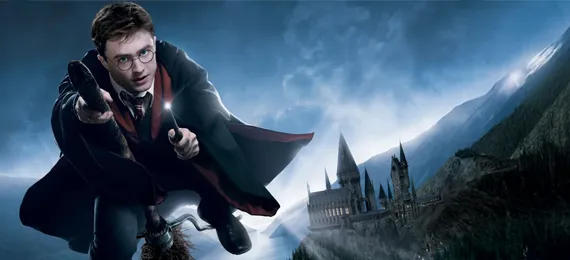
The wizarding world of Harry Potter isn’t just a story people read once and move on from. It’s a universe people return to, argue about, quiz themselves on, and rediscover year after year. One of the biggest reasons for this obsession is the sheer number of fascinating facts about Harry Potter hidden across its books, films, characters, and magical rules.
What looks like a simple tale about a boy wizard quickly reveals itself to be one of the most carefully built fictional worlds ever created. Every spell has limits. Every magical object has a backstory. Even silence and absence play important roles. These show why the series feels alive long after the final page is turned.
The Harry Potter Series: A Story That Grew With Its Readers
What protects Harry from Voldemort as a baby?
- A. A powerful spell cast by Dumbledore
- B. His mother’s sacrificial love
- C. A secret charm from Hogwarts
- D. The Elder Wand
One of the most remarkable facts is how intentionally the series matures over time. The first book feels light, whimsical, and playful, filled with talking portraits, magical sweets, and schoolyard rivalries. By the final book, the story explores grief, war, sacrifice, and moral responsibility.
This shift wasn’t accidental. Each book represents a year at Hogwarts, and each year mirrors the emotional growth of its characters. As Harry, Ron, and Hermione age, so do the themes. Childhood curiosity slowly transforms into teenage uncertainty and finally into adult responsibility.
The emotional stakes increase because readers grow attached to the characters long before the danger becomes real. When losses happen later in the series, they hurt because the world already feels familiar.
The Most Fascinating Facts About Harry Potter
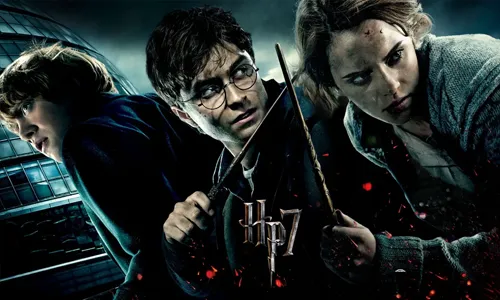
Among the most fascinating facts is that magic in this universe always comes with rules. Spells can fail. Wands can reject their owners. Even powerful magic like time travel is tightly controlled. This rule-based system is why the wizarding world feels believable rather than chaotic.
Another standout fact is that love functions as a literal magical force. Lily Potter’s sacrifice is not symbolic. It creates an ancient protection that Voldemort, despite all his knowledge, cannot undo. This reinforces a recurring idea throughout the series that emotional magic often surpasses learned skill.
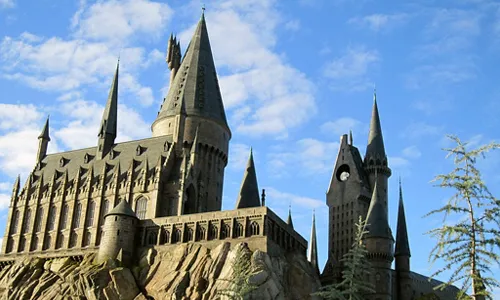
Even Hogwarts itself operates under ancient enchantments. The castle responds to danger, conceals secrets, and changes layout when needed. It’s less a building and more a living magical entity.
Little-Known Facts About Harry Potter Characters
Severus Snape, often perceived as cruel and bitter, is written as one of the most emotionally complex characters in the series. His loyalty is revealed not through kindness, but through consistency and sacrifice.
Hermione Granger’s intelligence was never portrayed as something she needed to hide or soften. This was unusual in children’s literature at the time and helped redefine how female characters could be written. Ron Weasley, frequently underestimated, demonstrates emotional courage and loyalty even when plagued by self-doubt.
Harry Potter characters often represent moral gray areas. There are very few purely good or purely evil figures. Choices, rather than bloodlines or talent, determine who characters become.
Hidden Hogwarts Facts About Harry Potter
The school’s four houses were not designed as moral categories. Gryffindor and Slytherin, often portrayed as opposites, actually share traits like ambition and bravery. The difference lies in how those traits are used.
The Sorting Hat itself is one of the most symbolic magical objects in the series. It considers personal choice, not destiny. Harry’s insistence on avoiding Slytherin reinforces the idea that identity is shaped by decisions rather than inherent traits.
Even subjects taught at Hogwarts reflect larger themes. Defense Against the Dark Arts teachers change every year, symbolizing instability and the constant presence of danger. History of Magic, taught without passion, mirrors how societies often neglect to learn from their past.
Surprising Behind-the-Scenes Facts About Harry Potter
The film cast aged naturally across the series, allowing audiences to visually grow with the characters. This continuity strengthened emotional investment and made the story feel more real.
Many sets were built with practical details that never appear on screen, simply to make the world feel authentic to the actors. The Great Hall, for example, was designed as a functional space where cast members could actually interact rather than perform against green screens.
Another fascinating production fact is that many actors knew major plot twists years before audiences did, especially those playing characters with hidden motivations.
Dark and Emotional Facts About Harry Potter
Despite its magical surface, the series contains deeply dark themes. One of the most unsettling things is the concept of Horcruxes. Each one requires murder and permanently damages the soul. This makes Voldemort’s quest for immortality a symbol of extreme moral decay.
The Dementors represent depression and emotional emptiness, draining happiness rather than inflicting physical harm. Their presence introduces mental health metaphors into a fantasy setting long before such discussions were common in children’s literature.
Loss is permanent in the Harry Potter universe. Characters do not return from the dead through convenient magic. This reinforces the weight of sacrifice and makes survival meaningful rather than guaranteed.
Magical Rules and World-Building Facts About Harry Potter
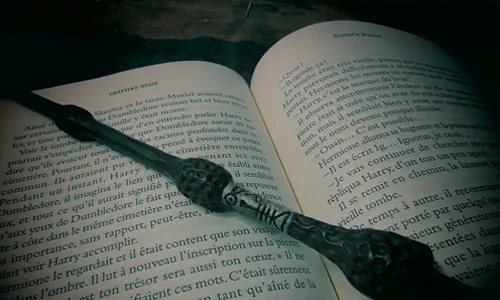
The wizarding world is governed by detailed magical laws. Magic cannot create food from nothing. Time travel has consequences. Certain spells are unforgivable regardless of intent. These restrictions prevent magic from becoming an easy solution to every problem.
Discrimination against non-human beings, obsession with blood purity, and political corruption mirror real-world issues. These elements add realism and complexity beneath the fantasy.
Even Voldemort’s downfall is rooted in his misunderstanding of these rules. His inability to comprehend love, loyalty, and self-sacrifice ultimately leads to his defeat.
Harry Potter Anniversary and Return to Hogwarts
The Return to Hogwarts special highlighted the emotional impact the series had on both cast and audience.
Rather than focusing on spectacle, the anniversary emphasized memory, gratitude, and shared experience. Hogwarts was presented not just as a fictional place but as a symbol of belonging for millions of readers and viewers.
These moments reinforced why Harry Potter remains culturally relevant long after its conclusion.
Quick Trivia
- The author J.K. Rowling and actor Daniel Radcliffe share the same birthday.
- Quidditch, a fictional sport played using broomsticks, hoop goals, and flying balls, was created by J.K. Rowling after an argument with her then-boyfriend in 1991.
- Every name in the Harry Potter series has a deeper meaning. The names of the main characters often reflect leadership qualities or personality traits.
- Peeves, a troublemaker and memorable character in the Harry Potter books, did not appear in the movie series.
- J.K. Rowling first wrote the idea of the Hogwarts houses on an airplane sick bag.
- During an interview, Daniel Radcliffe revealed that the child actors had their teeth cast and molded so they could use fake teeth if they lost one while filming.
- J.K. Rowling’s mother was a passionate reader. She died of multiple sclerosis (MS) and never knew that her daughter was writing what would become a literary masterpiece.
- J.K. Rowling later mentioned that she initially felt Emma Watson was too attractive to play Hermione Granger, as she had imagined the character differently while writing the books.
- Just like in the books, the producers tried to give Daniel Radcliffe green contact lenses and Emma Watson buck teeth. However, this failed because Daniel was allergic to contact lenses, and Emma found it difficult to speak with the prosthetic teeth.
- Robbie Coltrane, who played Hagrid in all eight Harry Potter films, was the first actor to be cast in the series.
- The food shown during the Great Hall feast in Harry Potter and the Sorcerer’s Stone was real. Director Chris Columbus wanted the scene to feel as magical as it was described in the book, but much of the food spoiled under the hot studio lights.
- Rupert Grint wanted to stand out during auditions, so he sent a video of himself rapping about why he wanted the role of Ron Weasley.
The magic of Harry Potter doesn’t live only in spells or wands. It lives in the details. These facts about Harry Potter remind us that the wizarding world was carefully crafted to grow, challenge, and comfort its audience. And that’s why people never really leave Hogwarts. They just keep finding new reasons to return.