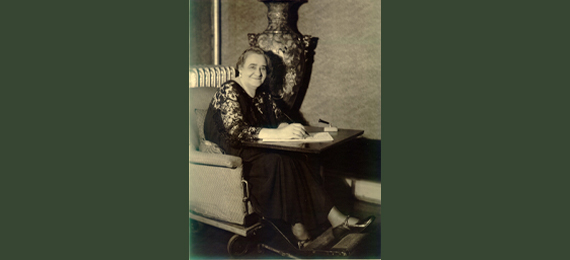
Maggie Lena Walker was a pioneering American businesswoman and educator who made history as the first African American woman to serve as a bank president in the United States. As a visionary leader, she dedicated herself to improving the lives of African Americans and breaking down racial and gender barriers. In 2010, her bank, known as the Consolidated Bank and Trust Company, became the oldest African-American-owned bank in the U.S. Despite facing a debilitating stroke that left her in a wheelchair, she continued to empower people with disabilities and advocate for their rights.
As Grand Secretary of the Independent Order of St. Luke (IOSL), Walker helped organize various initiatives that uplifted the African American community while expanding the public role of women. She was also involved in key organizations such as the NAACP, the National Association of Colored Women, the National Urban League, and the National Negro Business League. Although she encountered significant obstacles as an African American woman in the post-Civil War South, Walker’s determination to foster investment and collective action yielded tangible improvements for African Americans.
Her Life
Born on July 15, 1864, to Maggie Eccles Cuthbert and Elizabeth Draper, Lena Draper Walker’s early years were shaped by a humble, but hardworking family. Her mother, once enslaved, worked as an assistant chef at the Van Lew estate, while her father, a journalist of Irish descent, worked for the New York Herald. Raised in a community that valued education and social activism, Walker attended Richmond Public School and later became involved with the Independent Order of St. Luke at just 14 years old.
When was Maggie Lena Walker born?
- A. 13 March 1854
- B. 15 July 1864
- C. 02 September 1854
- D. 28 December 1861
After graduating from the Richmond Colored Normal School in 1883, she worked as a teacher at the Lancasterian School and later became a part-time insurance agent with the Woman’s Union. She also took night classes in accounting, demonstrating her commitment to self-improvement.
Achievements
1. The Independent Order of St. Luke
In 1886, Walker fully committed to the Independent Order of St. Luke, eventually becoming its Right Worthy Grand Secretary in 1899. Her leadership saved the organization from financial ruin and allowed her to implement programs that promoted economic independence and community empowerment. She introduced the Juvenile Branch to teach young members the values of thrift, community service, and education. Under her guidance, the IOSL expanded its initiatives, including launching the St. Luke Herald in 1902 and the Saint Luke Penny Savings Bank in 1903.
2. The Saint Luke Bank and Trust Company
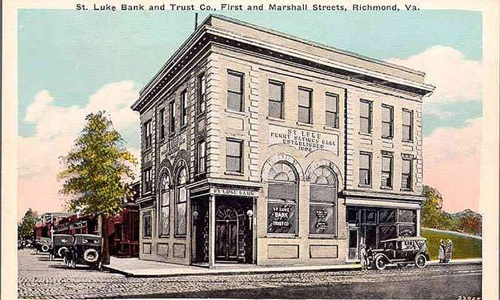
Walker famously said, “Let us put our money together… and reap the benefit ourselves.” Her advocacy for financial independence culminated in the founding of the Saint Luke Penny Savings Bank, which played a crucial role in strengthening Richmond’s black middle class and increasing Black homeownership. Despite the challenges of the Great Depression, Walker successfully merged her bank with two others, creating the Consolidated Bank and Trust Company in 1930, an African-American-owned institution that continued to serve the community for generations.
Challenges and Political Hurdles
Walker faced significant challenges from both the white community and Virginia’s state government. After a 1910 embezzlement scandal and the collapse of another African American bank, the state mandated that fraternal societies and financial institutions be separate, forcing the St. Luke Emporium to become independent. Although the emporium struggled due to consumer reluctance and competition from white retailers, it remained a key part of Walker’s efforts to provide employment opportunities for African American women and offer affordable goods to the Black community.
Personal tragedies also marred her life. Her son, Russell Walker, mistakenly shot and killed his father, only to be exonerated after a lengthy trial. He struggled with depression and alcoholism before passing away in 1923. Walker’s health declined due to diabetes, and she became paralyzed, spending her final years in a wheelchair.
A Lasting Legacy
In 1905, Walker was featured alongside other African American leaders in the “101 Prominent Colored People” poster. She received an honorary master’s degree from Virginia Union University in 1925 and was inducted into the Junior Achievement U.S. Business Hall of Fame in 2001. Her legacy was further honored with the creation of Maggie L. Walker High School, which later became the Maggie L. Walker Governor’s School for Government and International Studies.
Her former office in the St. Luke Building was listed on the National Register of Historic Places in 1982, and the National Park Service now operates the Maggie L. Walker National Historic Site at her home in Jackson Ward. In 2000, she was celebrated as one of Virginia’s Women in History, and in 2017, a statue of Walker was unveiled in Richmond. Today, Maggie Lena Walker is remembered for her unwavering commitment to financial independence and social justice, shaping the future for generations to come.
Fun Facts About Maggie Lena Walker
- Maggie Lena Walker was the first African American female banker in the U.S.
- She had a German shepherd named “Booker T,” a collie named “Ego,” and a cat.
- She married Armstead Walker Jr., a brick contractor, on September 14, 1886.
- Her office in the St. Luke Building was listed on the National Register of Historic Places in 1982.