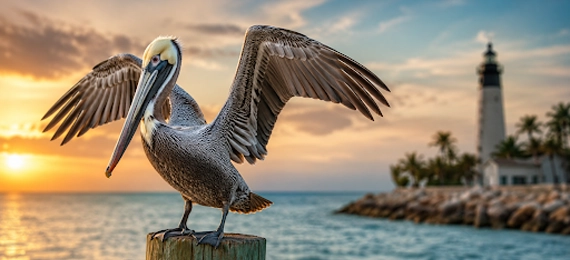
Brown pelicans are the undisputed plunge-diving champions of the bird world, capable of folding their wings and plummeting into the ocean from 60 feet in the air to ambush fish. If you are a coastal wanderer or just a trivia fanatic looking for cool facts about brown pelican biology, you are in for a treat. These goofy, prehistoric-looking birds might seem clumsy on a dock, but in the air and water, they are highly specialized hunters. From their bizarre cooling methods to their built-in biological “bubble wrap,” here are 15 wild things you probably never knew about our favorite ocean aviators.
Wild and Surprising Facts About Brown Pelican Survival

1. They Are One of Only Two Pelican Species That Plunge-Dive
To secure their favorite food, like menhaden, herring, and mullet, these daredevils tuck their wings and dive face-first into the water from heights of up to 60 feet. Only the Peruvian pelican shares this dramatic hunting style; all other pelican species swim along the surface to corral fish into their nets.
How much water can a brown pelican’s pouch hold?
- A. 1 gallon
- B. 3 gallons
- C. 5 gallons
- D. 10 gallons
2. Their Pouch Holds Three Times More than Their Stomach
The legendary brown pelican beak features a highly elastic gular pouch that can expand to hold up to 3 gallons (11 liters) of water and fish. Their stomach, by comparison, maxes out at about 1 gallon. This means their mouth acts less like a stomach extension and more like a high-capacity dragnet.
3. They Incubate Their Eggs by Standing on Them
Instead of using featherless brood patches on their bellies like most birds, parents keep their nests warm using a dense network of blood vessels in their webbed feet. They literally stand on their eggs to transfer heat, which requires an incredibly delicate touch for such a heavy bird.
4. Air Sacs Protect Them from High-Speed Impacts
A key entry in unique brown pelican characteristics is their biological “bubble wrap.” They have an extensive network of subcutaneous air sacs under the skin on the front of their bodies. These sacs inflate right before impact, cushioning their internal organs from the intense force of hitting the water.
5. They Have Surprisingly Long Lifespans
If you have ever wondered how long do brown pelicans live, prepare to be impressed. While many face challenges in their first year of life, the oldest recorded banded bird in the wild reached a staggering 43 years of age, proving that their lifespan can rival many terrestrial animals.
6. They Are the Smallest of the Pelican Family
Despite looking like absolute giants to beachgoers, their overall brown pelican size is modest compared to the massive Dalmatian or American White pelicans. A healthy adult’s brown pelican weight typically tops out at a lean 8 to 10 pounds (3.6 to 4.5 kg), keeping them light enough for agile flight.
7. Their Wingspan Is Wider than Most Humans Are Tall
A mature brown pelican wingspan stretches from 6.5 to 7.5 feet (around 2 to 2.3 meters). This incredible span enables them to glide effortlessly just inches above the ocean waves, riding an aerodynamic cushion known as the “ground effect” to save immense amounts of energy.
8. Young Birds Look Totally Different from Adults
If you spot a completely brown bird, it’s the kids! A brown pelican juvenile sports a drab brown or gray head and belly, completely lacking the crisp white underparts, bright yellow crown plumage, and elegant silver-gray back feathers that define mature adults.
9. Males and Females Look Identical but Differ Slightly in Size
When comparing the brown pelican male vs female, plumage won’t help you tell them apart. They wear the exact same colors, but the female brown pelican is generally slightly smaller and lighter than her male counterpart, a difference that is usually only obvious when they stand side-by-side.
10. Their Numbers Plummeted in the 1960s Due to DDT
Thanks to the pesticide DDT thinning their eggshells (which broke when parents stood on them), they almost went extinct. Thankfully, a strict ban on the chemical successfully restored the brown pelican habitat, leading to a complete population recovery and their removal from the Endangered Species list.
11. They Have an Incredible Coastal Range.
The brown pelican range spans the marine coasts of the Americas. You can spot them patrolling the Atlantic coast from Nova Scotia down to Brazil, and along the Pacific coast from British Columbia all the way to the shores of Chile. They rarely venture inland over fresh water.
12. They Cool off by Fluttering Their Throat Pouches
A fascinating behavior used to beat the summer heat is called “gular fluttering.” They rapidly vibrate the skin of their throat pouches to evaporate moisture and release excess body heat, which looks a bit like a avian version of a dog panting.
13. They Squeeze Water Out Before They Swallow
After a successful plunge, they tilt their massive bills downward to let the gallons of ocean water drain out of the corners of their mouths. This process takes up to a minute, and only when the water is gone will they tip their heads back to swallow the fish whole.
14. Gulls Frequently Steal Food Right Out of Their Mouths
Because a pelican must drain the water from its pouch before swallowing its catch, it is vulnerable to kleptoparasitism. Cheeky laughing gulls will often land directly on the pelican’s head, waiting for the bill to open slightly, and snatch the fish right out of its mouth.
15. They Are the Proud State Bird of Louisiana
Louisiana is famously known as the “Pelican State.” The region has honored the brown pelican on its official state flag, state seal, and official state bird roster since 1966, celebrating the bird as a symbol of coastal resilience and unique natural heritage.
Frequently Asked Questions
Do brown pelicans store fish in their pouches for later?
No. The pouch is strictly a fishing net, not a lunchbox. They drain the water and swallow their catch immediately.
Are brown pelicans endangered?
No. While they almost went extinct in the mid-20th century due to DDT poisoning, their populations have fully recovered.
How high can brown pelicans fly?
While they usually skim just inches above the waves, they can soar up to 10,000 feet high during migration.
The brown pelican is far more than a quirky fixture of coastal docks—it is a finely tuned, gravity-defying marvel of nature. From their shock-absorbing air sacs to their incredible 43-year lifespan, these birds combine prehistoric charm with masterclass hunting adaptations. The next time you spot one gliding effortlessly over the surf or plunging headfirst into the ocean, you will know the incredible engineering behind every single move they make.