After the heartbreaking Indian passenger plane crash in June 2025, all eyes turned to a single device that holds the answers—the black box. Despite its name, the black box is not black, and it’s far from mysterious for those who understand its purpose. But to most of us, it still feels like a secret vault that only experts can decode.
1. What Is a Black Box, Really?
1.1 It’s Not Actually Black
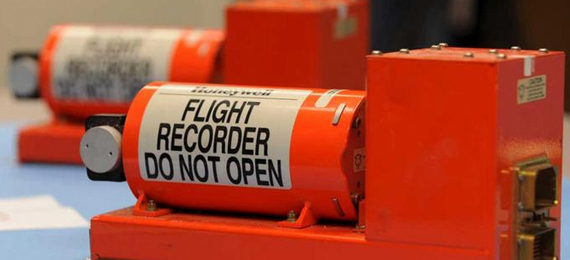
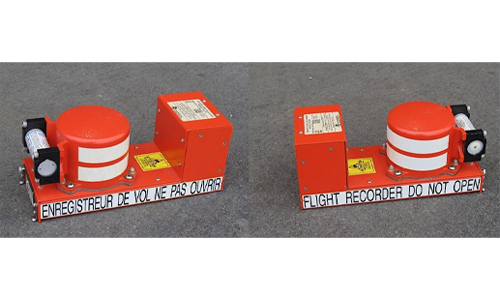
Despite the name, black boxes are typically bright orange with reflective tape to make them easier to locate after a crash. It is painted a vibrant color called International Orange. A color which is associated with San Francisco’s Golden gate or the color of the highlighters we use. The term “black box” originally referred to any complex electronic device inside an aircraft that couldn’t be easily opened or understood by non-specialists.
What is the primary purpose of a black box in aircraft?
- A. To control engine power
- B. To record flight data and cockpit audio
- C. To store aircraft manuals
- D. To transmit live flight updates
1.2 There Are Two Separate Recorders
A black box actually consists of two parts:
- Cockpit Voice Recorder (CVR): Records all audio inside the cockpit, including conversations, alarms, and background engine noise.
- Flight Data Recorder (FDR): Captures detailed technical data such as altitude, speed, heading, and thousands of other flight parameters.
1.3. It Records for 25 Hours
Modern black boxes can store up to 25 hours of data for the FDR and 2 hours for the CVR. Older versions stored only 30 minutes.
1.4. The Construction of Black Box
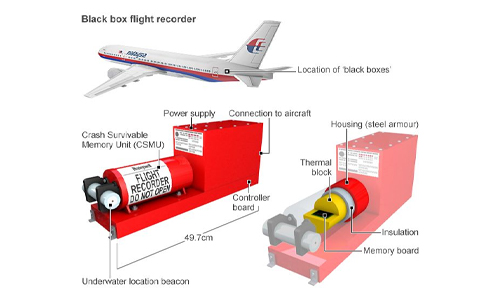
The Crash Survivable Memory Unit (CSMU) is the heart of the black box, the component that safeguards the invaluable recorded data. This unit is not merely robust; it is engineered to withstand extreme heat, jarring crashes, and immense pressure, forces that no other part of the aircraft is expected to endure.
The inner layer consists of thin aluminum housing, carefully encasing the delicate memory cards.
A crucial 1-inch (2.54 cm) thick layer of high-temperature dry-silica insulation provides the primary thermal protection, specifically designed to shield the memory boards during intense post-accident fires.
The outermost defense is an armor-like stainless-steel cast shell, approximately 0.25 inches (0.64 cm) thick. In some designs, titanium, known for its exceptional strength-to-weight ratio, is also utilized for this hardened housing.
1.5. They’re Fireproof and Waterproof
Black boxes must survive:
- 1,100°C (2,012°F) fire for 1 hour
- 20,000 feet of ocean depth for 30 days
- 3,400 G-force shock impact
- 5,000 lbs. of crush force
These standards ensure the data remains intact after catastrophic accidents.
Extreme Durability Testing Regimen
| Test Type | Description | Conditions Required to Withstand |
| Impact Tolerance | Unit shot down an air cannon at a target. | 3,400 Gs of force for 6.5 milliseconds (equivalent to 270 knots velocity, 45 cm crushing distance) |
| Penetration Resistance | Heavy weight with a steel pin dropped onto the unit. | 500-pound (227 kg) weight with a 0.25-inch (0.64 cm) steel pin dropped from 10 feet (3 meters) |
| Static Crush | Crushing force applied to various points. | 5,000 pounds per square inch (psi) for five minutes on each of six major axis points |
| Fire Resistance | Unit placed in a propane fireball. | 2,000 degrees Fahrenheit (1,100 Celsius) for one hour |
| Water Pressure Resistance | Submersion in pressurized saltwater. | Submerged under 20,000 feet (6,096 meters) of water pressure |
| Saltwater Submersion | Prolonged immersion in saltwater. | Functional after 30 days in saltwater |
| Fluid Immersion | Components exposed to aviation fluids. | Various components immersed in jet fuel, lubricants, fire-extinguisher chemicals |
2: The History & Invention of the Black Box
2.1. An Australian Invention
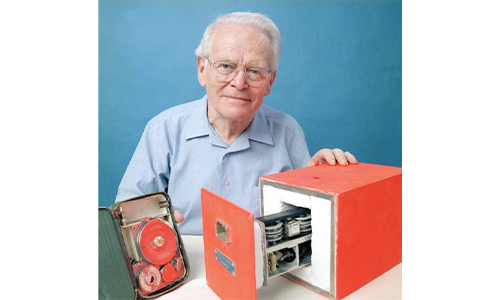
The black box was invented in 1953 by Dr. David Warren, an Australian scientist. He was motivated by the mysterious crash of a Comet aircraft, where no cause could be determined.
2.2 It Was Rejected at First
Surprisingly, airlines and even his own government initially ignored the invention, fearing it would be used to blame pilots. It wasn’t until later in the 1960s that black boxes became mandatory.
2.3. First Mandated in 1967
The U.S. Federal Aviation Administration (FAA) made it mandatory for all commercial aircraft to have CVRs and FDRs installed by 1967.
2. 4. “Red Egg” Was the Original Nickname
Dr. Warren originally called his invention the “Flight Memory Unit,” and some referred to it as the “Red Egg” due to its shape and color. The nickname “black box” stuck because of the aviation slang for sealed, mysterious equipment.
3: How Black Boxes Help After a Crash
3.1. They Tell the Last 30 Seconds of Every Flight
Most critical flight accidents occur in the final few minutes—or even seconds—before the crash. The black box captures this high-stress window, which helps investigators reconstruct what went wrong.
3.2. Black Boxes Don’t Just Record Crashes
They also record routine flights, which helps in refining aircraft design, improving pilot training, and detecting system anomalies early.
3.3. They Take Weeks to Decode
Even though the data is immediately available after recovery, interpreting the recordings—especially audio—can take weeks or even months. Teams use a combination of aviation expertise, sound analysis, and data synchronization to piece together what happened.
3.4. Black Boxes Are Found Using Underwater Beacons
When submerged, a black box emits ultrasonic pings at 37.5 kHz every second for about 30 days, helping search teams locate it underwater using hydrophones.
4: Modern Innovations
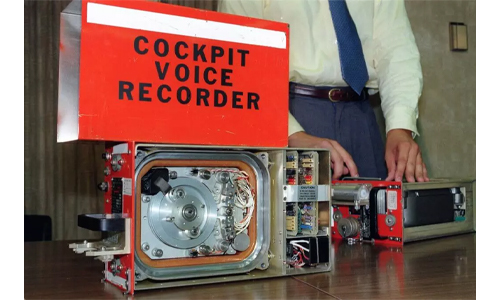
4.1. Streaming Black Boxes Are Coming
After the Malaysia Airlines Flight 370 disappearance, the aviation industry began developing real-time data streaming versions of black boxes to prevent total loss of data in future crashes.
4.2. Some Planes Have a Third “Black Box”
Military and experimental aircraft often carry a third recorder called a Quick Access Recorder (QAR) that stores detailed performance data used for research and training.
4.3. Pilots Can Manually Erase the Voice Data
In most modern aircraft, CVR data can be erased after a safe landing using a specific process. This is mainly used for training flights or to avoid storing sensitive cockpit discussions not related to accidents.
4.4. Data Is Stored on Crash-Survivable Memory Units (CSMU)
This titanium or steel box is insulated, wrapped, and shielded, making it nearly indestructible. It’s usually the only piece of technology that remains recoverable after a full-plane fire.
4.5. Black Boxes Are Heavier Than You Think
A black box can weigh up to 10 kilograms (22 pounds) because of the metal casing, insulation, and advanced electronics inside.
4.6 Real-Time Data and Deployable Recorders
One of the most promising opportunities is the integration of real-time flight data streaming via satellite networks. By mid-2024, over 21,000 aircraft globally were transmitting real-time flight data to ground stations, representing a 24% increase from 2022. This trend, particularly strong in Asia-Pacific where 37% of long-haul flights use streaming-enabled recorders, offers enhanced safety, reduces incident investigation time, and improves maintenance scheduling by providing immediate access to in-flight parameters.
4.7 Recorder with Greater Storage Capacity
In 2023, 37% of newly installed units could store over 70 flight hours of data, a notable increase from 23% in 2021. This aligns with global regulatory mandates for extended-duration recording, such as the 25-hour CVRs now included in over 65% of newly delivered commercial aircraft in 2024. Furthermore, cybersecurity enhancements are becoming standard, with 22% of all flight data recorders installed in 2024 featuring encrypted data storage and anti-tamper software protocols, addressing potential vulnerabilities in a digitally connected world.
Notable Examples (Shocking Truth)
Air France Flight 447 (2009)
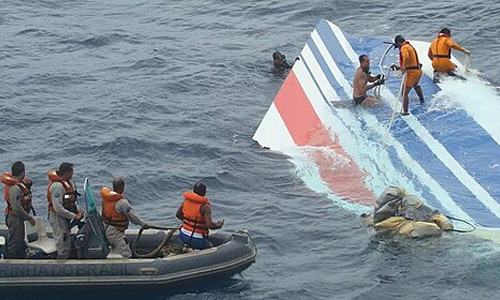
This tragic accident involved an Airbus A330 that disappeared over the Atlantic Ocean en route from Rio de Janeiro to Paris, claiming all 228 lives onboard. The black boxes, including the Cockpit Voice Recorder (CVR) and Flight Data Recorder (FDR), were recovered two years later from depths exceeding 10,000 feet.
What the Black Box Revealed
The CVR unveiled chilling cockpit conversations, revealing the pilots’ final moments and their desperate attempts to regain control. The FDR data, combined with the CVR, showed that the aircraft experienced temporary inconsistencies in airspeed measurements, likely due to ice crystals obstructing the pitot tubes, which caused the autopilot to disconnect. Crucially, the crew reacted incorrectly to the stall warnings, inadvertently causing the aircraft to enter an aerodynamic stall from which they failed to recover. The recordings captured the co-pilot’s realization, “I don’t have control of the aeroplane anymore now. I don’t have control of the aeroplane at all!” and later, “We’ve lost all control of the aeroplane, we don’t understand anything, we’ve tried everything”.
Impact
The findings from Flight 447 led to significant changes in aviation safety protocols, including new regulations for airspeed sensors and revised pilot training methods, particularly concerning stall recovery and handling unreliable airspeed indications.
Germanwings Flight 9525 (2015)
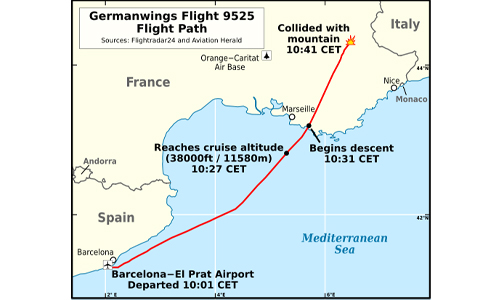
This Airbus A320 crashed in the French Alps, killing all 150 people onboard. The CVR was recovered shortly after the crash, followed by the FDR.
What the Black Box Revealed
The CVR initially indicated “normal breathing” from the co-pilot, Andreas Lubitz, after the captain left the cockpit, followed by the sound of the cockpit door being locked and repeated banging from outside. The FDR data confirmed that Lubitz deliberately set the autopilot to descend to 100 feet and repeatedly accelerated the aircraft’s descent speed, intentionally crashing the plane into the mountain. The investigation concluded that Lubitz, who had a history of suicidal tendencies and was declared unfit to work by his doctor (information he withheld from his employer), committed a murder-suicide.
Impact
This incident highlighted critical gaps in pilot mental health screening and led to discussions and changes in cockpit door security protocols and medical certification processes for pilots, particularly regarding self-reporting of medical fitness.
United Airlines Flight 232 (1989)
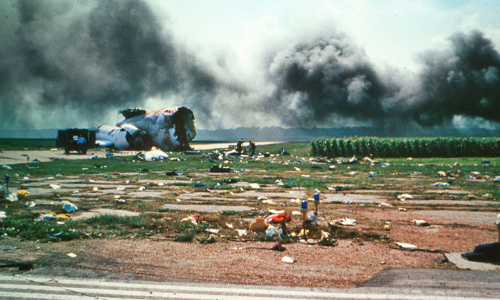
A DC-10 suffered a catastrophic uncontained engine failure in its tail-mounted engine, leading to the loss of all three independent hydraulic systems and rendering the flight controls inoperable. The crew, with the assistance of an off-duty check pilot onboard, managed to guide the aircraft to an emergency landing at Sioux City, Iowa, using only differential engine thrust. While 111 people died, 185 survived, largely due to the crew’s extraordinary efforts.
What the Black Box Revealed
The FDR provided precise data on the engine failure, the subsequent loss of hydraulic pressure, and the crew’s attempts to control the aircraft using thrust. It confirmed the sequence of events, showing how the fan disk disintegration severed all hydraulic lines in the tail section. The CVR captured the crew’s calm and coordinated efforts, including their communication with air traffic control and their innovative use of engine power to steer the crippled aircraft.
Impact
The investigation, heavily reliant on black box data, revealed a metallurgical defect in the engine’s fan disk that had gone undetected during manufacturing inspections. This led to significant changes in engine design, manufacturing processes, and inspection protocols for critical rotating components, emphasizing the importance of “containment” and “reliability” in engine design to prevent uncontained failures from damaging essential aircraft systems.
Japan Airlines Flight 123 (1985)
A Boeing 747 experienced an explosive decompression and structural failure 12 minutes after takeoff, resulting in the loss of its vertical stabilizer and all hydraulic systems. The pilots struggled for 32 minutes to control the aircraft before it crashed, killing 520 of the 524 people onboard.
What the Black Box Revealed
The CVR recorded a loud bang, vibration, and cabin decompression, along with the crew’s confusion and desperate attempts to control the aircraft, which had become “uncontrollable”. The FDR data confirmed the rapid depletion of all four hydraulic systems and the loss of the vertical fin, providing a detailed record of the aircraft’s erratic flight path as the crew tried to maneuver it using only engine thrust.
Impact
The investigation, heavily informed by the black box data, traced the root cause to an improperly executed repair by Boeing technicians seven years prior, following a tailstrike incident. This faulty repair led to undetected fatigue cracking that eventually caused the catastrophic failure of the aft pressure bulkhead. This accident led to major revisions in maintenance and repair procedures, particularly concerning structural repairs and fatigue crack detection, and underscored the critical importance of proper repair techniques and thorough inspections in maintaining aircraft airworthiness.
These cases exemplify how black boxes serve as invaluable forensic tools, transforming tragic incidents into profound learning opportunities that continuously enhance aviation safety worldwide.
People Also Ask (FAQs)
Why is the black box orange if it’s called black?
The term “black box” is slang. The actual box is painted orange for high visibility after a crash.
How long does a black box last in water?
It can emit pings underwater for up to 30 days and survive depths of up to 20,000 feet.
Can a black box be destroyed?
Yes, but it’s extremely rare. Black boxes are designed to survive intense heat, shock, and crushing pressure.
Do all planes have black boxes?
All commercial flights are required to have them. Private aircraft may or may not have black boxes, depending on size and regulations.
What happens if the black box is never found?
Without the black box, investigators rely on radar, ATC logs, eyewitness accounts, and wreckage analysis, but the investigation becomes significantly more challenging.
Who invented the black box flight recorder?
Dr. David Warren from Australia in 1953.
How many crashes has a black box solved?
There’s no official count, but the black box has played a role in solving thousands of aviation incidents and has helped improve flight safety globally.