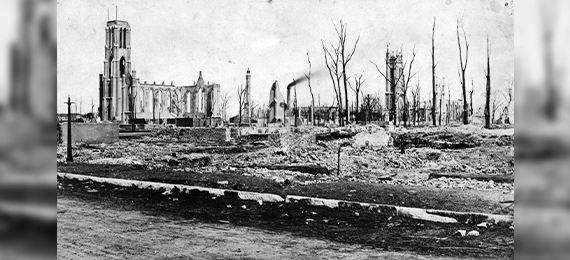
Wondering which buildings survived the Chicago Fire of 1871? Despite one of America’s most devastating urban disasters, a handful of remarkable structures escaped destruction. Here are five famous buildings that survived the Chicago Fire and the fascinating stories behind their survival.
Picture this: It’s the evening of October 8, 1871. A rogue spark hooks up with dry autumn winds, and suddenly, the city of Chicago is turned into a literal barbecue pit. By the time the smoke cleared two days later, the Great Chicago Fire had eaten over 2,000 acres, destroyed 17,500 structures, left 100,000 folks homeless, and claimed roughly 300 lives. Yet, amidst a wasteland of ash, a handful of defiant structures refused to burn. If you’ve ever wondered what buildings survived the chicago fire and how anything escaped a 2,000-degree inferno, you’re in the right place. Today, we’re unpacking the incredible tales of 5 famous buildings that survived the Chicago Fire, served with a side of historical irony.Let’s dive into the structures that looked a monstrous apocalypse in the eye and said, “Not today.”
1. The Chicago Water Tower & Pumping Station: The Ultimate Irony
How did the Chicago Fire start according to popular myth?
- A. A lightning strike on a saloon
- B. Mrs. O'Leary's cow kicking over a lantern
- C. A fireworks show gone horribly wrong
- D. A chemical mishap in a lab
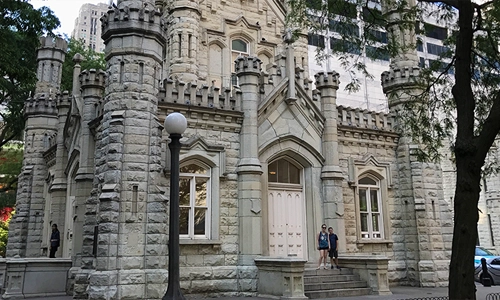
You cannot talk about buildings that survived the Chicago Fire without bowing down to the absolute king of survival. Built just two years prior in 1869 out of beautiful yellow Lemont limestone, this Gothic Revival icon looked like a tiny castle misplaced in the Midwest.
When the fire tore through the city, the Chief Fire Engineer actually thought the thick stone walls would make a perfect refuge. He was wrong. The fire was so intense it literally jumped the Chicago River, set the roof on fire, and melted the internal machinery. Yet, while the wooden interior burned, those magnificent limestone walls stood completely intact. It became a global symbol of Chicago’s unbreakable spirit. When people historically asked what buildings survived the great chicago fire, this was always the towering, definitive answer.
2. St. Michael’s Church: Saved by the Divine (and Double Brick)
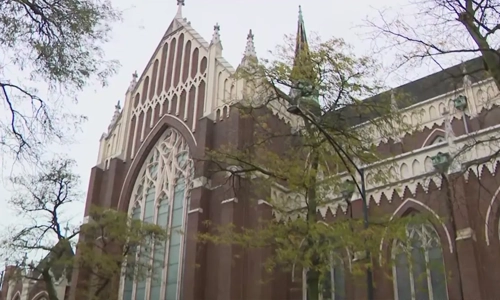
Located up in Old Town, St. Michael’s was one of the largest churches in the country at the time, serving a massive population of German immigrants. When the flames swept north, they ripped right through the building, melting the giant bronze church bells until they puddled on the floor.
So, how did it survive? The church was built with massive, heavy-duty double brick walls. While the wooden roof and glorious interior were totally gutted, the structural brick shell refused to crumble. The determined parishioners didn’t waste a single second; they immediately used the standing walls to rebuild. To this day, if you look closely at the exterior walls, you can see dark discoloration from the 1871 soot—a permanent tattoo of survival.
3. The Mahla Block / Frederick Mahla House: Chemical Shielding
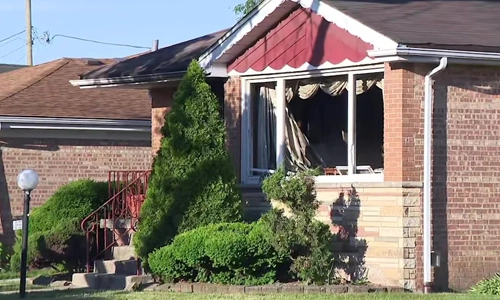
If you like your history with a touch of eccentric luck, meet the Mahla Block. Frederick Mahla was a wealthy chemist who built a sturdy, three-story brick building that functioned as his laboratory, pharmacy, and residence.
When the wall of fire approached, Mahla didn’t just pack a bag and run—he used science. He and his family hauled water from a nearby well and drenched the roof, window frames, and doors. Because builders had used premium, thick brick and avoided immediate wooden walls with neighbors, their frantic dampening worked. The fire swerved around his property, leaving the Mahla block standing like a solitary brick island in a sea of charcoal.
4. The Richard Bellinger Cottage: A Drenching of Epic Proportions
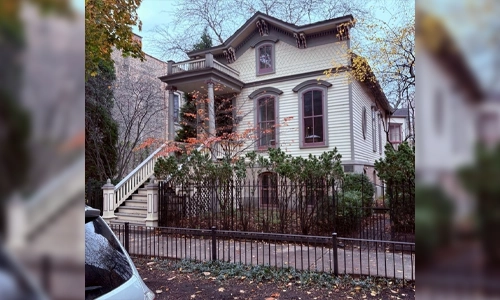
You’d think every single wooden building in Chicago was reduced to toothpicks, but policeman Richard Bellinger proved everyone wrong. His secret weapon? A well-insulated, classic wooden cottage designed with a wide, cleared yard, located on Lincoln Park West.
As the fire advanced, Bellinger ripped up his wooden sidewalk to prevent the fire from using it as a fuse. Then, he got to work wetting down his roof. When the neighborhood water supply suddenly failed, legend says Bellinger didn’t give up—he allegedly hauled out barrels of cider from his cellar and used it to drench the house. Whether it was the cider, the cleared yard, or pure, unadulterated luck, his wooden home miraculously survived while everything around it vaporized.
5. The Samuel S. Greeley House: The Lone Standing Frame
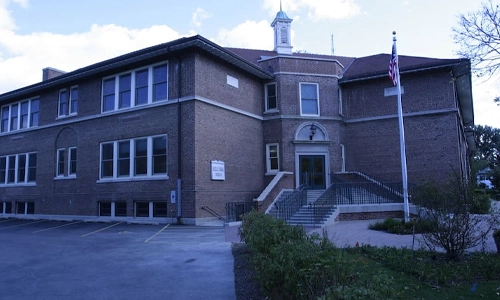
Samuel S. Greeley was a city surveyor, which means he knew a thing or two about space, layouts, and urban design. His frame house on Erie Street shouldn’t have made it through the night, but it had a hidden geographical armor: a massive, open gravel lot next door.
Because there were no adjacent wooden buildings to pass the flame along like a deadly game of hot potato, the fire couldn’t easily leap onto his property. Greeley’s house stood entirely alone in its district, looking highly awkward but deeply triumphant. It served as a vital stark reminder that sometimes, the best neighborhood feature is a total lack of neighbors.
The Great Chicago Fire destroyed much of the city, but these remarkable buildings proved that resilience sometimes comes down to smart construction, quick thinking, and a little luck. More than 150 years later, they continue to tell the story of one of America’s most famous disasters and the people who refused to let it define their city. If you love unusual history and survival stories, these buildings remain some of Chicago’s most fascinating landmarks.
FAQs About Buildings That Survived the Chicago Fire
What famous buildings survived the Chicago Fire?
The most famous survivors include the Chicago Water Tower, St. Michael’s Church, the Mahla Block, the Richard Bellinger Cottage, and the Samuel S. Greeley House.
Why did some buildings survive the Chicago Fire?
Builders constructed many surviving buildings with thick stone or brick walls, while others gained protection from strategic locations, open spaces, or active fire prevention efforts.
Is the Chicago Water Tower still standing today?
Yes. The Chicago Water Tower remains one of the city’s most recognizable landmarks and a symbol of resilience.
How many buildings were destroyed in the Great Chicago Fire?
Approximately 17,500 structures were destroyed during the fire of 1871.
What caused the Great Chicago Fire?
The exact cause remains uncertain, though the fire began on October 8, 1871, and spread rapidly because of dry conditions and strong winds.