
You’re driving down the highway when a gorgeous rainbow appears ahead of you. You speed up to get closer for that perfect Instagram shot. But no matter how fast you drive, the rainbow stays the same distance away. Why?
If you’ve ever chased a rainbow (and who hasn’t?), you’ve experienced one of nature’s most maddening optical illusions. But that’s just the beginning of how weird and wonderful rainbows really are.
Here’s a promise: By the end of this post, you’ll never look at rainbows the same way again. These aren’t your typical “rainbows are pretty” facts—these are the mind-bending secrets that even weather enthusiasts don’t know.
What is the shape of the rainbow?
- A. Circle
- B. Rectangle
- C. Semi-circle
- D. Cone
Quick challenge: Before reading further, think about the last rainbow you saw. Where were you standing? What time of day was it? Keep those details in mind—we’re about to reveal why that specific moment was more special than you realized.
Fact #1: You Can Never Actually Reach a Rainbow (And It’s Not What You Think)
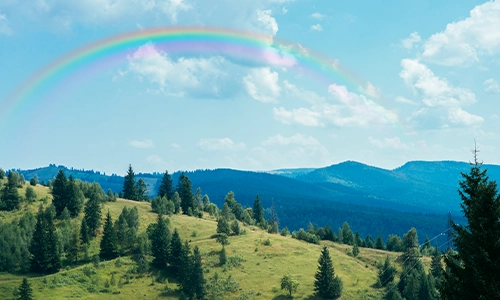
The Ultimate Mirage
Remember that rainbow chase we mentioned? You literally cannot get closer to a rainbow—and it’s not because it “moves away” from you. Here’s the mind-bending truth:
The rainbow doesn’t exist in a fixed location. It’s not “out there” in the sky like a cloud or a bird. A rainbow is a personal optical phenomenon that exists only in the specific angular relationship between you, the sun, and water droplets.
The 42-Degree Rule
Every rainbow you see appears at exactly 42 degrees from the “antisolar point”—the spot directly opposite the sun from your perspective. This means:
- Move 10 feet left? You see a completely different rainbow formed by different water droplets
- Your friend stands beside you? They’re seeing their own unique rainbow
- Drive toward it? The new rainbow keeps appearing 42 degrees from your new position
Think about this: The rainbow you’re admiring exists only for you, in that exact moment, from that exact spot. Move even slightly, and you’re seeing a brand new rainbow that has never existed before.
Why This Blew Ancient Minds
This “uncatchable” nature made rainbows deeply mystical to ancient cultures:
- Irish folklore said leprechauns hid gold at rainbow’s end because they knew no one could ever reach it
- Aboriginal Australians believed the Rainbow Serpent was a shape-shifting spirit that couldn’t be captured
- Greek myths described rainbows as a bridge that only gods could traverse
Modern twist: Even with GPS and helicopters, you still can’t “go to” a rainbow. Pilots flying through rainbow-producing rain clouds see… nothing. The rainbow only exists for observers on the ground.
Fact #2: Rainbows Have a Secret Twin You’ve Probably Never Noticed
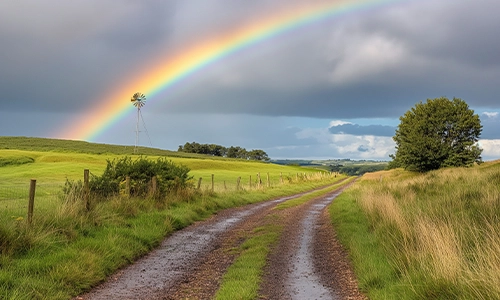
The Shadow Rainbow Mystery
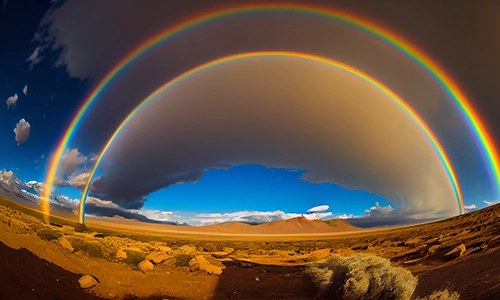
Look carefully during your next rainbow sighting: There’s often a much fainter, larger arc above the main rainbow. Most people dismiss it as “just a double rainbow,” but it’s actually something far more interesting.
This secondary rainbow isn’t just a copy—it’s a mirror universe version of the primary rainbow:
- Colors appear in reverse order (red on the inside, violet outside)
- It’s about 10 times fainter than the primary rainbow
- The gap between the two rainbows has a special name: Alexander’s Dark Band
The Physics Behind the Magic
Secondary rainbows form when sunlight bounces twice inside raindrops instead of once:
- Single bounce = Primary rainbow (bright, normal color order)
- Double bounce = Secondary rainbow (dim, reversed colors)
- The dark band between them = Where no light reaches your eyes
Here’s what’s wild: The area between the two rainbows (Alexander’s Dark Band) is actually darker than the surrounding sky. Most people never notice this, but once you know to look for it, you can’t unsee it.
Extremely Rare: Triple and Quadruple Rainbows
Triple rainbows require perfect conditions and are so rare that only a few have ever been photographed. They appear much fainter and on the same side of the sky as the sun (not opposite like normal rainbows).
Quadruple rainbows are theoretical but have been captured only a handful of times in human history. If you ever see one, buy a lottery ticket immediately.
Fact #3: There’s a Rainbow You Can Only See at Night (And It’s Hauntingly Beautiful)

Meet the Moonbow: Nature’s Ghost Rainbow
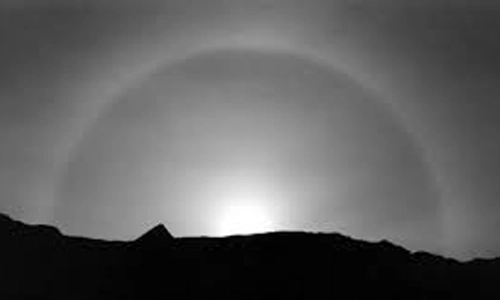
Moonbows (also called lunar rainbows) are exactly what they sound like—rainbows created by moonlight instead of sunlight. However, they’re so rare and ethereal that most people go their entire lives without seeing one.
Why Moonbows Are Ultra-Rare
Perfect conditions required:
- Full moon or nearly full (bright enough to create the effect)
- Moon must be low in sky (less than 42 degrees above horizon)
- Active rain or waterfall mist opposite the moon
- Extremely dark surroundings (no light pollution)
- Clear sky where the moon is shining
The result? A ghostly, silvery-white arc that appears almost supernatural. To human eyes, moonbows look nearly colorless because moonlight is roughly 400,000 times fainter than sunlight.
Where to Spot Moonbows
Famous moonbow locations:
- Victoria Falls (Zimbabwe/Zambia) – Most reliable moonbow spot on Earth
- Cumberland Falls, Kentucky – “Moonbow Capital of America”
- Yosemite Falls, California – During spring snowmelt
- Lower Antelope Canyon, Arizona – Rare but documented
Photography secret: Cameras can capture the colors in moonbows that the human eye cannot see. Long-exposure photos reveal beautiful, muted rainbow colors that are invisible to us in real-time.
Indigenous Legends
Many cultures have special significance for moonbows:
- Native Hawaiian tradition considers moonbows bridges for spirits to travel between worlds
- Some African cultures believe moonbows predict major life changes
- Medieval Europeans thought moonbows were omens of important visitors
Fact #4: Rainbows Can Appear in the Weirdest Places (Including Your Backyard)
Beyond Rain: The Rainbow Creation Kit
Forget waiting for storms. Rainbows appear anywhere you have:
- Light source (doesn’t have to be the sun)
- Water droplets in the air
- You positioned correctly (light behind you, droplets in front)
Everyday Rainbow Spots You’ve Never Noticed
- Garden sprinklers: Position yourself between the sprinkler and sun—instant rainbow. Best time: Late afternoon when the sun is lower.
- Waterfalls and fountains: Almost guaranteed rainbows on sunny days. Pro tip: The mist zone creates the most vivid colors.
- Car wash rainbows: The spray creates perfect conditions. You might be the only person who notices while everyone else focuses on soap suds.
- Bathroom shower: Stand in your shower on a sunny morning with the window open. Positioning: Back to the window, facing the spray.
- Even your breath: On extremely cold, sunny days, your breath can create tiny ice crystal rainbows called sun dogs.
The Artificial Rainbow Revolution
Modern rainbow creation:
- Holographic displays use rainbow physics for 3D projections
- Theme parks create permanent rainbow effects with precise water timing
- Photographers use spray bottles and backlighting for rainbow portraits
- Scientists study rainbow optics to improve fiber optic technology
Dewdrop Rainbows
Early morning secret: Spider webs covered in dew create thousands of tiny rainbows. Each dewdrop acts like a miniature prism. Best viewing: First hour after sunrise, low angle required.
Fact #5: Rainbows Can Predict the Weather Better Than Most Apps
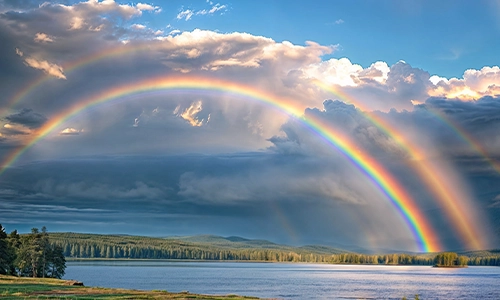
The Rainbow Weather Forecast System
Here’s something meteorologists rarely share: The presence, intensity, and behavior of rainbows can tell you exactly what weather is coming next. Our ancestors used these “rainbow signs” long before weather apps existed.
Reading Rainbow Weather Codes
Bright, Vivid Rainbow
- Meaning: The storm is moving away from you
- Forecast: Clear weather coming within 1-2 hours
- Science: Intense colors mean lots of sunlight breaking through, indicating the storm’s end
Faint, Pale Rainbow
- Meaning: Light rain continuing, more weather approaching
- Forecast: Intermittent showers for several more hours
- Science: Limited sunlight means thick cloud cover still dominates
Rainbow Duration
- Quick appearance (2-3 minutes): Brief shower, then clearing
- Long-lasting (15+ minutes): Complex weather system, expect variable conditions
The Morning vs. Evening Rainbow Rule
Morning Rainbows (rare but significant)
- Weather pattern: Rain is approaching from the west
- Forecast: Expect deteriorating weather all day
- Old sailor saying: “Rainbow at noon, rain soon”
Evening Rainbows (most common)
- Weather pattern: Storm systems moving east (away from you)
- Forecast: Clear weather tomorrow
- Traditional wisdom: “Rainbow at night, sailor’s delight”
Advanced Rainbow Meteorology
Double Rainbow Intensity
- Bright secondary rainbow: Very heavy rain in the storm system
- No secondary rainbow: Light to moderate precipitation
Rainbow Width
- Wide, broad rainbow: Large raindrops (heavy downpour ending)
- Narrow, sharp rainbow: Small droplets (light rain or mist)
Why This Works Better Than Apps
Rainbow Forecasting Advantages
- Real-time local conditions (not regional predictions)
- Immediate visual confirmation of current weather patterns
- No technology required (works during power outages)
- Hyperlocal accuracy (conditions within 1-2 miles of your location)
Traditional farmers and sailors used rainbow weather reading with 85-90% accuracy—often better than modern short-term forecasts.
Bonus: The Rainbow Challenge That Will Change Your Life
Now that you know these secrets, here’s your Rainbow Master Challenge:
Week 1: The Hunt
Find a rainbow using artificial means (sprinkler, hose, fountain). Time how long it takes and note what conditions work best.
Week 2: The Observation
During your next natural rainbow sighting:
- Check for the secondary rainbow and Alexander’s Dark Band
- Note the time and use it to predict tomorrow’s weather
- Try to spot it from a different location to see how it “moves”
Week 3: The Share
Amaze someone else with one of these facts during a rainbow moment. Watch their reaction when you explain why they can never reach it or point out the reversed colors in the secondary rainbow.
Advanced Level: Night Rainbow Hunt
Plan a moonbow expedition to Victoria Falls, Cumberland Falls, or your nearest large waterfall during the next full moon. Warning: This might become an obsession.
Frequently Asked Questions About Rainbows
Can rainbows appear at night?
Yes! Moonbows form during full moons with rain, but they appear almost colorless to human eyes due to low light levels.
Why do I see different rainbow colors than my friend standing next to me?
You’re each seeing light from different water droplets positioned at your unique 42-degree angle from the sun.
How long do rainbows typically last?
Most rainbows last 5-30 minutes, depending on how quickly the rain moves and sun angle changes.
Can you create a rainbow without rain?
Any water mist works—garden sprinklers, waterfalls, fountains, or even your shower on a sunny day.
Why are some rainbows brighter than others?
Brightness depends on droplet size and sun intensity. Larger raindrops and stronger sunlight create more vivid rainbows.
Is it true that rainbows are actually circles?
Yes! You normally see only the top half because the ground blocks the bottom. Airplane passengers sometimes see full circular rainbows.
Can animals see rainbows?
Many animals perceive different colors in the rainbow than humans. Birds and bees see ultraviolet colors we can’t, while dogs see fewer colors overall.
What’s the best time of day to see rainbows?
Late afternoon (4-6 PM), when the sun is low enough (below 42 degrees) but still bright enough to create vivid colors.
Do rainbows appear on other planets?
Potentially! Any planet with sunlight and water droplets in the atmosphere could produce rainbows, though they’d look different due to atmospheric composition.
Why can’t I ever reach the end of a rainbow?
Rainbows don’t have physical “ends”—they’re optical illusions that exist only from your specific viewing angle and constantly shift as you move.
The Reality Check: You’ll Never See Rainbows the Same Way
Before this post, rainbows were just pretty arcs in the sky. Now you know:
- Every rainbow is uniquely yours and impossible to reach
- Secret twin rainbows hide in plain sight with reversed colors
- Ghost rainbows appear by moonlight in ultra-rare conditions
- Backyard rainbows are everywhere once you know where to look
- Rainbow weather prediction beats most apps for immediate forecasting
The next time you spot a rainbow, you won’t just see a colorful arc. You’ll see a personal optical phenomenon that exists only for you, weather information about what’s coming next, and evidence of complex physics happening in real-time above your head.
Most importantly: You’ll know you’re witnessing something that has never existed before and will never exist again—your own unique rainbow moment.
What’s the most unusual place you’ve ever spotted a rainbow? Share your story in the comments—we love hearing about unexpected rainbow encounters!