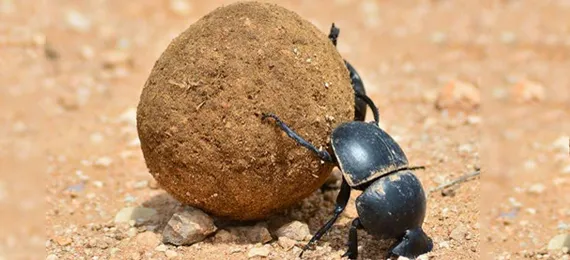
When people hear the word “dung beetle,” they usually picture a tiny insect pushing a ball of poop across the ground like it’s late for a meeting. But these insects are far more fascinating than their messy reputation suggests.
From shaping ecosystems to navigating by the stars, dung beetles are miniature environmental engineers with surprising superpowers. If you’ve ever wondered what dung beetles do with dung or why they’re so important to nature, you’re about to find out.
What Is a Dung Beetle?
What is the main diet of most dung beetles?
- A. Leaves
- B. Nectar
- C. Dung
- D. Seeds
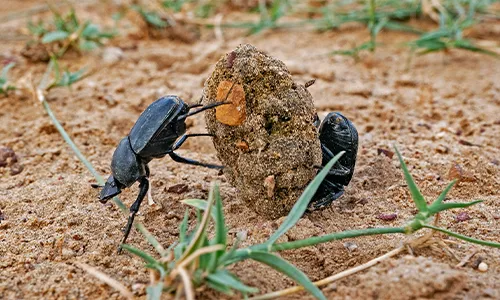
A dung beetle is an insect that feeds partly or entirely on animal dung. There are thousands of species worldwide, each adapted to different climates and habitats.
The scientific name of dung beetle varies by species, but most belong to the scarab beetle family. Their specialized mouthparts and strong legs make them perfectly suited for collecting, shaping, and burying dung.
Why Do Dung Beetles Roll Poop?
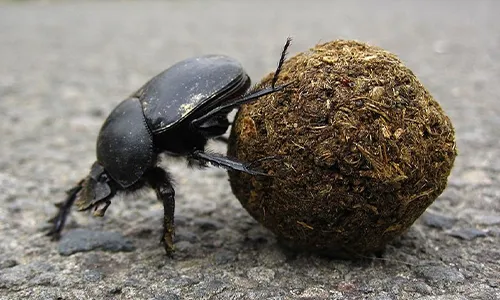
The famous rolling behavior isn’t random, it’s survival strategy.
Dung beetles roll dung into balls to:
- Store food for themselves
- Create a nursery for their eggs
- Reduce competition by moving dung away quickly
Rolling the ball also helps them claim ownership. Think of it as putting a “reserved” sign on dinner and a future nursery at the same time.
What Do Dung Beetles Eat?
If you’re wondering what does a dung beetle eat, the answer is simple but clever.
They primarily consume:
- Liquid nutrients from dung
- Microorganisms found inside it
- Partially digested plant matter
Different types of dung beetles have slightly different diets, but dung remains the main menu item.
What Do Dung Beetles Do With Dung?
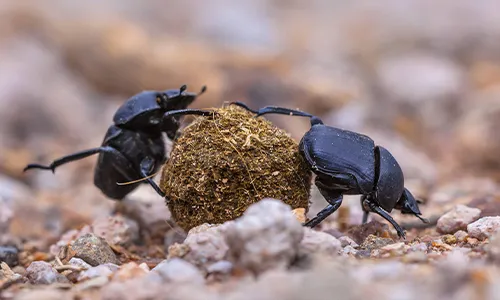
Not all dung beetles roll balls. Scientists group them into three main behavior types:
- Rollers – Shape dung into balls and move it away
- Tunnelers – Bury dung directly beneath the pile
- Dwellers – Live and breed inside the dung itself
Each method helps recycle nutrients back into the soil, improving fertility and reducing waste in ecosystems.
Why Are Dung Beetles Important to the Environment?
Despite their humble diet, dung beetles play a huge ecological role.
They help:
- Enrich soil with nutrients
- Reduce parasites and flies
- Improve pasture health
- Speed up decomposition
Without them, animal waste would pile up quickly, disrupting ecosystems and agriculture alike.
Are Dung Bug and Dung Beetle the Same?
Yes. “Dung bug” is simply a casual nickname for dung beetles. Both terms refer to the same group of insects, though “dung beetle” is the more accurate scientific description.
Life Cycle of a Dung Beetle
The life cycle of a dung beetle follows a classic insect pattern:
- Egg
- Larva
- Pupa
- Adult
Female beetles lay a dung beetle egg inside a dung ball or chamber. When the larva hatches, it feeds on the dung until it develops into an adult.
The lifespan of a dung beetle varies by species but typically ranges from a few months to a couple of years.
What Eats Dung Beetles?
Dung beetles may be tough, but they’re still part of the food chain.
Common dung beetle predators include:
- Birds
- Lizards
- Frogs
- Small mammals
If you’re wondering what animal eats dung beetles, the answer depends on the habitat, but many insect-eating animals rely on them as a protein snack.
Types of Dung Beetles Around the World
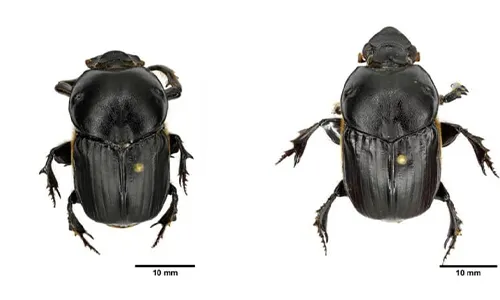
There are over 6,000 species of dung beetles globally. They vary in size, color, and behavior, from tiny soil dwellers to large, shiny species with horn-like structures.
Their diversity allows them to thrive in deserts, forests, grasslands, and even urban environments.
Surprising Superpowers of Dung Beetles
Here are a few facts that make dung beetles truly extraordinary:
- Some species navigate using the Milky Way
- They can roll dung balls many times their body weight
- Their work helps reduce greenhouse gas emissions from manure
- They compete in dramatic “ball-stealing” battles
Not bad for insects that spend their lives around poop.
FAQs About Dung Beetles
1. What is the scientific name of a dung beetle?
Dung beetles belong mainly to the subfamily Scarabaeinae, within the scarab beetle family.
2. Why do dung beetles roll poop?
They roll dung into balls to use as food or as a brood chamber where they lay eggs and protect larvae.
3. Are dung bugs and dung beetles the same?
Yes. “Dung bug” is simply a casual name for dung beetles.
4. What do dung beetles eat?
Most species feed on animal dung, though some also consume fungi, decaying plant matter, or fruit.
5. Do identical species share the same behavior?
Not always. Some roll dung, some tunnel beneath it, and others live directly inside the dung pile.
6. What animals eat dung beetles?
Birds, reptiles, frogs, and small mammals are common predators.
7. How long does a dung beetle live?
Depending on species, their lifespan ranges from a few months to about a year.
8. What do dung beetles do with dung besides eating it?
They recycle nutrients back into the soil, improving fertility and reducing parasites in ecosystems.
Dung beetles prove that even the smallest creatures can have a massive impact on the planet. Their recycling skills keep ecosystems clean, fertile, and balanced. The next time you spot one rolling its tiny treasure, you’ll know you’re watching one of nature’s most efficient cleanup crews in action.