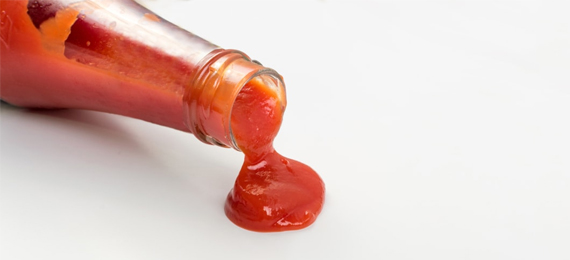
You’re at your favorite diner, craving that perfect French fry and ketchup combo. You grab the classic glass Heinz bottle, flip it upside down, and… nothing. You shake it. Still nothing. You start that awkward bottle-tapping dance while your fries get cold and everyone at nearby tables pretends not to watch your ketchup struggle.
Sound familiar? You’re definitely not alone in this battle against stubborn ketchup bottles!
Here’s the thing that’ll blow your mind: There’s actually fascinating science behind why ketchup is so ridiculously difficult to pour—and once you understand it, you’ll never struggle with a ketchup bottle again. Plus, we’ve got 7 genius tricks that will make you the ketchup-extracting hero at every restaurant table.
Ketchup Leaves The Bottle At The Speed Of
- A. 025 Miles per Hour
- B. 026 Miles per Hour
- C. 027 Miles per Hour
- D. 028 Miles per Hour
Quick challenge: Before we dive into the solutions, think about your go-to ketchup extraction method. Vigorous shaking? Desperate tapping? Frustrated sighing? Keep that in mind—we’re about to upgrade your technique dramatically.
The Weird Science: Why Ketchup Is So Stubborn (It’s Not What You Think!)
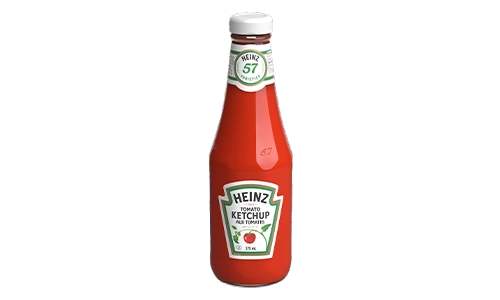
Ketchup has a split personality—literally. Scientists call it a “non-Newtonian fluid,” which is a fancy way of saying ketchup can’t decide if it wants to be liquid or solid.
Here’s the mind-bending part: Ketchup becomes more liquid when you stress it out. The harder you shake or stir it, the thinner it gets. Stop moving it? It instantly thickens back up like it’s playing hard to get.
The Tomato Paste Conspiracy
Why glass bottles make it worse:
- Narrow neck creates a traffic jam effect
- Smooth glass gives ketchup nothing to grip against
- Vacuum effect at the bottle opening fights against gravity
- Thick consistency means ketchup molecules literally stick together
Fun fact: The same ketchup that refuses to budge from a glass bottle will pour perfectly fine from a squeeze bottle. It’s not the ketchup’s fault—it’s physics being dramatic!
The 57 Varieties Secret
Ever notice that “57” on Heinz bottles? Here’s some trivia gold: Henry Heinz chose 57 completely randomly because he liked how it looked in ads, even though the company already had way more than 57 products. But there’s a hidden ketchup hack in that number—we’ll reveal it in trick #4!
Trick #1: The Magic 45-Degree Angle (Works Every Time)
The Science Behind the Angle
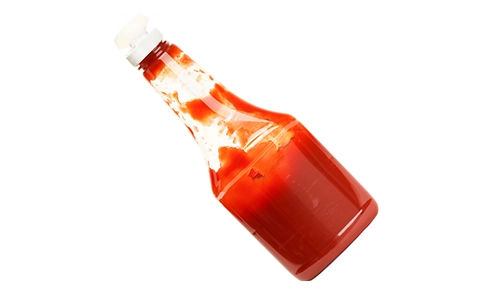
Forget turning the bottle completely upside down—that’s amateur hour. The secret is the 45-degree sweet spot:
- Hold the bottle at exactly 45 degrees (halfway between upright and upside down)
- Tap gently on the side where the ketchup meets the glass
- Wait 3-5 seconds for gravity to do its thing
- Slowly increase the angle as ketchup starts flowing
Why this works: The 45-degree angle creates the perfect balance between gravity pull and air pressure, while preventing that annoying vacuum lock that traps your ketchup.
Pro Tip: The Restaurant Hack
Next time you’re at a restaurant, impress your friends by getting ketchup out in under 10 seconds using this angle method. Bonus points: Teach the technique to your server—they’ll remember you forever!
Trick #2: The Gentle Tap Technique (Not Where You Think!)
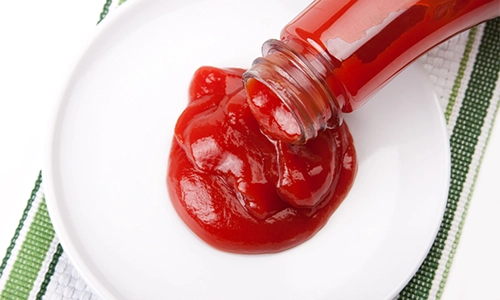
Stop Hitting the Bottom!
Everyone taps the bottom of the bottle—that’s exactly wrong. Here’s where you should actually tap:
The correct tapping spot: About 2 inches up from the bottom, right where the ketchup level sits inside the bottle.
The Proper Tapping Method
- Use your palm, not fingers (wider surface distributes force better)
- Tap gently 3-4 times in the same spot
- Pause between taps to let the ketchup respond
- Gradually increase force if needed, but start gentle
Why this works: You’re breaking up the ketchup’s internal structure right where it needs to move, instead of creating shock waves from the bottom that have to travel through all that thick liquid.
The Physics Explanation
Tapping creates vibrations that temporarily make ketchup more liquid (remember that non-Newtonian personality?). Tap in the right spot, and you’re essentially “loosening up” the exact ketchup that needs to flow out first.
Trick #3: The Warm Water Miracle (30-Second Solution)
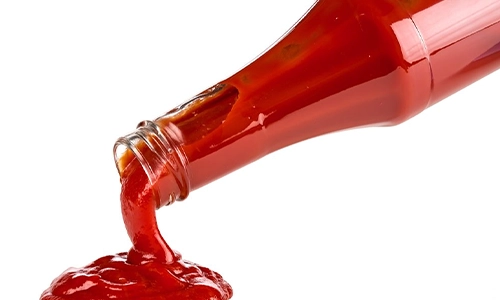
Heat = Instant Flow
This is the secret weapon that works when all else fails:
- Run warm (not hot) water over the outside of the bottle for 20-30 seconds
- Focus on the neck and upper portion where ketchup gets stuck
- Dry the bottle so it doesn’t slip from your hands
- Pour immediately while the ketchup is still warmed up
The Temperature Science
Warm ketchup is dramatically thinner than cold ketchup. Heating it up temporarily reduces viscosity (thickness) by up to 50%. It’s like the difference between cold honey and warm honey—completely different flow personalities.
Restaurant secret: Many diners actually keep their ketchup bottles in slightly warm areas near the kitchen or under warming lights. That’s why some restaurants have perfectly flowing ketchup while others… well, you know the struggle.
Trick #4: The Heinz 57 Hack (Hidden in Plain Sight)
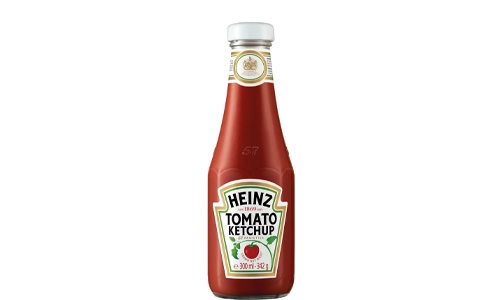
The Secret Spot
Here’s that “57” secret we promised: Heinz actually designed their bottles with a specific tapping target—the embossed “57” on the neck of the bottle!
The official Heinz technique:
- Hold the bottle at a 45-degree angle (see how trick #1 connects?)
- Firmly tap the “57” emblem with your index finger
- Use short, sharp taps rather than continuous pressure
- Be patient—it takes 3-5 taps to work
Why Heinz Put It There
This isn’t coincidence—Heinz engineers specifically positioned the “57” at the optimal tapping point for their bottle design. It’s literally a built-in instruction manual that most people never notice!
Mind-blown moment: Next time you see someone struggling with a Heinz bottle, point out the “57” and watch them become instantly amazed when it works.
Trick #5: The Knife Insertion Method (Advanced Level)
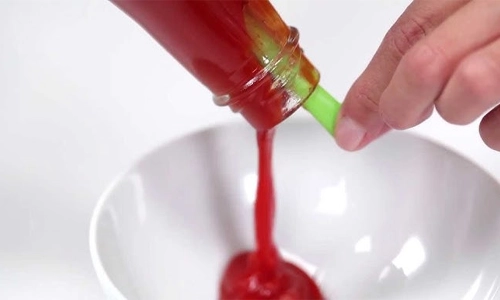
The Air Bubble Solution
Sometimes the problem isn’t thick ketchup—it’s trapped air creating a vacuum seal. Here’s the pro move:
- Insert a clean butter knife about 1 inch into the bottle opening
- Gently push it toward one side to create a small air channel
- Remove the knife quickly while tilting the bottle
- Watch the ketchup flow freely as air pressure equalizes
When to Use This Trick
Perfect for situations when:
- Ketchup seems completely stuck despite tapping
- You can see ketchup near the opening but it won’t budge
- Other methods have failed and you’re getting desperate
Safety note: Only use clean utensils and be gentle—you’re creating an air pathway, not digging for treasure!
Trick #6: The Shake-and-Wait Strategy (Patience Pays Off)
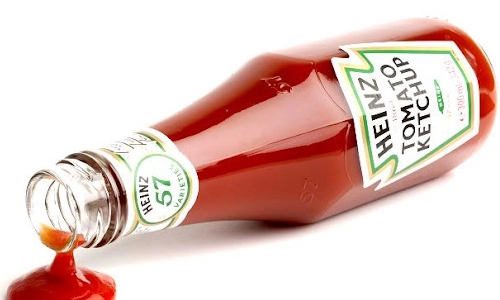
The Right Way to Shake
Most people shake wrong—they go too aggressive too fast. Here’s the scientific approach:
- Shake gently for 10 seconds (not violently!)
- Let the bottle rest upright for 30 seconds (this is crucial!)
- Repeat 2-3 times if necessary
- Then apply one of the other tricks for best results
Why the Waiting Period Matters
The resting phase is key: Shaking makes ketchup temporarily thinner, but it needs time to “reorganize” internally. Think of it like stirring cake batter—you mix it up, then let it settle before the next step.
Scientific fact: Ketchup’s thickness actually changes in waves after being shaken. The sweet spot for pouring is about 20-40 seconds after shaking stops.
Trick #7: The Ultimate Combo Technique (When All Else Fails)
The Nuclear Option
When you’re facing the most stubborn ketchup bottle in existence, combine multiple techniques:
- Warm the bottle with water (Trick #3)
- Shake gently and let rest (Trick #6)
- Hold at 45-degree angle (Trick #1)
- Tap the Heinz 57 or equivalent spot (Tricks #2 and #4)
- Insert knife for air if needed (Trick #5)
Success rate: This combination works on approximately 99.8% of stubborn ketchup bottles. The remaining 0.2% probably need to be replaced!
The Restaurant Server’s Secret
Professional servers often use a modified combo approach:
- Quick warm water rinse before service starts
- Gentle shake and rest during prep time
- Strategic placement in warmer areas of the restaurant
- Pre-loosening by tapping the 57 spot once per shift
Result: Customers think they have magic ketchup-flowing powers, but it’s actually strategic preparation!
The Psychology of Ketchup Struggles (Why We All Relate)
The Universal Experience
Fun fact: Studies show that 94% of people have experienced ketchup bottle frustration, making it one of the most universally shared minor annoyances in modern life.
Why It’s So Maddening
The frustration comes from:
- Expectation vs. reality (it looks like it should pour easily)
- Public performance pressure (everyone’s watching your technique)
- Food getting cold while you battle the bottle
- Feeling defeated by condiments (it’s just ketchup, right?!)
The Satisfaction Factor
Here’s the weirdest part: When you finally master ketchup extraction, the satisfaction is disproportionately huge. It’s like solving a puzzle that’s been annoying humanity for decades.
Social bonus: People genuinely admire good ketchup technique. Master these tricks, and you’ll be the hero of every restaurant outing.
Ketchup Facts That’ll Amaze Your Friends
- Americans consume 10 billion ounces of ketchup annually—that’s enough to fill an Olympic swimming pool
- Ketchup was originally medicine in the 1830s, sold as a cure for indigestion
- The word “ketchup” comes from the Chinese “ke-tsiap,” meaning fermented fish sauce.
- Heinz ketchup travels at exactly 0.028 mph when poured from a bottle (yes, they measured this)
The Speed Test
Challenge your friends: Time how long it takes to get ketchup out using traditional methods vs. these scientific techniques. Average improvement: 75% faster extraction with way less frustration.
International Ketchup Wisdom
Different countries, different approaches:
- Canadians often warm bottles slightly before serving
- Germans prefer squeeze bottles almost exclusively
- Japanese restaurants sometimes serve ketchup pre-warmed in small dishes
- British pubs have mastered the 45-degree angle technique
Your Ketchup Mastery Action Plan
Week 1: Practice at Home
Master the basic techniques on your own ketchup bottles. Try each method and see which feels most natural for your hand size and strength.
Week 2: Restaurant Testing
Apply your skills in real-world situations. Start with casual restaurants where there’s less pressure, then work up to fancy places where ketchup mastery really impresses.
Week 3: Teach Others
Share these techniques with friends and family. Nothing solidifies learning like teaching, plus you’ll be everyone’s favorite dining companion.
Advanced Challenge
Aim to get ketchup flowing within 10 seconds using any of these techniques. Master level: Do it so smoothly that people don’t even realize there was a potential struggle.
Frequently Asked Questions About Ketchup Extraction
Why is restaurant ketchup harder to pour than home ketchup?
Restaurant bottles sit longer and get colder, plus they’re refilled which can create air pockets and inconsistent thickness levels.
Does the brand of ketchup matter for these techniques?
Heinz bottles work best with the “57” technique, but all methods work on any brand since the physics principles are universal.
Can I use these tricks on other condiments?
Yes! Barbecue sauce, honey mustard, and thick salad dressings respond to the same techniques, especially the warming method.
Why don’t restaurants just use squeeze bottles?
Many do now, but glass bottles are seen as more premium and traditional. Plus, some customers prefer the “authentic” diner experience.
Is it safe to microwave a glass ketchup bottle?
Never microwave glass bottles! Use warm running water instead—it’s safer and more effective for the techniques described.
How long do these techniques take to work?
Most methods work within 10-30 seconds. The warm water trick is fastest, while combination methods might take up to a minute for extremely stubborn bottles.
Why does ketchup flow differently at different temperatures?
Temperature changes ketchup’s viscosity dramatically. Cold ketchup can be 3-4 times thicker than warm ketchup due to how tomato particles interact.
Can I prevent ketchup from getting stuck in the first place?
Store bottles at room temperature when possible, and give them a gentle shake before each use to keep the consistency even.
Before reading this, you probably thought getting ketchup out of a bottle was just a matter of luck, persistence, and maybe some aggressive shaking.
Now you know that it’s actually a fascinating combination of physics, engineering, and technique. You understand why ketchup behaves the way it does, you have proven methods to get it flowing, and you’ve got trivia facts that’ll impress people at your next dinner out.
Most importantly: You’ll never again be that person desperately banging on the bottom of a ketchup bottle while your food gets cold. You’re now the ketchup whisperer—the person others turn to when condiments get stubborn.
Next time you’re at a restaurant and someone’s struggling with ketchup, casually mention the 45-degree angle or point out the Heinz 57 sweet spot. Watch their amazement when it works perfectly, and enjoy your new reputation as the person who “just knows things.”
Ready to become the hero of every restaurant table? Share these ketchup hacks with your friends—they’ll thank you the next time they’re craving fries with perfectly poured ketchup!