“Most of the animals produce sounds that they are born with”
Animals do communicate with one another without human knowledge. We often ask ourselves, Do animals speak regional languages? Or why can’t animals speak human languages?
But ’communication’ and ‘language’ are two different terms. Animals can communicate through sound, smell, and body language. Language is a unique way to communicate which animals can’t use. In one article, the Washington Post states that “research suggests that the overwhelming majority of animals are born knowing how to speak their species’ “language”. It doesn’t matter where those animals are born or raised because their speech seems to be mostly imprinted in their genetic code”.
1. Which of the Following Is a Form of Animal Communication?
- A. Sound
- B. Smell
- C. Body language
- D. All the above
Animal Languages
“Animals’ voice box can produce various sounds
A few can mimic the sounds of human speech.”
We think an animal can have different kinds of noises for communication, which is not completely true; it is much more complicated than that. Animals from diverse areas speak in different regional dialects. Scientists discovered that amphibians, birds, whales, dolphins can speak in various regional languages.
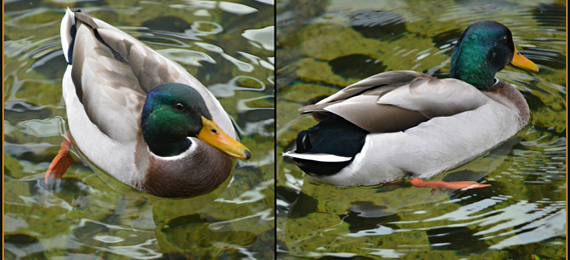
There is evidence that suggests that animal species communicate with regional dialects and accents. In a BBC article, it is mentioned that Cockney ducks use rougher sounds that closely resemble shouting to communicate with their fellow London ducks. Sperm Whales communicate through clicks called codas and are known to have accents.
As humans, we learn to speak through parents and others around who help us to improve language and communication skills whereas animals have the inherent ability to communicate amongst themselves. It is called the genetic code. If animals are living in a group, they learn to communicate with regional accents and regional languages over time.
Hence the answer to our question is ‘no’. Animals can’t speak in regional languages. But they do communicate with dialects or sounds depending on where they belong. The noises that animals make vary from one country to another. Some birds use regional accents to interact with each other.
FAQs on Animal Languages
Do animals have language like humans do?
Animals communicate, but they don’t have grammar-based languages like humans. Instead, they use signals, sounds, gestures, scents, and body language to share information.
Which animals are believed to have the most complex communication systems?
Whales, dolphins, elephants, and some primates like chimpanzees are known for having highly sophisticated ways of communicating.
Can animals develop regional “dialects” or accents?
Yes. Birds, whales, and even some monkey groups show regional differences in their calls — similar to human dialects.
How is animal communication different from human language?
Human language uses syntax and symbols to create unlimited meanings. Most animal communication is limited to specific signals for food, danger, or mating.
Do animals ever learn human words?
Certain species — parrots, crows, dolphins, and apes — can mimic human sounds or use symbols, but that’s not the same as having true language.
Is there evidence that animals name each other?
Research on dolphins and some parrot species suggests they use unique calls (“signature whistles”) to identify individuals, much like names.
Can my pet understand what I’m saying?
Pets like dogs and cats can recognize tones, cues, and some words. They don’t “speak” our language, but they do associate words and actions.
Which animal has the loudest or farthest-reaching call?
Blue whales hold the record for low-frequency calls that can travel hundreds of miles under water.
Are there animals that communicate through smells or chemicals?
Absolutely. Ants, bees, and many mammals use pheromones or scent markings to share information.
What does “animal language research” mean?
It’s a scientific field studying how animals communicate, whether they have syntax, symbols, or learning abilities similar to human language.
According to one BuzzFeed research, Pigs make “oink” sound in English whereas in Germany they say “grunz”. The dogs in U.K say “woof and in Dutch it is ‘blaf’. In Swedish mice sounds is “pip-pip” and in Italian, they say “squitt”.