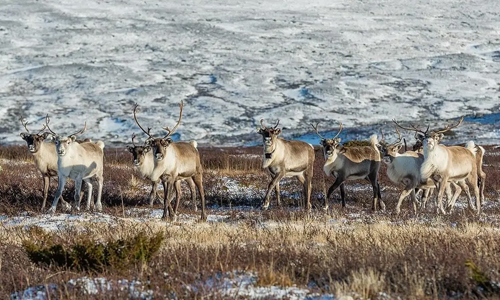
Reindeer or caribou is a species of deer that is native to the Arctic, subarctic regions, and mountainous terrains of northern Europe, Siberia, and North America. Male reindeer grow to 28 to 53 inches (2.14 meters) and can weigh up to 700 lbs. They are also used to pull sleighs in the Arctic regions for their muscular power.
Where Do Reindeer Live?
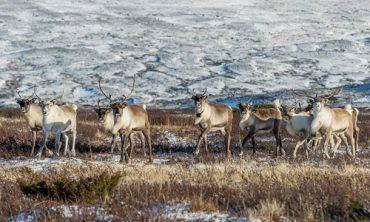
Reindeers are also found in Greenland, Scandinavia, Russia, Alaska, and Canada, other than the usual regions.
The shoulder height of a male reindeer is about ________?
- A. 2.9 feet
- B. 3.5 feet
- C. 3.9 feet
- D. 4.9 feet
They are highly migratory animals that travel long distances each year, sometimes up to 3,000 miles, between their summer and winter grounds. They were introduced by humans in the 18th century and are mostly found in northern Scandinavia, Russia, and Iceland.
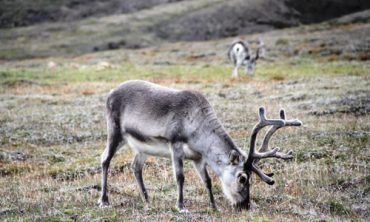
Reindeer mostly rely on mosses, ferns, herbs, shoots, grasses, leaves, and trees, especially willow and birch.
In summer, it eats grasses, leaves, sedges, and new growth of willow, birch, and larch. Mushrooms are also eaten by them during late summer.
During the winter, it eats carbohydrate-rich lichens (also called reindeer moss) or fungi, by scraping the snow away with their hooves. According to the FDA, an average adult reindeer eats 9 to 18 pounds of vegetation a day. Also, when nutritionally starved, they may eat small rodents, fish, and bird eggs.
Reindeer Vs Deer
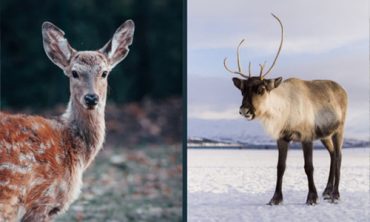
| Differences | Reindeer | Deer |
| Species | 5th biggest species of deer, there are 10 species in total | About 43 species in total |
| Habitat | Colder climates | Usually live in moderate regions like meadows and woodlands |
| Fur | Dense fur | Thinner than the reindeer fur |
| Location | Arctic and sub-arctic regions | They are found in almost all the continents except Australia and Antarctica |
| Diet | Feeds on mosses, ferns, herbs, shoots, leaves and trees. | Specialized herbivores that rely on leafy parts of woody plants, hard and soft seeds, grass, mushrooms, and lichens. |
| Antlers | Largest and heaviest antlers | Bony and lighter |
| Predators | The golden eagle is the biggest predator. Other predators are gray wolves, arctic foxes, mountain lions, coyotes, lynx, and dholes | Humans, Bobcats, wolves, and coyotes. However, the count of these carnivores has significantly decreased. |
| Nose | Only species with hairy nose | They have whiskers |
| Size | Reindeer can weigh more than 600 pounds. | Comparatively small |
So, now that you know the basic features of reindeer, it is time to explore some unique facts that might leave you in awe.
Some Interesting Facts About Reindeer
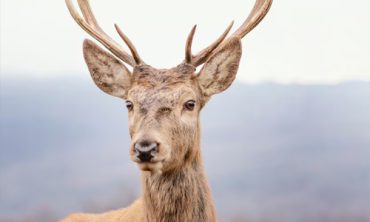
- Isn’t it interesting that both male and female reindeer species can grow antlers?
- Reindeers are species that live up to 15 years in the native regions, Whereas when it is domesticated, it can live up to 20 years or even more!
- Its main diet includes a carbohydrate-rich plant known as lichen. Did you know that the plant has also been renamed reindeer lichen?
- They are the only species to have hair completely covering them, making it easier to withstand the climate.
- Reindeer mostly roam around in groups and rest together throughout the day in herds of 10 to a few more.
- In all other states, the species is called “reindeer.” In North America, it is called caribou.
- One of the most interesting facts is that their nose is specially designed to warm the air before it gets into the lungs.
- The North Indian Caribou can migrate 3000 miles a year, which is more than any other land animal.
- Wonder where the word “reindeer” comes from? It is of Norse origin (the old Norse word “Hreinn” for deer) and “caribou” comes from the Miꞌkmaq word, “qalipu,” meaning “snow shoveler.”
- Reindeer milk contains many nutritional values like 22% fat and 10.3% protein. Cow milk contains 3.4% to 5% fat.
- Have you seen “Rudolph, the Red-Nosed Reindeer?” Its nose looks red. Yes, reindeer have extra blood vessels in their noses and covered fur to warm the cold Arctic air inhaled into their lungs.
- The northernmost ones are much lighter in color than the southern ones.
- Do female reindeer have antlers? Yes, a male’s antlers can be up to 51 inches long, and a female’s antlers can grow up to 20 inches.
- Warble fly can cause parasitic infection in reindeer. The antiparasitic drug, Ivermectin, which is FDA-approved, is used to control warble. According to an article in ScienceDirect, “Warble flies belong to the Oestridae, obligatory parasites whose larvae migrate through the host tissue and live as subcutaneous parasites.
- The baby reindeer are spotless when they are born.
- Do you know that these small creatures can run like an Olympic sprinter 90 minutes after they are born? They run at a speed of up to 50 mph or even more a day during migration.
- Reindeer share their terminology with cattle. The male is called a “bull,” the female is known as a “cow,” and the baby is called a “calf.”
- It makes a clicking sound while walking. This is useful when they are struck in danger to inform their fellow herd.
- They usually spend 40% of their life in the snow. So they have a special hollow fur that helps to trap heat and survive the cold climatic conditions. They can also adapt to both spring and snow.
- Their body is made up of two layers of hollow hair. They are also excellent swimmers too as they migrate in this manner.
- Their eye’s tapetum (the part behind the iris) changes color in the summer and winter from golden to blue.
- Reindeers may not fly, but they are fast as they can run up to 50 mph or more per hour.
- Santa’s reindeer was first mentioned in 1821 when William Gilley, published a 16-page booklet. It was named “A New Year’s Present to the Little Ones from Five to Twelve.”
I hope this blog helps you know the facts about reindeer and their characteristics. All of us must take measures to protect these species. Now, refresh your memory on the fun facts about reindeer by answering the Quiz on this page!