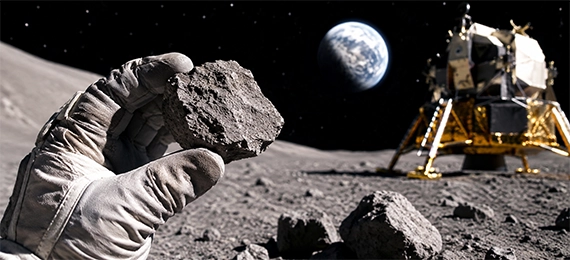
Yes, NASA is officially paying private companies to collect moon rocks, and they recently awarded a contract to a robotics startup for a total of exactly $1.
You read that right. While most of us are trying to figure out how to pay for groceries, the U.S. government is casually throwing down pocket change to acquire off-world real estate. But before you grab a bucket and start looking for a rocket to hitch a ride on, there is a massive catch.
The story behind this dollar-menu space deal involves international treaties, FBI sting operations, and a highly lucrative black market for lunar dust. Let’s dive into the fascinating, borderline-absurd world of space ownership.
The Moon's Surface Is Actually Dark.
- A. True
- B. False
Why Is NASA Buying Moon Rocks for One Dollar?
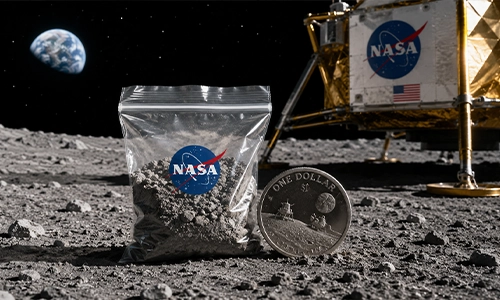
In 2020, NASA announced it would award contracts to private companies to scoop up small amounts of lunar regolith (moon dirt) and transfer ownership of the material to the space agency. Four companies won these bids. While one company asked for $15,000, a Colorado-based startup named Lunar Outpost bid an unbeatable $1.
So, why go through the trouble of drafting a federal contract for less than the price of a vending machine soda?
It’s all about setting a legal precedent. By officially paying a private business to extract resources from the Moon, NASA is establishing a framework for future commercial space mining. The 1967 Outer Space Treaty states that no nation can claim sovereignty over the Moon. However, the treaty is a bit fuzzy on whether private companies can mine it. By buying these rocks, NASA is drawing a line in the lunar sand: you can’t own the Moon, but you can own the dirt you dig out of it.
Is It Legal to Own, Buy, or Sell Moon Rocks?
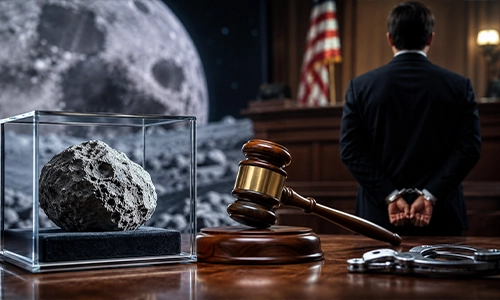
If you see someone selling an “authentic Apollo moon rock” on eBay, run the other way.
Under U.S. law, any lunar material brought back by astronauts during the Apollo missions is strictly federal property. It is absolutely, unequivocally illegal for a private citizen to buy, sell, or own an Apollo moon rock. The penalties are severe, falling under federal statutes for theft of government property.
If you get caught holding Apollo space dust, you aren’t just getting a slap on the wrist; you are risking serious prison time and massive fines. Even the astronauts who risked their lives to go to the Moon aren’t allowed to keep the rocks they chipped off the surface.
How Do People Legally Buy Moon Rocks Then?

Despite the strict rules, there is one completely legal loophole to owning a piece of the Moon: lunar meteorites.
Here is how the loophole works:
- Wait for an asteroid to hit the Moon: Millions of years ago, massive impacts blasted chunks of the lunar surface into space.
- Let gravity do the work: Those ejected chunks drifted through the solar system until they got caught in Earth’s gravitational pull.
- Find them in the desert: They eventually plummeted to Earth as meteorites, mostly landing in desolate areas like the Sahara Desert or Antarctica.
Because these rocks were delivered naturally by the cosmos rather than by government-funded astronauts, they are subject to “finders keepers” rules. You can legally buy, sell, and trade lunar meteorites, and they often fetch a pretty penny at specialized auctions.
What Happened to the Missing Apollo Moon Rocks?
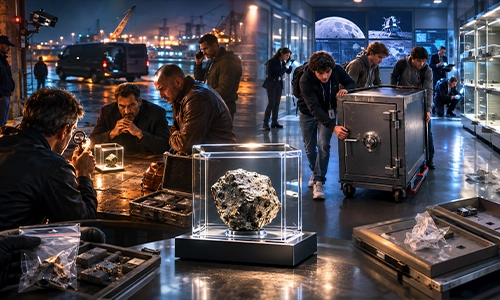
During the Nixon administration, the U.S. gifted hundreds of small “Goodwill Moon Rocks” to the 50 states and various foreign nations. Unfortunately, a distressing number of them have vanished into the black market.
The hunt for these missing rocks has resulted in some of the wildest true-crime stories in history:
- The Honduras Sting Operation: A moon rock gifted to Honduras was stolen and offered on the black market for $5 million. NASA set up a massive undercover sting operation (funded by billionaire Ross Perot) to buy it back and arrest the smugglers.
- The Intern Heist of 2002: In an audacious plot, NASA interns stole a 600-pound safe from the Johnson Space Center containing Apollo moon rocks and a Martian meteorite. They tried to sell the loot on a Belgian mineralogy forum, which immediately tipped off the FBI.
Can Astronauts Keep Anything from Space?

Yes, but not rocks. In 2012, Congress passed a law allowing Mercury, Gemini, and Apollo astronauts to keep full legal ownership of the personal artifacts they used during their missions. They can keep their checklists, personal logs, and even tools. But the law explicitly excludes lunar material.
Frequently Asked Questions
Can you legally buy a moon rock online?
Only if it is a lunar meteorite that fell to Earth naturally. Selling or buying authentic Apollo samples is illegal.
How much is an authentic Apollo moon rock worth?
NASA considers them priceless. However, federal sting operations have valued black-market fragments at $1 million to $5 million per gram.
What happens if you get caught with a stolen moon rock?
The NASA Office of Inspector General will seize the rock immediately without compensation, and you can face federal theft or smuggling charges.
Why doesn’t NASA require companies to fly the $1 moon rocks back to Earth?
NASA already has plenty of samples. The $1 deal is purely to establish the legal precedent for transfer of ownership on the lunar surface.
How do scientists prove a rock actually came from the Moon?
Geologists analyze its unique chemical composition and oxygen isotope ratios, comparing them directly to verified Apollo-era baseline samples.
The next time you gaze up at the night sky, remember that the gray sphere glowing above us isn’t just a romantic celestial body—it’s a heavily regulated, legally complex zone of future commerce. Whether NASA is cutting $1 checks to robotics startups or the FBI is running undercover stings to recover stolen Apollo samples, the obsession with moon rocks is very real. If you want your own piece of lunar history, skip the black market and look for a certified meteorite dealer instead!