
Dreams are still one of the most fascinating mysteries of the human brain. From lucid dreaming and sleep paralysis to forgotten memories and animal dreams, these weird facts about dreams reveal surprising truths backed by psychology and sleep science.
Ever find yourself running from a giant marshmallow in a tuxedo, only to wake up sweating? You are not alone. Dreams are our brains’ way of throwing a bizarre, late-night afterparty where logic is completely uninvited. Scientists, psychologists, and mystics have spent centuries trying to figure out how dreams work and what dreams mean. While we still do not have a universal translator for your weirdest late-night visions, sleep researchers have uncovered some mind-boggling data. Get ready to test your knowledge, because these weird facts on dream cycles will completely change the way you look at your pillow.
11 Bizarre Facts on Dream Psychology and Science
1. You Forget 95% of Your Dreams Within Minutes

What percentage of our dreams is typically forgotten within just 10 minutes of waking up?
- A. Around 50%
- B. Around 75%
- C. Between 95% and 99%
- D. Exactly 100%
Have you ever woken up with the absolute certainty that you just dreamed the plot of a billion-dollar sci-fi movie, only for it to vanish while you pour your coffee? It is not your memory failing you; it is your biology. According to sleep statistics about dreams, about 95% to 99% of all dreams are permanently wiped from your mental hard drive within ten minutes of waking up. The brain chemistry during Rapid Eye Movement (REM) sleep makes it incredibly difficult to transfer short-term dream narratives into long-term memory storage.
2. You Only Dream of Faces You Have Already Seen

Researchers believe many faces seen in dreams are based on people we have encountered before, even if we don’t consciously remember them. Every creepy stalker, random barista, or background extra appearing in your sleep is someone you have encountered in real life. You might not actively remember the guy who pumped your gas in 2018, but your subconscious mind keeps receipts. It saves every human face you pass in traffic, on television, or in a grocery store, ready to cast them as an actor in your next midnight feature.
3. Lucid Dreamers Can Actually Control the Plot

Imagine realizing you are dreaming, turning to the monster chasing you, and transforming it into a harmless kitten. That is the reality of lucid dreaming, a state where you become completely conscious inside your subconscious.
During the REM stage, your brain waves spike into high activity. If you master lucidity, you can actively manipulate your surroundings, fly across galaxies, or practice real-world skills while your body rests.
4. Sleep Paralysis Invents Literal Monsters

Speaking of a scary dream, nothing matches the pure terror of sleep paralysis. This creepy phenomenon occurs when your mind wakes up before your body exits the REM paralysis stage. Because your brain is still technically trapped in a dreaming state, it often projects terrifying, waking hallucinations into your room.
Many people across different cultures describe seeing a dark, heavy shadow figure sitting directly on their chest, making it impossible to move or scream. It feels profoundly spiritual or demonic, but it is actually a temporary glitch in your neurological wiring.
5. Blind People Dream in Rich Sensory Detail

Do dreams mean anything if you cannot physically see? Absolutely. People who lose their sight later in life continue to see vivid images in their sleep. However, individuals born blind experience dreaming facts through a fascinating mix of audio, touch, taste, scent, and intense emotion. Their brains construct intricate nighttime realities based entirely on non-visual sensory inputs, proving that our subconscious imagination does not need eyes to create an entire world.
6. Your Smartphone is Banned from Your Subconscious
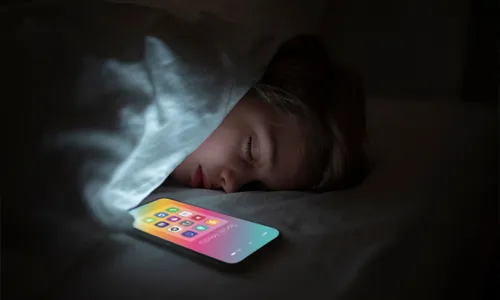
Think about your daily life: you probably stare at a screen for hours on end. Yet, many people report that smartphones and digital screens appear less frequently in dreams than expected for people to use a smartphone, type a text, or read a book inside a dream. The parts of the brain responsible for complex language processing and analytical reading are mostly offline while you sleep. If you ever want to check whether you are dreaming or awake, look down at your hand and try to send a text message—your brain simply cannot handle the interface.
7. Men and Women Experience Different Dream Scenarios

Psychological facts on dreams reveal that our waking biases spill into our sleeping habits. Several dream studies suggest that men frequently dream about other men, often involving competitive or aggressive themes in outdoor settings. Women, on the other hand, dream about men and women equally, with narratives that tend to take place in familiar indoor environments and focus heavily on personal relationships, conversations, and social dynamics.
8. Pets Dream Exactly Like We Do

If you have ever watched your dog twitch its paws, whine softly, or chase an imaginary squirrel while asleep, you have witnessed animal REM sleep.
All mammals and birds experience the exact same neurological stages of sleep as humans. When your cat or dog drifts off, their brain waves mirror a human’s dreaming pattern. They are highly likely replaying their daytime adventures, guarding their territory, or finally catching that elusive red laser pointer.
9. Invention and Creativity Thrive in the Subconscious

The absolute truth is that some of humanity’s greatest breakthroughs happened entirely in bed. Larry Page dreamed up the initial concept for Google’s search algorithm. Dmitri Mendeleev spent years trying to organize the chemical elements, fell asleep at his desk, and woke up having seen the complete Periodic Table arranged perfectly in a dream. When your conscious mind stops overthinking, your brain connects scattered pieces of information in ways you could never organize while awake.
10. Negative Emotions Reign Supreme

If your dreams feel stressful, you are perfectly normal. Psychological research indicates that the single most common emotion experienced in human dreams is anxiety. In fact, negative emotions—like fear, confusion, anger, sadness, and guilt—outnumber positive, joyful dreams by a significant margin. Evolutionarily speaking, our brains likely use these stressful scenarios as a safe simulation space to practice survival mechanisms for real-world threats.
11. You Can Experience Multiple Dreams a Night

You might only remember one vivid story when your alarm goes off, but the statistical truth is that you experience anywhere from four to seven distinct dreams every single night. You spend roughly two whole hours dreaming per night, regardless of whether you remember a single second of it. The dreams get progressively longer as the morning approaches, culminating in your final, most memorable REM cycle right before you wake up.
Why do we dream?
Dreams are believed to help process emotions, memories, and experiences, although scientists are still studying their exact purpose.
How many dreams does a person have each night?
Most people experience four to seven dreams during a typical night’s sleep.
Are dreams based on real life?
Many dreams are influenced by real experiences, emotions, memories, and thoughts from daily life.
Can dreams predict the future?
There is no scientific evidence that dreams can predict future events, although many people find personal meaning in them.