
Surprise!! We have curated a list of five – sorry! 18 magical works of Murakami. The Japanese author cleverly incorporates magical elements to drag the reader to his mysterious world. Magical realism, surrealism, supernatural realism, and self-discovery are the major themes he prefers. Murakami novels are unique, dreamy, humorous, and strange. Check out the best works of Murakami.
Brief Summary of the Author:

When was ‘the Birthday Girl’ Published?
- A. 2000
- B. 2001
- C. 2002
- D. 2003
Haruki Murakami is a Japanese author and translator who is known for his works of fiction and non-fiction worldwide. He never imagined he would become a writer. In 1970, he ran a jazz bar with his wife and at the age of 29, he began writing. He is a highly skilled runner and loves detective stories. Every year he wins a Japanese literary award. His fifth book, Norwegian Wood, was the first book published in Japan in 1987. He was praised as one of the world’s greatest living novelists by The Guardian. He received many awards including the Franz Kafka Prize, the Frank O’Connor International Short Story Award, and the Jerusalem Prize. He also wrote personal essays on running, entitled What I Talk About When I Talk About Running. Jerusalem Prize, which has previously been awarded to J.M. Coetzee, Milan Kundera, and V.S. Naipaul, is the most recent of his many international literary accolades.
Murakami novels
These are outstanding, realistic fiction aimed at exploring and understanding the core of human identity.
1. Short Story
(I) Birthday Girl

One of the best short stories written by Murakami. This short story was originally written in the Japanese language and published in 2002. Inspired by William Trevor’s work “Timothy’s Birthday” and Russell Banks’s “The Moor,” Murakami decided to work his magic on birthday-themed books. The story revolves around a waitress who went to substitute her friend’s absence. Things turn interesting when she serves food to the restaurant owner. After knowing it is her birthday, the man wishes her to have a fruitful life. Whether a waitress lives a fruitful life or not is an interesting conclusion.
(II) First Person Singular
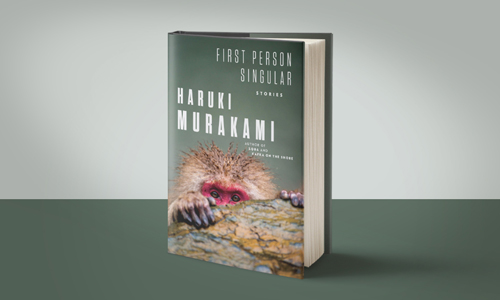
The book hides a collection of eight stories. Narrated by middle-aged male narrators who were reminiscing about their past lives. ‘First Person singular’- pun intended because the story is being told in a first-person singular. Among the other fictional narrators, Murakami also joins to narrate a chapter called – ‘The Yakult Swallows Poetry Collections.’
(III) The Elephant Vanishes
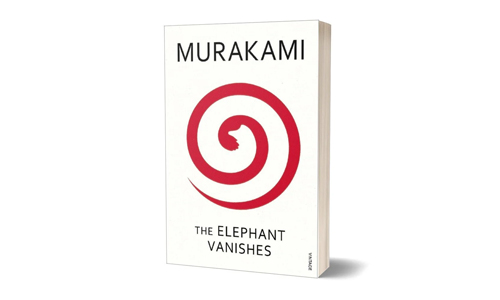
Similar to the last work, The Elephant Vanishes also comprises a collection of interesting stories. Overall, this book contains 17 stories which were written between 1980 and 1991. The stories are hand-picked by his editor Gary Fisketjon and published in English in 1993. Some of this content was published in magazines before being released into a single compilation. This collection includes multiple stories and themes such as surrealism, loneliness, loss, destruction, confusion, and painful issues.
(IV) After the Quake
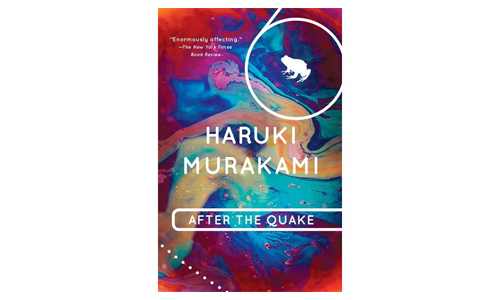
This story is set between two incidents –the Kobe earthquake and the Tokyo gas attacks which occurred in the same year 1995. The Quake book has every factor that a Murakami book features with some stylistic changes. Featuring six short stories which are told in the third person.
(V) Blind Willow Sleeping Women

Blind Willow contains a collection of 24 stories written in 1980 and 2005. The English version of this series was first published in 2006. Philip Gabriel and Jay Rubin are the two authors who translated the stories. In the prologue, Murakami said that he finds writing novels quite challenging while writing stories a joy. The title story “Blind Willow, Sleeping Women” was later adapted into a movie in 2022.
2. Essay
(VI) Novelist as a Vocation
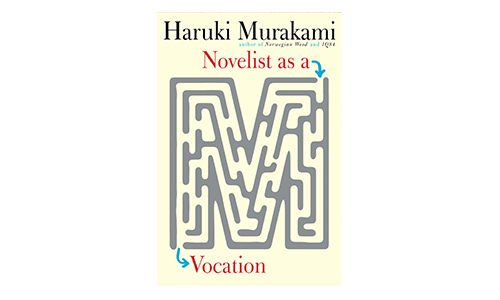
Besides being a novelist, Murakami established himself as an essayist as well. Novelists as a Vocation is a book of essays published on 10 September 2015. This book deals with novelists and their approaches to novels. The first chapter itself explains “ Are Novelists Broadminded?.” Novelist as a Vocation received appreciation as well as serious criticism from journalists. Notably, the author wrote an essay about himself being a novelist – “ How I Became a Novelist.”
Also, Read this blog to know the best first lines from novels.
3. Fictions
(VII) Tony Takiani

Murakami came across this name when he went to a Thrift Shop in Maui. There he saw a man called Takiani, wearing a yellow T-shirt that said “Tony Takiani, House(D).” By that time, Takiani was hurriedly getting ready for the office. Haruki thought his story would do better for his next work.
(VIII) The Seventh Man
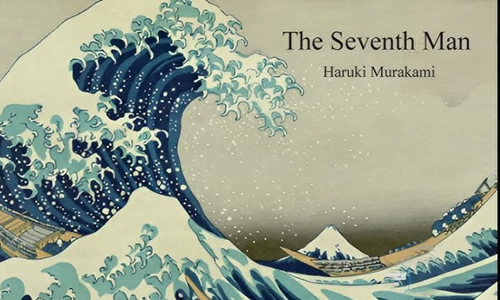
The seventh man in this story narrates the tragic incident that happened during his childhood. When he was ten years old, his hometown was destroyed by typhoons and tsunamis. Luckily, the narrator escaped but he couldn’t save his friend who got carried away by the flood and died. Since then the guilt-ridden man avoids going to sea. Finally, makes up his mind to forgive himself. The Seventh Man is a Western fiction written by Murakami.
(IX) South of the Border, West of the Sun
It is a short novel that deals with two characters who used to be close in their childhood and drifted apart after high school. After many years, Hajime and Shimamoto met and shared their personal life. Meeting his childhood friend pushes him to choose between his past and present.
(X) Sputnik Sweetheart
The novel Sputnik Sweetheart was published in Japan in 1999. Its English translation was done by Philip Gabriel and published in 2001. Sumire is the leading character of the novel who dresses in an old-fashioned way. She often talks to her close friend K and asks questions like what sexual desire is and whether she should reveal her love for Miu.
(XI) After Dark
After Dark is one of the surrealist novels which showcases many themes in a single shot. The protagonist Mari is the major character of the book who discovers strange things about her sister and the place in one night.
(XII) Hard-boiled Wonderland and the End of the World
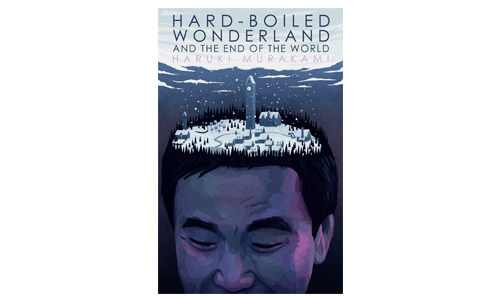
A surreal science fiction story written in Murakami style. The story revolves around two characters – A scientist and a thief who belong to two different worlds. One is the dystopian future Tokyo and the other is a dream-like town–the End of the Wonderland. Eventually, the two worlds converge and discover consciousness, subconsciousness or unconscious mind, and identity.
(XIII) Dance, Dance, Dance
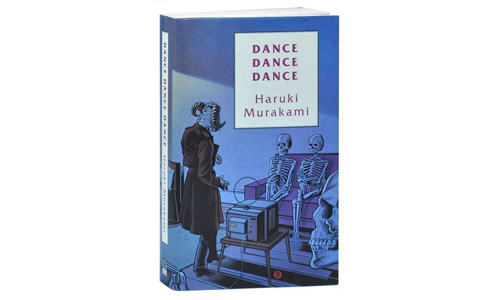
It is the sixth novel of Murakami’s works and happens to be a sequel to “A Wild Sheep Chase.” The title dance refers to the metaphor of life and experiences. The reader can enjoy Murakami’s magical realism along with fantasy. Dance, Dance, Dance was first published in 1988 and the translated version was published in 1994.
(XIV) The Wind-Up Bird Chronicle
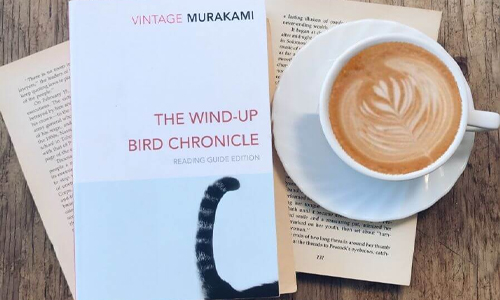
The Japanese version of The Wind-Up Bird Chronicle was published in three parts, but the three extracts were combined when released in English. Toru Okada, the narrator of the play, embarks on an endless search for his wife and cat. Simultaneously, he encounters odd and surreal characters on his way. The Wind-Up Bird Chronicle is a timeless classic loved by his fans.
4. Literary Realism
(XV) Hear the Wind Sing
Hear the Wind Sing is the first novel of Haruki Murakami. Initially, it was published in a magazine called Gunzo, one of the literary issues in Japan, before being released into a book. Kazuki Omori created a movie based on this story. The title is taken from the last line of Truman’s short story “Shut a Final Door.” The protagonist of this book lives a lethargic life drinking, smoking, and thinking about the women he slept with.
(XVI) Colorless Tsukuru Tazaki and His Years of Pilgrimage
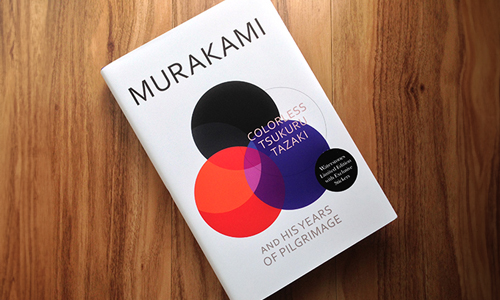
Colorless Tsukuru is the thirteenth novel of his literary career. The novel sold more than one million copies as soon as it was published. Tsukuru Tazaki, is a Japanese railroad engineer who was avoided by his close friends circle in childhood. Years later, Tsukuru approaches his friends again to learn the truth while embarking on a pilgrimage.
5. Magical Realism
(XVII) A Wild Sheep Chase
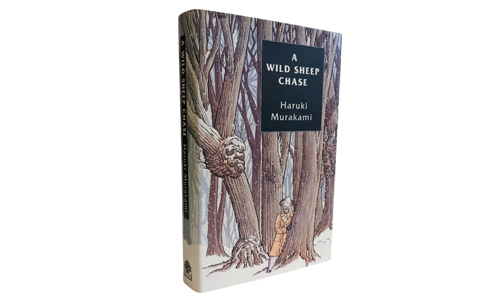
A Wild Sheep Chase is the third novel for Murakami. Similar to the title, the story is indeed about chasing a sheep. The narrator embarks on a journey to find a magical sheep that was seen in a newspaper. It is a blend of detective stories and self-discovery.
(XVIII) Kafka on the Shore
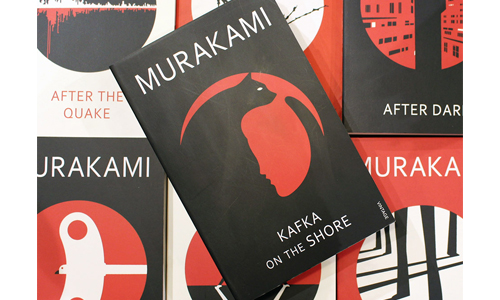
Kafka on the Shore was one of the “Top 10 Books of 2005.” The hero Kafka is a teen who ran away from home fearing a curse. Satoru Nakata is an old man with a disability who can communicate with cats. One character is escaping from his terrible fate while the other one is getting a fresh start.
Hey book lover, hope we provided the list of new books to add to your collections. Check out the seven controversial books published in English.