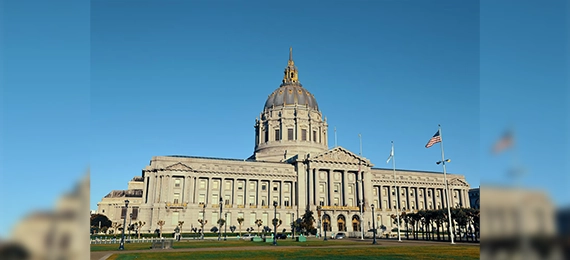
When we talk about iconic United States architecture, we’re not just talking about pretty buildings — we’re talking about structures that captured the full force of a moment in American history. These seven architectural masterpieces were born from a unique collision of genius, era, politics, technology, craftsmanship, and cultural urgency that can never be perfectly replicated. You could throw billions of dollars at rebuilding them today and still end up with something hollow — a copy without a soul.
From Art Deco skyscrapers that embodied a nation’s ambition to a bridge that defied the laws of what was thought possible, here are 7 pieces of American architecture that are truly, irrevocably one-of-a-kind.
1. The Chrysler Building — New York City, New York
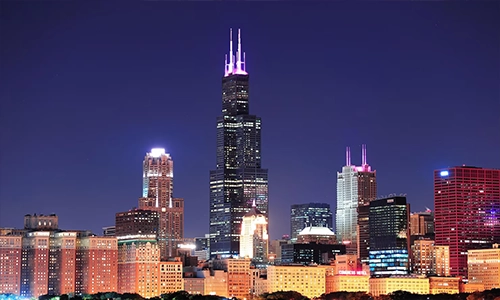
Which building was once the tallest in the world?
- A. Chrysler Building
- B. United States Capitol
- C. Empire State Building
- D. Monticello
Completed in 1930, the Chrysler Building stands as the crown jewel of American Art Deco architecture. Designed by William Van Alen, it was briefly the tallest building in the world — a title it held for just 11 months before the Empire State Building surpassed it. But height was never the Chrysler Building’s real achievement.
Its eagle-headed gargoyles, its sunburst crown made of stainless steel, its lobby adorned with exotic woods and intricate inlaid murals — every inch was a declaration of an America that believed in grandeur, craft, and the romance of the machine age.
Why It Can Never Be Recreated
The building was born during the golden age of American craftsmanship, when skilled artisans — metalworkers, stone carvers, muralists — were both abundant and affordable. The bespoke stainless steel eagles at the 61st floor were hand-hammered. Today, finding and financing that caliber of human artistry is nearly impossible. The Chrysler Building isn’t just a design — it’s the product of a whole civilization’s moment in time.
- Completed: 1930
- Architect: William Van Alen
- Style: Art Deco
- Height: 1,046 ft (77 floors)
- Location: Midtown Manhattan, New York City
2. Fallingwater — Mill Run, Pennsylvania
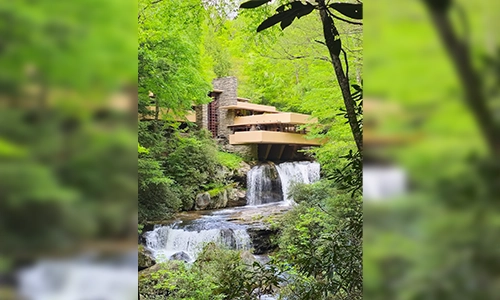
Frank Lloyd Wright called it his greatest masterpiece, and the American Institute of Architects called it the best all-time work of American architecture. Fallingwater, completed in 1939, is a private home that appears to grow organically from the rocky hillside above a waterfall in the Pennsylvania forest.
Wright’s concept was radical: rather than building a home with a view of the waterfall, he built one over it. Cantilevered concrete terraces extend boldly over the cascade, creating an interplay of human construction and natural landscape that architects have studied for nearly a century without fully demystifying it.
Why It Can Never Be Recreated
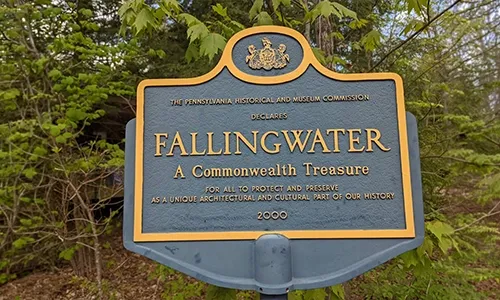
Fallingwater is site-specific to an almost supernatural degree. It was designed around this particular waterfall, these particular boulders, this particular hillside. It is also the embodiment of Wright’s deeply personal philosophy — one forged over seven decades of practice, failure, and obsession. No other architect can think the way Wright thought, and even Wright himself could not have built another Fallingwater anywhere else.
- Completed: 1939
- Architect: Frank Lloyd Wright
- Style: Organic/Modernist
- Status: UNESCO World Heritage Site
- Location: Mill Run, Fayette County, Pennsylvania
3. The Golden Gate Bridge — San Francisco, California
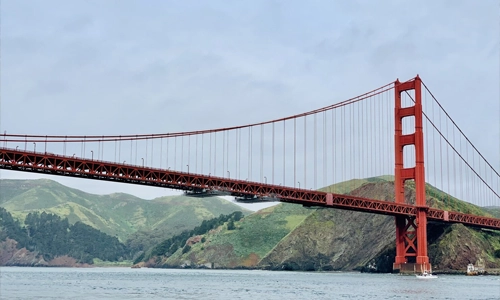
When construction of the Golden Gate Bridge began in 1933, many experts called it impossible. The Golden Gate Strait — the narrow channel connecting San Francisco Bay to the Pacific Ocean — was known for its powerful tides, frequent fog, high winds, and unpredictable earthquakes. Chief engineer Joseph Strauss, along with architect Irving Morrow, proved the skeptics wrong when the bridge opened in 1937.
Its iconic ‘International Orange’ color was originally applied as a primer sealant. Architect Irving Morrow convinced the authorities to keep it — arguing that it harmonized beautifully with the natural hues of the bay and the surrounding hills. He was right.
Why It Can Never Be Recreated
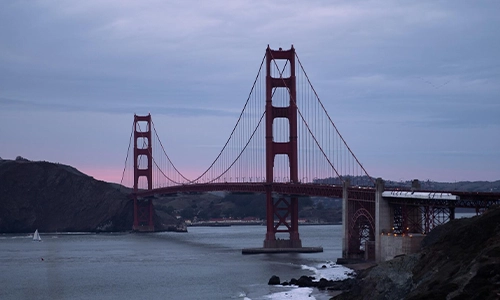
The Golden Gate Bridge was built during the Great Depression, partly as a public works employment program — a context of national urgency that shaped every decision made. It was also the world’s longest suspension span at the time, a record that demanded solving engineering problems no one had solved before. Its specific geography, its historical circumstance, and the emotional weight of what it represented to a struggling America make it irreplaceable.
- Completed: 1937
- Chief Engineer: Joseph Strauss
- Main Span: 4,200 ft — longest in the world at completion
- Style: Art Deco / Suspension Bridge
- Location: San Francisco, California
4. The United States Capitol — Washington, D.C.
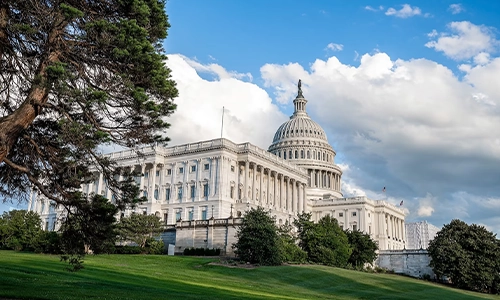
The U.S. Capitol is not a single building — it is a 200-year conversation in stone, iron, and marble. Its construction began in 1793 when George Washington laid the cornerstone, and it has been continuously modified, rebuilt, and expanded ever since. Burned by the British in 1814. Restored. Expanded. The iconic cast-iron dome was completed during the Civil War — Abraham Lincoln insisted the construction continue as a symbol that the Union would endure.
Every column, every frieze, every inch of the Rotunda’s breathtaking ceiling fresco — ‘The Apotheosis of Washington’ painted by Constantino Brumidi — carries the weight of living American history.
Why It Can Never Be Recreated

The Capitol cannot be separated from the history it has witnessed and shaped. It is not just architecture — it is constitutional democracy made physical. You can recreate the structure. You cannot recreate the fact that Lincoln, Roosevelt, and Kennedy walked its halls; that Civil Rights legislation was debated inside it; that it has been the backdrop for the peaceful transfer of power for over two centuries. Its meaning is inseparable from its walls.
- Construction Began: 1793
- Cornerstone Laid By: President George Washington
- Style: Neoclassical
- Dome Height: 289 ft
- Location: Capitol Hill, Washington, D.C.
5. Monticello — Charlottesville, Virginia
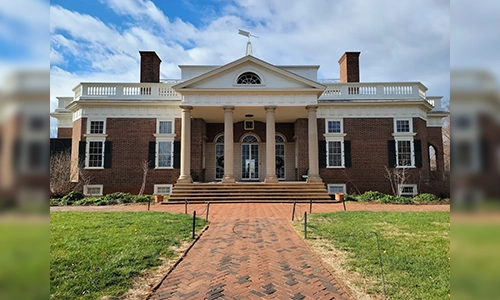
Thomas Jefferson began designing Monticello when he was 26 years old. He spent the next 40 years building, rebuilding, and endlessly revising it — importing ideas from his travels in France, drawing on Palladian principles, and inventing architectural solutions no American had attempted before. The result is a home that is simultaneously a philosophical treatise, a scientific experiment, and a self-portrait of one of history’s most complex minds.
Monticello features an octagonal dome — the first on a private American home — a clever bed alcove shared between two rooms, a dumbwaiter system for wine bottles, and skylights designed to flood the interior with natural light. It is now a UNESCO World Heritage Site.
Why It Can Never Be Recreated
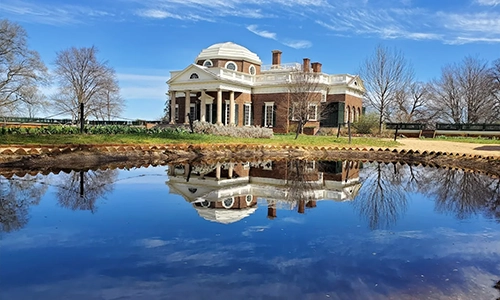
Monticello is the physical autobiography of a man who was simultaneously a founding father, a philosopher, an architect, a scientist, and — in the darkest chapter of his legacy — an enslaver. The building embodies every contradiction of early America. You cannot reconstruct that tension. The site itself, its hilltop perch, its enslaved labor history, and its connection to the Declaration of Independence give it a moral and historical complexity that no new building could ever claim.
- Construction Began: 1769
- Designer: Thomas Jefferson (self-designed)
- Style: Neoclassical / Palladian
- Status: UNESCO World Heritage Site
- Location: Charlottesville, Virginia
6. The Vietnam Veterans Memorial — Washington, D.C.
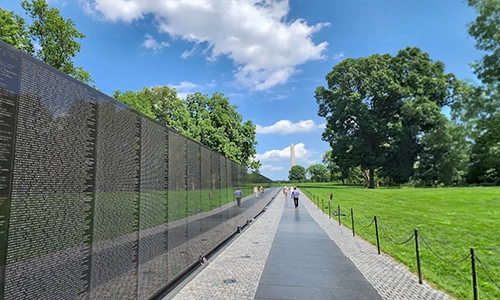
When 21-year-old architecture student Maya Lin submitted her design for the Vietnam Veterans Memorial in 1981, the reaction was polarizing. Her proposal: two long, black granite walls descending into the earth, inscribed with the names of over 58,000 Americans who died in the Vietnam War. No statues. No flags. Just names, and your own reflection in the polished stone.
The design was called minimalist, even disrespectful by some critics. But when it opened in 1982, something unexpected happened: veterans wept at the sight of their comrades’ names. Families pressed their hands to the stone. People left mementos, flowers, letters. The memorial became one of the most emotionally powerful spaces in American history.
Why It Can Never Be Recreated
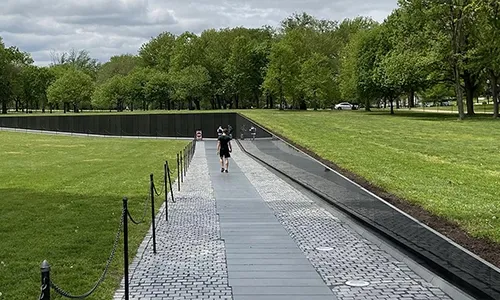
The Vietnam Veterans Memorial exists at the intersection of a specific national wound and a singular act of design courage. Maya Lin was a young Chinese-American woman designing a memorial to a war that had divided a generation — and she was right when others were wrong. The memorial’s power comes from its radical simplicity, its specific moment, and the fact that it changed how America thought about grief and architecture simultaneously. No recreation could carry that weight.
- Completed: 1982
- Designer: Maya Lin (21 years old at time of design)
- Style: Minimalist / Conceptual
- Names Inscribed: 58,320
- Location: National Mall, Washington, D.C.
7. The Empire State Building — New York City, New York
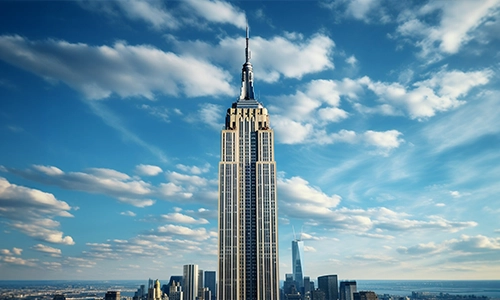
The Empire State Building was built in 410 days — a fact that still staggers the imagination. Opened on April 11, 1931, during the depths of the Great Depression, it rose 102 stories and 1,454 feet into the Manhattan sky and instantly became the tallest building in the world, a title it held for 40 years. Over 3,400 workers — many of them Mohawk ironworkers known for their fearless high-altitude work — pushed the project forward at a pace of approximately four and a half floors per week.
The Empire State Building is the purest expression of American ambition: the belief that no obstacle is too large, no timeline too short, no dream too tall. Built with Art Deco elegance and Depression-era urgency, it remains an emotional landmark for millions of New Yorkers and visitors from around the world.
Why It Can Never Be Recreated
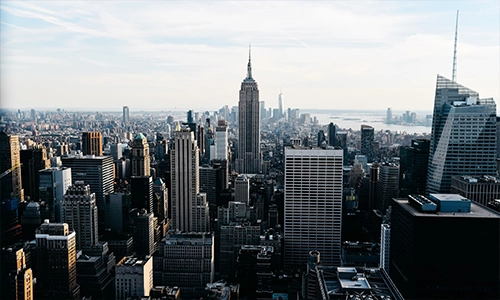
The Empire State Building was the product of an era when labor was cheap, materials were uncomplicated, and ambition outweighed everything else. No modern building project could be completed in 410 days at that scale — safety regulations, environmental reviews, and supply chain realities alone would add years. More importantly, it was built as proof that America could dream bigger than its problems. That specific emotional context — the Depression, the defiance, the audacity — cannot be manufactured or rerun. It was a moment, and the building is its monument.
- Completed: 1931
- Architects: Shreve, Lamb & Harmon
- Style: Art Deco
- Floors: 102
- Construction Time: 410 days
- Height: 1,454 ft (including antenna)
- Location: Midtown Manhattan, New York City
What Makes American Architecture Irreplaceable?
These seven structures share something beyond great design: they are all products of forces that no longer exist in the same form — a Depression-era urgency, a post-war ambition, a civil rights reckoning, a founding-era philosophical revolution. Great architecture does not merely shelter us; it encodes the spirit of its age into stone, steel, and concrete.
The next time you read about United States architecture, remember that what makes these buildings immortal is not just their beauty. It is the fact that they are unrepeatable expressions of America at specific, irretrievable moments in time. They are history made permanent, frozen into form, and left for us to marvel at — and to learn from.