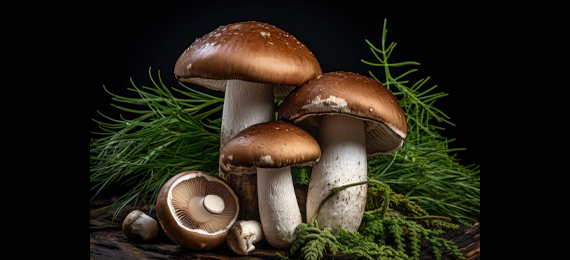
You might have seen soft, fleshy mushrooms added to tasty, flavorful dishes. You might have even tasted them, and found them to be delicious. Apart from mushrooms being mouth-watering and nutritious, what else do you know about them? This blog is all about mushrooms and lots of weird facts about them. By reading it, you will know the answer to the question, ‘What are mushrooms?’ You will also learn some fascinating facts about these magical creatures that you never heard of before!
What Are Mushrooms?
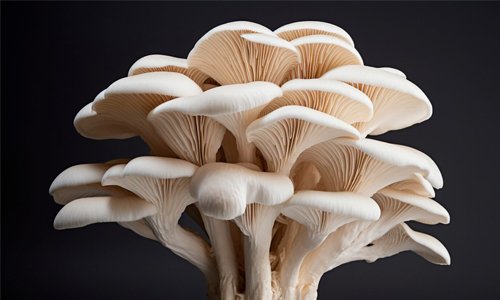
Mushrooms are spore-bearing species of fungi that grow in damp and dark conditions. Some of them are edible and are added to various dishes, but many of them are not. Some mushroom species are even poisonous! Did you know that mushrooms are more closely related to animals than to plants? Unlike plants, mushrooms don’t require sunlight to grow. Although they thrive in damp conditions, they fail to live in places where there is too much water, like soaking wet soil. Continue reading this blog to learn more about mushrooms, their characteristics, and their life cycle.
Mushrooms are spore-bearing species of fungi.
- A. True
- B. False
Where Do Mushrooms Come From?
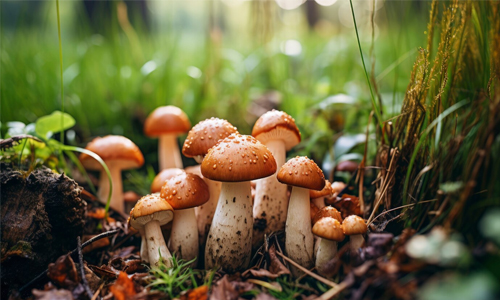
Mushrooms have existed for millions of years on Earth. They usually grow from tiny fungal spores, which can be found in humid conditions. You can usually find lots of mushrooms on the bark of dead trees and places rich in decaying plant matter.
Mushrooms generally grow above the ground. They can also be cultivated on a substratum.
Mushroom Spawn
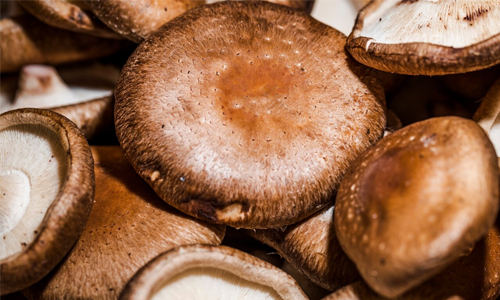
‘Mushroom spawn,’ known as ‘mycelium,’ is the fungal culture grown on a suitable substratum. This spawn is equivalent to the seeds of plants. Farmers usually use seeds to grow plants; in the same way, the spawn is used to grow mushrooms in mushroom cultivation.
Even though mushrooms can be grown from their spores, it’s not recommended for cultivators because there are higher risks of contamination while growing them using spores.
Eating Mushrooms for Better Health
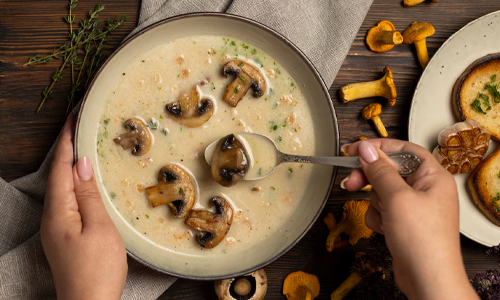
Mushrooms are good for heart diseases, cancer, diabetes, and Alzheimer’s because they are rich in antioxidants, proteins, and fiber, and are low in calories. However, consuming mushrooms that are not produced from reliable sources can be fatal because wild mushrooms contain heavy metals and other harmful chemicals.
How Many Species Are Out There?
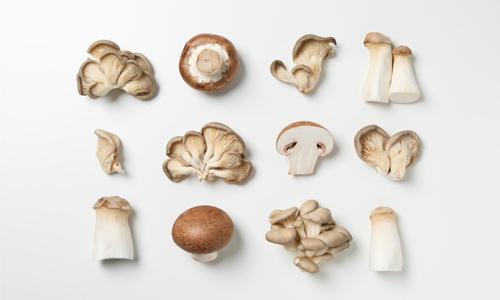
There are only 10,000 named species of mushrooms worldwide, but scientists believe that is only a fraction of what’s out there! Out of the 10,000, more than 70 are poisonous, and over 2000 are edible for humans.
The ‘button mushroom,’ also called ‘table mushroom,’ is the most common type of edible mushroom and is consumed widely across the world. Its botanical name is Agaricus bisporus. It’s cultivated in over 70 countries, and you will find lots of them in North America.
The most expensive edible mushroom in the world is called ‘yartsa gunbu,’ in Tibetan. It looks like a caterpillar and grows only in a particular area of China. It is famously known as the ‘Viagra of the Himalayas,’ because it is used in medicine as an aphrodisiac. It is also known to increase energy levels.
Life Cycle of Mushroom
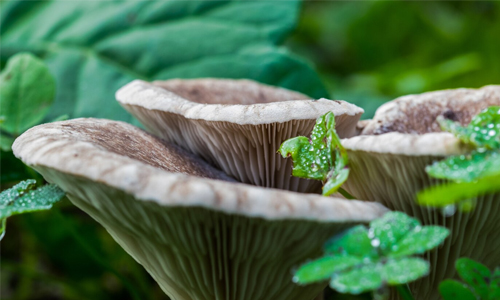
Just like butterflies, mushrooms have a life cycle of their own. It might sound complicated, but in reality, it’s pretty simple. Let’s take a sneak peek at their life cycle.
- A mushroom has parts known as ‘gills,’ which are found under their caps. They produce spores, which can be male or female.
- The spores group with other spores, thus forming male and female hyphae.
- The hyphae combine with other hyphae to form the mycelium.
- The mycelium goes through a phase, at the end of which the hyphal knot is produced.
- The hyphal knots grow to become baby mushrooms, which eventually transform into adult mushrooms.
- The entire life cycle is repeated.
How to Grow Mushrooms?
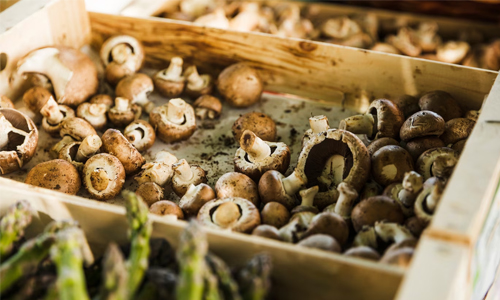
1. Find a Suitable Location
The temperature and other conditions are of paramount importance when it comes to growing mushrooms. Since they don’t need much sunlight, they can be grown indoors too. You must maintain a consistent temperature because temperature changes can affect the growth and quality of the mushrooms.
2. Zero in on an Appropriate Substratum
Usually, mushrooms thrive on sawdust, wood chips, or compost manure. Based on their species, the substratum will vary. Select a container and place the substratum such that it’s 6 inches deep. This is essential for the mycelium to spread freely in the container.
3. Sprinkle Mushroom Spawn/Spores
Once you’ve filled the container with substratum, you can sprinkle mushroom spawn or spores on it. Then, add a layer of substratum on top of the sprinkled spawn/spores.
4. Maintain Moisture
You can do this using one of the following:
- Spray bottle
- Damp cloth
- Humidifier
5. Harvest Your Mushrooms!
After 3 to 4 weeks of sprinkling the spawn/spores, you can harvest your mushrooms. When you see their caps flattening, or the mushrooms releasing the spores, it’s time for you to harvest them.
How Fast Does Mushroom Grow?
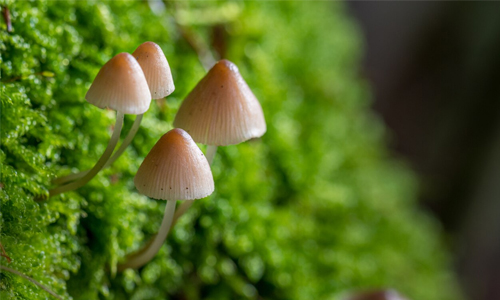
Mushrooms grow very fast, but the growth rate differs from one species to another. Because of their high growth rates, it might look as if they appear overnight! Usually, to complete their life cycle, mushrooms take 1 to 3 weeks, after which you can harvest them.
Weird Mushroom Facts
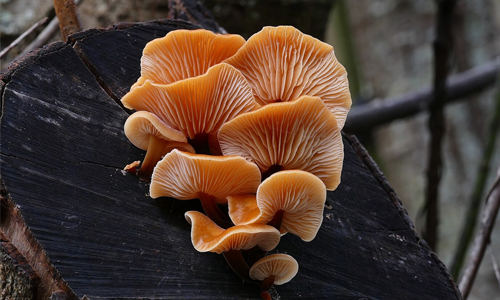
It’s now time to check out these weird mushroom facts!
- In addition to the normal umbrella shape, mushrooms also take up other shapes.
- The Lion’s Mane mushroom has a mop-like head. It grows from a single stem around trees in North America, Asia, and Europe. These stringy mushrooms are good for dementia, anxiety, and depression.
- There are around 600 varieties of milkcap mushrooms. They come in various shapes and sizes but have one common thing, which is, that they all produce a milk-like substance when cut. The ugliest mushroom is part of the milkcap family.
- The mushroom known as, ‘Armillaria ostoyae,’ is not only the largest mushroom but also the largest organism in the world. It covers over 2000 acres of the Blue Mountain in Oregon, US. Did you know that the entire colony of these mushrooms in the Blue Mountain comes from a single-parent stem?
- Some mushrooms cause allergic reactions. The poisonous varieties can cause liver failure, respiratory problems, food poisoning, or even death.
- Others can make you high! They make you feel relaxed, calm, and under control, but continuous consumption might result in hallucinations, anxiety, and paranoia.
- The DNAs of mushrooms are a better match to those of humans when compared to the DNAs of plants!
- Mushrooms are capable of producing Vitamin D under UV rays.
- Before even trees started growing on earth, giant mushrooms were the prominent inhabitants!
Mushrooms – A Magic of Mother Nature!
We hope this blog on ‘What are mushrooms?’ and the interesting facts on the same proved useful to you. Refresh your memory on the points we have discussed by answering the Quiz on this page!