When we talk about the invention of printing, most people instantly think of Johannes Gutenberg and the printing press in Europe. But what if we told you that the first printed book in human history was created centuries earlier—and not in Europe at all?
If you’re ready to challenge what you thought you knew about history, this trivia is for you.
The First Country to Print a Book
China holds the title for being the first country in the world to print a book. The method used? Woodblock printing—a revolutionary technology developed long before Gutenberg’s printing press.
Which country was the first to print a book?
- A. Germany
- B. China
- C. India
- D. Egypt
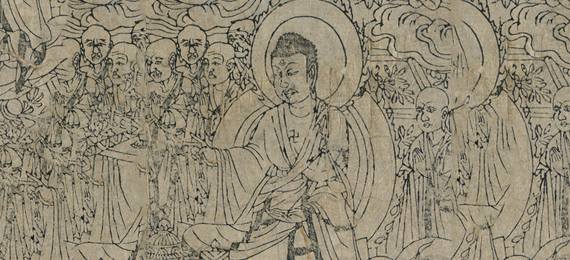
One of the earliest known printed books is “The Diamond Sutra,” printed in 868 AD during the Tang Dynasty. This Buddhist scripture wasn’t handwritten or copied by scribes. Instead, it was printed using carved wooden blocks—each block etched with an entire page of text.
This discovery shattered the myth that printing began in Europe. In fact, China had been experimenting with printing techniques as early as the 7th century AD!
What Is the Diamond Sutra?

The Diamond Sutra is a sacred Mahayana Buddhist text and is regarded as the world’s oldest surviving dated printed book. Discovered in a cave in Dunhuang, China, the book was preserved as part of a hidden library filled with ancient manuscripts.
The full title of the book is “The Diamond That Cuts Through Illusion,” and it’s deeply respected in Buddhist traditions. The printed scroll is over 16 feet long and contains both text and illustrations.
Today, the original Diamond Sutra scroll is kept in the British Library, where it remains one of the most treasured historical artifacts from ancient China.
Gutenberg vs. China: Who Really Invented Printing?

While Johannes Gutenberg is often credited with inventing the printing press, his major contribution was introducing movable type printing in Europe around 1440 AD. His famous Gutenberg Bible was printed in 1455—nearly 600 years after China’s Diamond Sutra.
That doesn’t mean Gutenberg’s work wasn’t important. His invention made books more affordable and accessible across Europe. But history shows that China was already ahead of the curve by centuries.
In fact, a Chinese inventor named Bi Sheng created an early version of movable type using clay around 1040 AD—long before Gutenberg’s press came into play.
The Evolution of Printing in Ancient China
- 7th Century AD: Earliest forms of block printing used to reproduce religious texts
- 868 AD: The Diamond Sutra is printed using full-page woodblocks
- 1040 AD: Bi Sheng invents clay movable type printing
- Later Dynasties: Metal movable type introduced and refined
This timeline showcases how China’s technological advancements laid the foundation for mass communication, education, and culture—all before the West began its own printing revolution.
What Was the First Printed Book in the United States?
While China pioneered the art of printing centuries earlier, the first book printed in what is now the United States came much later. It was the Bay Psalm Book, printed in 1640 in Cambridge, Massachusetts by Stephen Daye, a locksmith by trade who became America’s first printer. The Bay Psalm Book was a Puritan translation of biblical psalms, designed for congregational singing, and marked the beginning of printing in the American colonies.
Though there’s no direct technological link between this and China’s printing innovations, the broader concept of disseminating knowledge through printed text traces its roots to East Asia.

Understanding the true origin of inventions helps us appreciate the diversity of human innovation. From scrolls and hand-copied manuscripts to block-printed texts, each culture contributed in its own way to the spread of knowledge.
So the next time someone credits Gutenberg as the inventor of printing, surprise them with this fact: The first printed book in the world came from China—600 years earlier!