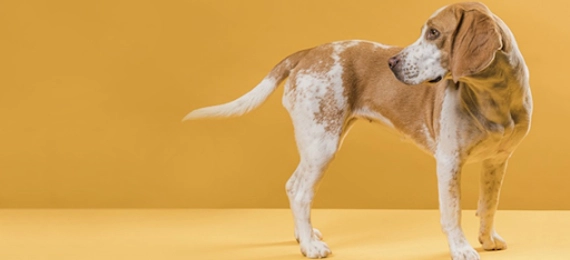
Let’s imagine this: you walk through the front door, and your dog’s tail turns into a propeller. But have you ever stopped and wondered — why do dogs wag their tails? Is it just happiness? Or is there way more going on behind that furry metronome?
Spoiler alert: it’s a LOT more fascinating than most people realize. Dog tail wagging is essentially a full-blown communication system — and once you decode it, you’ll never look at your pup’s tail the same way again. Let’s dig in!
Why Do Dogs Wag Their Tails?
Dogs wag their tails to communicate emotions and intentions. While tail wagging is often associated with happiness, it can also signal excitement, nervousness, uncertainty, submission, or alertness. The meaning depends on the tail’s position, speed, direction, and the dog’s overall body language.
In which direction do dogs tend to wag their tail when they feel positive emotions?
- A. Left
- B. Right
- C. Straight up
- D. Both equally
Fun Fact to Kick Things Off
Dogs don’t wag their tails when they’re alone. They do it specifically to communicate with other beings — which means every wag is a message meant just for you!
What Did Dogs Do Before They Learned to Wag?
Scientists believe tail wagging became more important as dogs evolved alongside humans. Wolves and wild canines rely heavily on posture, scent, and facial expressions. Over thousands of years of domestication, dogs developed more expressive tail movements to communicate more effectively with people.
This evolutionary change may explain why dogs wag their tails far more often than their wild relatives.
The Science Behind Why Dogs Wag Their Tails
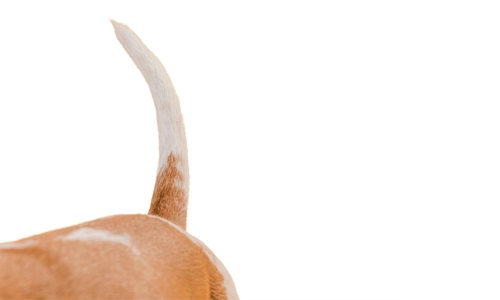
Here’s the thing — tail wagging isn’t instinct from birth. It’s actually a learned behavior, and science backs this up in a big way.
Newborn puppies don’t wag their tails at all. The neural pathways that control tail movement simply aren’t fully developed yet. Puppies typically start wagging around 6 to 8 weeks of age — which is right when they begin socializing with their littermates and humans. That’s no coincidence.
Researchers believe dogs evolved tail wagging specifically as a social signal. Their wild ancestors communicated dominance and submission through body posture, and over thousands of years of living alongside humans, domestic dogs fine-tuned tail wagging as a visual language to bridge the communication gap between species.
Science Corner
A 2007 study published in Current Biology found that dogs wag their tails in a directionally asymmetric way depending on their emotions. Right-biased wag = positive feelings. Left-biased wag = negative or anxious feelings. Even other dogs pick up on this difference!
What Does a Wagging Tail Actually Mean?
Here’s where most people get it wrong: a wagging tail does NOT always mean a happy dog. Tail wagging is context-dependent, and reading it correctly means paying attention to the whole picture — speed, height, direction, and body language.
| Wag Style | What It Means | Body Language Clue |
| Fast, wide wag | Super happy to see you! | Wiggly whole body |
| Slow, low wag | Uncertain or nervous | Tucked posture, ears back |
| Stiff, rapid wag | Alert or potentially aggressive | Body tense, eyes hard |
| Right-biased wag | Positive feelings | Relaxed, approachable |
| Left-biased wag | Negative or anxious feelings | May back away or freeze |
| Helicopter tail wag | Pure joy and excitement | Full-body shimmy |
| Tail held high + wag | Confidence, dominance | Direct eye contact |
| Tail tucked + wag | Fearful submission | Cowering, avoiding gaze |
The key takeaway? Always read the tail in combination with the rest of the dog’s body. A wagging tail paired with a stiff body, hard eyes, or raised hackles can signal danger — not friendliness.
Why Do Dogs Wag Their Tails at Humans Specifically?

Dogs don’t just wag at anyone. Studies show they wag more frequently — and more enthusiastically — at humans than at other dogs. Here’s why:
- Dogs are deeply social animals who have co-evolved with humans for roughly 15,000 years.
- They’ve learned that tail wagging gets positive responses from people — attention, petting, treats.
- Dogs are remarkably good at reading human emotions and mirroring social cues back to us.
Essentially, your dog has figured out that wagging at you works. It gets your attention, your affection, and sometimes your dinner scraps. Smart pups!
The Helicopter Wag — And Other Famous Tail Moves
Not all wags are created equal. Here are some of the most iconic tail movements and what they signal:
The Helicopter Wag
The tail spins in full circles rather than swinging side to side. This is the gold standard of dog happiness — usually reserved for greetings with their absolute favorite humans. If your dog helicopters at you, congratulations: you’re the best thing in their world.
The Full-Body Wiggle
The wag is so intense the entire rear end — and sometimes the whole body — swings along for the ride. This means pure, unadulterated joy. Think of it as a dog’s version of a standing ovation.
The Slow Sweep
A deliberate, slow wag low to the ground. The dog is cautious, trying to figure out what’s going on. This isn’t a greeting — it’s more of a question mark.
The High, Stiff Flick
Short, rapid, stiff movements with the tail held high. The dog is on high alert. This can precede aggression — approach with caution and give the dog space.
Do All Dogs Wag? What About Breeds With Docked or Curly Tails?
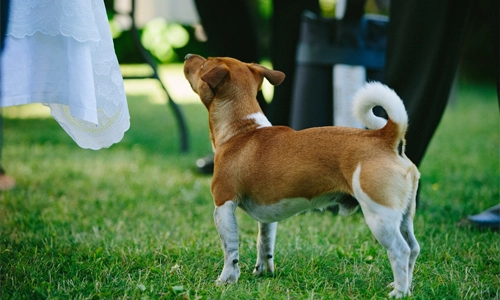
Tail docking (surgically shortening the tail) is practiced in some breeds like Dobermans and Boxers — and it actually creates a real communication disadvantage for those dogs. Without a full tail, they lose a key body language tool, which can make interactions with other dogs more challenging and sometimes lead to misunderstandings.
Dogs with naturally curly tails (like Pugs or Basenjis) still wag — they just do it in a tighter range of motion. And tailless breeds like the Australian Shepherd (naturally bobbed) communicate more heavily through ear position, facial expression, and body posture instead.
Surprising But True!
Deaf and blind dogs still wag their tails — using their remaining senses (smell, touch) to trigger the response. Tail wagging is hardwired deep into canine communication.
Can You Tell If Your Dog Is Happy Just By the Wag?
Sort of — but you need to read the full picture. A dog expert looks at:
- Tail position: High = confident. Low or tucked = anxious or submissive.
- Wag speed: Faster generally means more aroused (excited or agitated).
- Direction of wag: Right bias = positive. Left bias = negative.
- Body tension: Loose and wiggly = relaxed. Stiff = on guard.
- Eye contact and ear position: Soft eyes + forward ears = happy. Hard stare + pinned ears = stressed.
The most reliable sign of a truly happy, relaxed dog? A mid-height tail with a wide, loose, side-to-side wag accompanied by soft eyes, a relaxed mouth, and a wiggly body. That’s the full package of canine contentment!
Myth-Busting: Common Misconceptions About Tail Wagging
| ❌ The Myth | ✅ The Truth |
| A wagging tail always means a happy dog. | Wagging can signal anxiety, alertness, or even aggression. Always read the whole body. |
| Dogs wag their tails instinctively from birth. | Puppies learn to wag at 6–8 weeks. It’s a socially learned behavior. |
| The faster the wag, the friendlier the dog. | Fast wags can signal high arousal — which isn’t always friendly. Context matters. |
| Tail docking doesn’t affect a dog’s life. | Docked dogs lose a critical communication tool, which can lead to social misunderstandings. |
Did You Know?
- Dogs wag their tails using the same muscles they use to walk — it’s an active, energy-burning movement!
- Wolves and wild dogs rarely wag their tails — it’s primarily a behavior that domesticated dogs developed to communicate with humans.
- Dogs can wag at speeds of up to 3–4 wags per second during peak excitement.
- Some researchers suggest tail wagging may also release oxytocin (the ‘love hormone’) in dogs — making them feel happier the more they wag!
- The position of a dog’s tail at rest varies by breed — a Beagle’s natural tail position is very different from a Greyhound’s.
FAQs
Why do dogs wag their tails when they see you?
Dogs wag their tails as a social signal to express positive emotions — excitement, affection, and happiness at your presence.
Do dogs wag their tails on purpose?
Not entirely! Tail wagging starts as an involuntary emotional response, but dogs also learn that wagging gets them positive reactions from humans.
Why does my dog wag its tail while sleeping?
Dogs in deep (REM) sleep can dream and involuntarily move their tails — they’re likely dreaming about something exciting!
Is it true that dogs wag more to the right when happy?
Yes! Research confirms right-biased wagging signals positive emotions, while left-biased wagging indicates negative or anxious feelings.
Why do some dogs wag their whole body?
Full-body wags happen when a dog’s excitement is so intense that their tail muscles can’t contain it — pure, overflowing joy!
Can a wagging dog still bite?
Yes. A stiff, high-speed wag combined with a tense body and hard stare can precede aggression. Never assume a wagging dog is safe without reading the full body language.
Can Humans Learn to Read Dog Tail Language?
Ready-to-Paste Content
Absolutely.
While dogs cannot speak our language, their tails provide valuable clues about how they feel.
Learning to recognize:
- Tail height
- Wag speed
- Direction
- Body posture
- Facial expression
can help owners better understand their pets and strengthen the bond they share.
The more you observe, the easier it becomes to understand what your dog is trying to say.
Do wolves wag their tails like dogs?
Wolves can wag their tails occasionally, but they do so much less frequently than domestic dogs. Tail wagging became more prominent as dogs evolved alongside humans.
Why do dogs wag their tails when they hear your voice?
Dogs often associate familiar voices with positive experiences, causing excitement and emotional responses that trigger tail wagging.
Why does my dog wag its tail when it is nervous?
Tail wagging does not always mean happiness. Dogs may wag when they feel uncertain, anxious, or conflicted, especially if the wag is low and slow.
Do puppies wag their tails immediately after birth?
No. Most puppies begin wagging their tails around 6–8 weeks of age when they start interacting socially with littermates and humans.
Can dogs control their tail wagging?
Partially. Tail wagging is influenced by emotions, but dogs can also learn to use it as a social communication too
Every Wag Tells a Story
So, why do dogs wag their tails? The short answer: to talk to you. Every wag — whether it’s a slow sweep, a frantic blur, or a full helicopter spin — is your dog’s way of saying something. The direction, speed, height, and intensity all carry meaning.
The more you pay attention to your dog’s tail, the richer your relationship becomes. Because when you understand their language, you don’t just have a pet — you have a conversation partner who’s been waiting their whole life for you to listen.
Now go give that wagger a good belly rub. They’ve earned it.