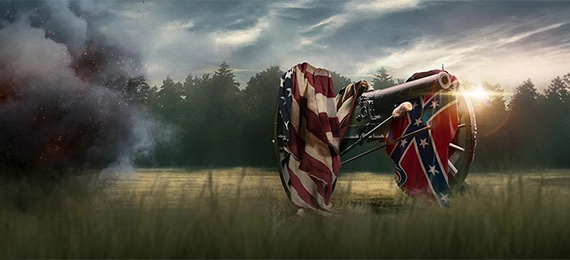
The American Civil War (1861–1865) stands as the most defining and devastating conflict ever fought on U.S. soil. While the previous blog — Why Was the American Civil War Fought — explored the deep-rooted causes like slavery, states’ rights, and political tension, this companion piece goes further. Here, we dig into the extraordinary human stories, jaw-dropping statistics, forgotten firsts, battlefield realities, and long-lasting legacy that textbooks often miss.
Below are 100 American Civil War facts carefully curated to inform, surprise, and deepen your understanding of this pivotal chapter in history. Whether you’re a trivia enthusiast, a student, or simply curious, these facts are for you.
The War at a Glance — Key Numbers and Dates
Who Was the President of the United States When the Civil War Was Fought?
- A. Andrew Johnson
- B. Franklin Pierce
- C. Abraham Lincoln
- D. James Buchanan
Image File Name: American-Civil-War-At-a-Glance
- The Civil War lasted exactly 4 years, 1 month, and 5 days — from the first shots at Fort Sumter on April 12, 1861, to the final Confederate surrender on May 13, 1865, at the Battle of Palmito Ranch in Texas.
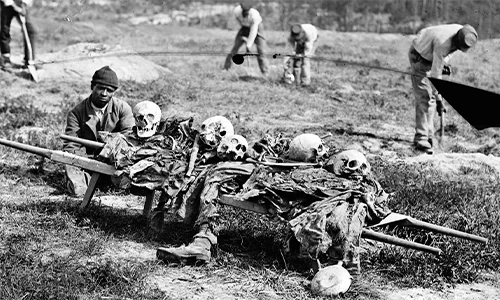
- More Americans died in the Civil War than in any other conflict. Estimates put the death toll at approximately 620,000–750,000 soldiers combined — surpassing U.S. deaths in World War I and World War II combined.
- Approximately 3.5 million soldiers served across both sides — The Union Army had around 2.1 million men while the Confederate Army enlisted roughly 880,000 to 1 million fighters across the war’s duration.
- There were over 10,000 documented military engagements — These ranged from full-scale pitched battles to skirmishes, raids, and naval confrontations, spread across 23 states and territories.
- The war cost the U.S. government approximately $6.19 billion — In today’s money, this is equivalent to hundreds of billions of dollars. The South’s economic losses were proportionally even more devastating.
- Eleven Southern states seceded to form the Confederacy — They were South Carolina, Mississippi, Florida, Alabama, Georgia, Louisiana, Texas, Virginia, Arkansas, North Carolina, and Tennessee — in that order of secession.
- The Union consisted of 23 states plus several territories — This numerical advantage in states, population, and industrial capacity gave the North a significant structural edge throughout the war.
- An average of 600 soldiers died every single day of the war — This staggering daily death toll makes it clear why the Civil War remains America’s bloodiest conflict by any historical measure.
- Disease killed more soldiers than combat did — Roughly two soldiers died of illness — particularly diarrhea, dysentery, typhoid, and pneumonia — for every one killed in battle throughout the war.
- The war officially ended on different dates in different theaters — While Lee surrendered at Appomattox on April 9, 1865, Confederate General Kirby Smith didn’t surrender the Trans-Mississippi theater until June 2, 1865.
Battles, Bloodshed, and Turning Points
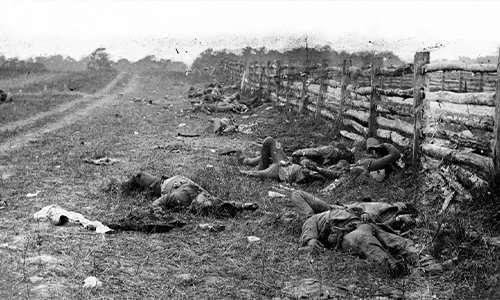
- The Battle of Gettysburg was the war’s deadliest engagement — Fought July 1–3, 1863, it resulted in over 51,000 combined casualties — killed, wounded, captured, or missing — across just three days of fighting in Pennsylvania.
- The Battle of Antietam on September 17, 1862, was the deadliest single day in U.S. military history — More than 23,000 soldiers were killed, wounded, or missing in just one day — a toll that shocked both North and South and the watching world.
- The Siege of Vicksburg lasted 47 days — From May 18 to July 4, 1863, Union General Ulysses S. Grant besieged the city. When it fell, the Union controlled the entire Mississippi River, effectively splitting the Confederacy in two.
- The first major land battle of the war was the First Battle of Bull Run — On July 21, 1861, civilians from Washington D.C. actually drove out in carriages with picnic baskets to watch what they expected to be a short, exciting fight. They fled in panic when the battle turned brutal.
- The Battle of Cold Harbor saw 7,000 Union casualties in under an hour — On June 3, 1864, Union troops charged fortified Confederate positions in Virginia. It was one of the most lopsided attacks of the war and haunted General Grant for the rest of his life.
- Over 50 major battles were fought during the Civil War — Military historians have classified about 50 engagements as ‘major battles,’ but the total number of combat actions, including skirmishes, exceeds 10,000.
- At least 230 Civil War battles have two different names — The Union typically named battles after the nearest body of water (like Bull Run), while the Confederates named them after the nearest town (like Manassas), leading to persistent double-naming in history books.
- The Confederacy launched the first-ever military submarine attack — The H.L. Hunley, a hand-cranked Confederate submarine, sank the USS Housatonic on February 17, 1864 — making it the first submarine in history to sink an enemy warship in combat.
- The Battle of Hampton Roads was history’s first ironclad naval battle — On March 8–9, 1862, the CSS Virginia (formerly the USS Merrimack) and the USS Monitor faced each other — changing naval warfare around the world forever.
- The last battle of the Civil War was won by the Confederacy — The Battle of Palmito Ranch on May 12–13, 1865, in Texas was a Confederate victory — even though the war itself had already been effectively lost weeks earlier.
The Soldiers — Who Really Fought the War
- The youngest known soldier in the Civil War was just 9 years old — Johnny Clem, nicknamed ‘Johnny Shiloh,’ ran away from home in Ohio to join the Union Army. By age 12, he was promoted to sergeant after shooting a Confederate officer at the Battle of Chickamauga.
- The oldest documented soldier was 80 years old — Curtis King from Pennsylvania enlisted at 80, making him one of the most remarkable cases of elderly service in any American conflict before or since.
- One in four Union soldiers was a foreign-born immigrant — Germans made up about 10% of Union forces, forming entire regiments like the Steuben Volunteers. Irish soldiers made up approximately 7.5%, and other nationalities — French, Polish, Italian, Scandinavian — fought as well.
- About 400 to 750 women disguised themselves as men to fight — Women on both sides cut their hair, bound their chests, and used male names. Some were discovered only after being wounded. Sarah Emma Edmonds and Jennie Hodgers (alias Albert Cashier) are among the most documented.
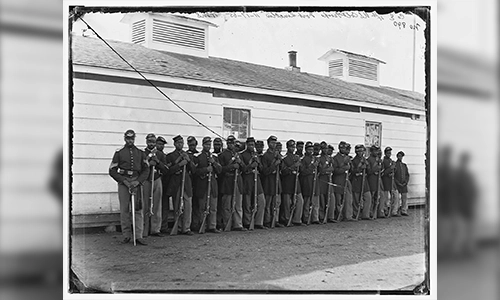
- Nearly 180,000 Black soldiers served in the Union Army — The United States Colored Troops (USCT) comprised approximately 10% of the Union Army. They faced discrimination in pay and assignments but played a decisive role in key battles, including the assault on Fort Wagner.
- Black Union soldiers were initially paid less than white soldiers — They received $10 per month compared to $13 for white soldiers, and were also charged a $3 clothing fee, effectively taking home just $7. Many Black soldiers refused their pay in protest until Congress equalized wages in 1864.
- The average Civil War soldier was 25 years old and 5 feet 8 inches tall — Most soldiers were young farmers or tradesmen with little prior military experience, many of whom had never traveled more than 50 miles from their hometown before the war.
- Nearly 10,000 soldiers on both sides were under the age of 18 — Child soldiers were not uncommon in the Civil War era. Drummer boys as young as 12 served in active military roles, often marching with troops into battle.
- Generals were 50% more likely to die in battle than ordinary soldiers — Unlike modern warfare, Civil War generals often led charges in person, on horseback, making themselves highly visible — and highly vulnerable — targets.
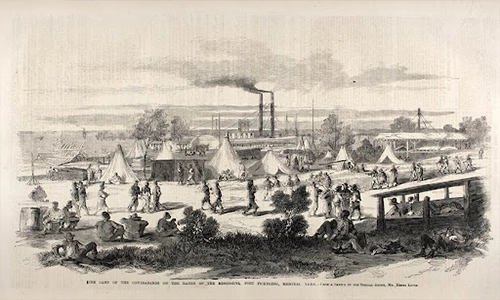
- Approximately 400,000 soldiers were taken prisoner during the war — POW conditions were often horrific on both sides. Andersonville prison in Georgia became infamous — nearly 13,000 of the 45,000 Union prisoners held there died from disease, malnutrition, or exposure.
Abraham Lincoln — The 16th President at War
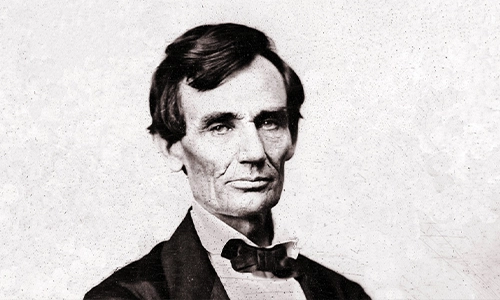
- Lincoln hired a substitute to fight in his place — Under the Union’s Enrollment Act, men could pay $300 to hire a substitute. Lincoln himself paid $500 and hired a man named John Summerfield Staples to serve in his place — even as Commander-in-Chief.
- Lincoln sometimes slept in the telegraph office during major battles — He was so reliant on telegraph communications — which he called ‘lightning messages’ — that he would spend nights waiting for battlefield dispatches, often sleeping on a cot there.
- Lincoln was the first U.S. president to be assassinated — He was shot by John Wilkes Booth at Ford’s Theatre on April 14, 1865 — just five days after Lee’s surrender at Appomattox — and died the following morning on April 15.
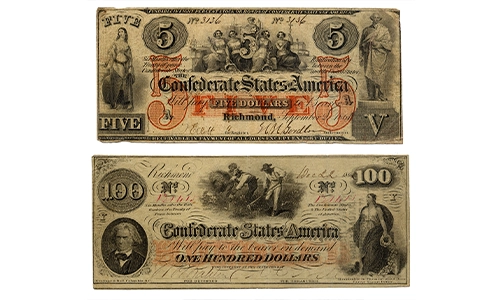
- A $5 Confederate bill was found in Lincoln’s wallet after his death — Among the personal effects recovered from Lincoln after his assassination was Confederate currency — a detail that has puzzled historians and collectors ever since.
- Lincoln informally referred to Robert E. Lee as ‘Bobby Lee’ — Despite being on opposite sides of the most devastating war in American history, Lincoln used this familiar nickname when referencing the Confederate general in private conversation.
- Lincoln issued the Emancipation Proclamation on January 1, 1863 — The executive order declared enslaved people in Confederate states to be free, but it did not immediately free anyone — it only applied to states in rebellion and had to be enforced by Union troops.
- Lincoln faced enormous pressure not to run for re-election in 1864 — By summer 1864, the war had dragged on so long that many within his own party urged him to step aside. Sherman’s capture of Atlanta in September dramatically reversed his political fortunes.
- 38. Lincoln used the telegraph more strategically than any previous commander — He was the first U.S. president to actively use the telegraph as a command-and-control tool, sending hundreds of messages directly to generals in the field during active campaigns.
- Lincoln’s Gettysburg Address was just 272 words long — Delivered on November 19, 1863, at the dedication of the Soldiers’ National Cemetery at Gettysburg, it lasted only about two minutes — yet it is widely considered one of the greatest speeches in American history.
- 40. Lincoln was warned about assassination plots multiple times before Ford’s Theatre — He received so many death threats that he kept them in a file labeled ‘Assassination Letters.’ He reportedly carried two worn newspaper clippings that praised him, saying he wanted to see what people thought well of him for.
Technology, Weapons, and Military Innovations
- The Civil War was the first major conflict extensively documented by photography — Photographers like Mathew Brady and Alexander Gardner captured battlefield images and portraits, forever changing how the public perceived and processed war. The Battle of Antietam was the first battle to be photographed.
- Hot air balloons were used for military reconnaissance by both sides — The Union used balloons called the Intrepid and the Union; the Confederacy used one called the Gazelle. They were sent up to 1,000 feet to spy on enemy positions and direct artillery fire.
- The Civil War introduced repeating rifles and breech-loading weapons — The Spencer repeating rifle could fire 7 rounds without reloading. Union soldiers who carried them had a massive tactical advantage over Confederate troops still using slower single-shot muzzle-loaders.
- The Minié ball revolutionized battlefield injury severity — This newly designed conical bullet could be loaded quickly and traveled at higher velocity than earlier musket balls. It caused devastating bone-shattering wounds, which is why amputation became so common.
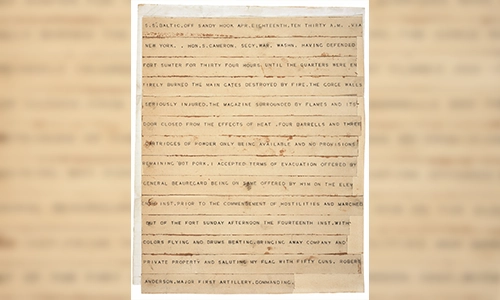
- The telegraph transformed military command and communication — For the first time in history, generals could receive and send orders across hundreds of miles in real time. The U.S. Military Telegraph Corps sent over 6.5 million messages during the war.
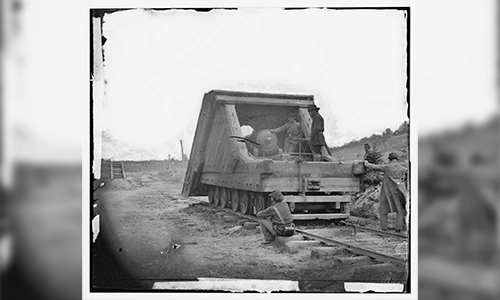
- Railroads were used strategically for the first time in military history — Both sides used trains to rapidly move troops and supplies. The Union’s superior rail network — 22,000 miles vs. the Confederacy’s 9,000 miles — proved to be a decisive logistical advantage.
- Land mines (called ‘torpedoes’) were first used systematically during the Civil War — Confederate General Gabriel Rains was the first to use land mines on a large scale, burying artillery shells in roads to slow Union advances — an innovation condemned as barbaric by many at the time.
- The USS Monitor introduced revolving gun turrets to naval warfare — Its rotating iron turret, designed by Swedish-American engineer John Ericsson, allowed the ship’s guns to fire in any direction — a concept that fundamentally changed warship design worldwide.
- Gatling guns made their first battlefield appearance during the Civil War — Richard Gatling’s hand-cranked multi-barrel weapon could fire 200 rounds per minute — a terrifying rate for the era. However, they were used only in limited numbers due to their weight and cost.
- Signal flags (semaphore) were used to relay battlefield information. The U.S. Army Signal Corps, founded in 1860, used coded flag signals called the wig-wag system to communicate between units across long distances during battles.
Medicine, Surgery, and the Science of Suffering
- Surgeons performed approximately 60,000 amputations during the war — With no antibiotics and crude anesthesia, amputation was often the only way to prevent fatal infection from Minié ball wounds. Surgeons were derisively called ‘Butchers’ by soldiers.
- Chloroform and ether were the primary anesthetics used — Contrary to the popular myth that soldiers bit bullets during amputation, anesthesia was actually widely available. However, supplies sometimes ran out during major engagements.
- The survival rate for amputations was roughly 75% — Surprising for the era, this relatively high rate was largely because battlefield surgeons worked quickly — often completing an amputation in under 10 minutes — reducing exposure time and blood loss.
- Civil War medicine gave birth to modern triage systems — The concept of categorizing wounded soldiers by severity to prioritize treatment was formalized during the Civil War, a practice that remains the foundation of emergency medicine today.
- Diarrhea and dysentery were the leading killers of the war — Poor sanitation in camps led to massive outbreaks of waterborne illnesses. Soldiers often didn’t understand the connection between contaminated water and disease, as germ theory wasn’t yet established.
- Over 66% of all deaths in the Civil War were caused by disease, not combat — This staggering fact reflects both the poor understanding of hygiene and the terrible conditions in which soldiers camped, marched, and lived for months or years at a time.
- Clara Barton organized battlefield nursing before the Red Cross existed — Known as the ‘Angel of the Battlefield,’ Barton collected and delivered medical supplies directly to frontline surgeons. She went on to found the American Red Cross in 1881.
- The Civil War created the first large-scale prosthetics industry in America — With tens of thousands of amputees returning home, the demand for artificial limbs exploded. The U.S. government issued artificial limbs to veterans, spurring technological innovations in prosthetics.
- Some Civil War wounds glowed in the dark — a phenomenon called ‘Angel’s Glow’ — Soldiers who survived at the Battle of Shiloh noticed their wounds emitting a faint blue-green glow at night. Modern research suggests this was caused by Photorhabdus luminescens bacteria, which may have actually fought off infection, improving survival rates.
- Opium and morphine addiction became widespread after the war — The use of opiates to manage pain was so common that post-war addiction earned the name ‘Soldier’s Disease.’ Tens of thousands of veterans returned home dependent on morphine.
Society, Culture, and Life Behind the Lines
- The Civil War helped make baseball America’s national pastime — Union soldiers from New York taught the game to fellow troops from across the country during downtime between battles. Prison camps became unlikely baseball hubs. By war’s end, soldiers had carried the sport to virtually every corner of America.
- The number of orphans in the U.S. skyrocketed after the war — With hundreds of thousands of fathers dead, estimates suggest that up to 500,000 children were left fatherless by the Civil War. This crisis helped drive the creation of orphanages and early child welfare programs.
- The divorce rate rose approximately 150% in the decade after the Civil War — The prolonged separation of husbands and wives, combined with the psychological trauma of war, led to a dramatic rise in marital breakdown across both North and South.
- The Civil War was known by at least 25 different names — These included the War Between the States, the War of Rebellion, the War of Northern Aggression, the War for Southern Independence, the Second American Revolution, and many others reflecting regional perspectives.
- Both the Union and Confederate governments used propaganda on a massive scale — Through posters, pamphlets, newspapers, and public rallies, both sides shaped public opinion in what historians consider the first large-scale use of political propaganda in American history.
- More than 60,000 books have been published about the Civil War since 1865 — No other conflict in American history comes close to this volume of scholarship and storytelling, making the Civil War the most written-about event in U.S. history.
- Soldiers on both sides played music to communicate and to cope — Bands played during marches and before battles. Musicians sent coded signals using drum rolls and bugle calls. At night, soldiers on opposite sides would sing together across the battle lines.
- Some soldiers sent letters and diaries that became historical treasures — With millions of soldiers writing home, the Civil War produced one of the most remarkable bodies of personal correspondence in American history, offering an intimate view of the conflict’s human toll.
- The U.S. government introduced the first federal income tax to fund the war — The Revenue Act of 1861 imposed a flat 3% tax on incomes above $800. It was the first income tax in American history and set a precedent for permanent federal taxation.
- The Confederacy’s draft was deeply unpopular even in the South — White men aged 18 to 35 (later extended to 45) faced mandatory military service. Wealthy men could pay $300 to hire a substitute — leading to the saying ‘a rich man’s war but a poor man’s fight.’
Spies, Secrets, and Covert Operations
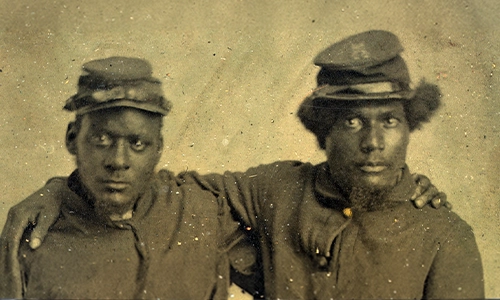
- Harriet Tubman led a military raid that freed over 720 enslaved people — On June 1, 1863, Tubman served as an intelligence operative and led Union Colonel James Montgomery and 300 Black Union soldiers on the Combahee River Raid in South Carolina — the first U.S. military operation planned and led by a woman.
- The Confederacy had spies operating in Washington D.C. from the very beginning — Rose O’Neal Greenhow, a Washington socialite, used coded messages to alert Confederate General P.G.T. Beauregard of Union troop movements before the First Battle of Bull Run — contributing to a Confederate victory.
- Belle Boyd spied for the Confederacy at age 17 — One of the most famous Confederate spies, Boyd passed intelligence to Stonewall Jackson in Virginia’s Shenandoah Valley, and was arrested multiple times but never convicted. She later became an actress and lecturer.
- Both sides used coded cipher systems to encrypt messages — The Union used a complex word-substitution cipher called the ‘route cipher.’ The Confederacy primarily relied on a Vigenère cipher — and Union cryptanalysts often decoded Confederate messages faster than Confederate officers could.
- Allan Pinkerton ran a civilian intelligence operation for the Union — The founder of the Pinkerton National Detective Agency gathered intelligence behind Confederate lines in the early years of the war, though his estimates of Confederate troop numbers were notoriously inflated.
The Confederacy — Inside the Southern War Effort
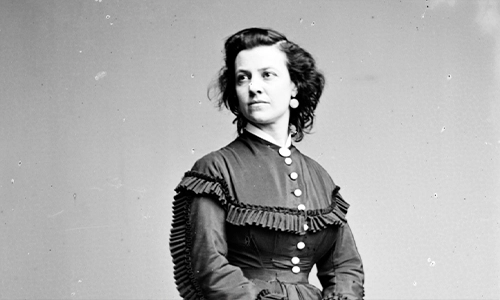
- Jefferson Davis never completed a full term in any elected office in his career — Despite serving as a U.S. Representative, Senator on two separate occasions, and President of the Confederate States, Davis never served a complete term in any of these positions due to war, illness, or resignation.
- The Confederate battle flag was not the official flag of the Confederacy — The familiar ‘Southern Cross’ or ‘rebel flag’ was actually a battle flag used by Confederate troops in the field — not the official national flag of the Confederate States of America, which went through three different designs.
- The Confederacy financed its war partly by printing money — With limited tax revenues — just 11% of fiscal needs — the Confederacy printed paper money aggressively. This caused rampant inflation: by 1864, a Confederate dollar was worth just 5 cents in gold.
- Some Black men fought for the Confederacy — The Confederate Army eventually allowed Black men to serve in combat roles in March 1865, just weeks before the war ended. These men were paid equal wages from the start — in a bitter irony — while Union’s Black soldiers initially were not.
- The Confederacy never received the foreign recognition it desperately needed — Confederate leaders had hoped that Britain and France — dependent on Southern cotton — would formally recognize the Confederacy as a nation. Neither did, partly because of the moral weight of the slavery issue and Lincoln’s skilled diplomacy.
Firsts, Records, and Remarkable Oddities
- The Civil War produced the first Medal of Honor recipients in U.S. history — The Medal of Honor was created in 1861 for the Navy and 1862 for the Army. A total of 1,522 Medals of Honor were awarded during and after the Civil War — still the largest number awarded for any single conflict.
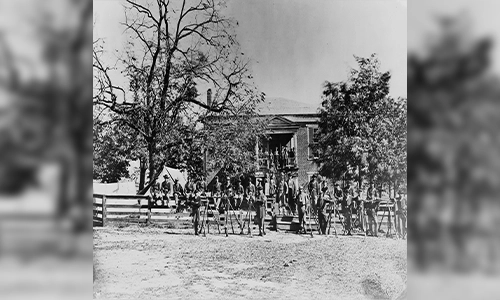
- The Wilmer McLean house was at the beginning and the end of the war — The First Battle of Bull Run was fought partly on McLean’s farm. He moved to Appomattox to escape the war — and it was in his parlor that General Lee surrendered to General Grant on April 9, 1865.
- There was an informal rule against shooting soldiers while they were using the toilet — Soldiers on both sides sometimes observed this unspoken gentlemen’s agreement, particularly during the long encampments that stretched between major engagements.
- The Confederacy enacted America’s first mandatory military draft — In April 1862, the Confederate Congress passed the First Conscription Act — the first military draft in American history, preceding the Union’s Enrollment Act of 1863.
- The H.L. Hunley sank three times — including once before its famous attack — The Confederate submarine sank and killed its crews twice during testing. The third time it sank was just hours after its historic attack on the USS Housatonic in 1864. It was recovered from the seabed in 2000.
- The war featured the first large-scale use of trench warfare in American history — Around Petersburg, Virginia (1864–1865), both sides dug elaborate trench systems stretching 30 miles — a preview of the Western Front tactics that would define World War I fifty years later.
- A soldier once survived a bullet to the brain during the Civil War — Phineas Gage, while not a Civil War case, established that brain injury could alter personality. Civil War doctors began studying head trauma in unprecedented numbers, helping launch the science of neurology.
- Civil War soldiers invented new card games and passed them on to the country — Poker, already popular in the South before the war, spread widely through the ranks of both armies. Soldiers carried decks of cards across the country and popularized what became America’s most iconic card game.
- Some Civil War veterans lived long enough to appear on Facebook — Alberta Martin, the last surviving widow of a Confederate veteran, died in 2004. Maudie Hopkins, another Confederate widow, died in 2008. Their lives literally bridged the 19th and 21st centuries.
- Both sides experienced significant desertion rates — An estimated 200,000 Union soldiers and over 100,000 Confederate soldiers deserted at some point during the war. Desertion was a symptom of poor conditions, lack of pay, and crushing homesickness.
The Aftermath — Reconstruction and Lasting Legacy
- Slavery was abolished by the 13th Amendment in December 1865 — Although Lincoln’s Emancipation Proclamation addressed enslaved people in Confederate states in 1863, it was the 13th Amendment to the Constitution, ratified on December 6, 1865, that formally and legally ended slavery throughout the entire United States.
- The South’s economy was devastated and took decades to recover — Sherman’s March to the Sea (November–December 1864) destroyed railroads, farms, and infrastructure across Georgia and the Carolinas. The Southern economy did not approach pre-war productivity levels until well into the 20th century.
- The Reconstruction Era (1865–1877) attempted to rebuild the nation — The federal government occupied Southern states, required them to ratify the 13th, 14th, and 15th Amendments (abolishing slavery, guaranteeing equal protection, and granting Black men the right to vote), and restructured their governments.
- Over 700 Civil War battlefields still exist today, many threatened by development — Organizations like the American Battlefield Trust have worked for decades to preserve these sites. Hundreds of battlefields have been lost to shopping centers, housing developments, and highways.
- The 14th Amendment, born of the Civil War, still shapes American law today — Ratified in 1868, it guaranteed citizenship and equal protection of the laws to all persons born or naturalized in the United States — a foundational element of virtually every major civil rights case in the 20th and 21st centuries.
- The Civil War dramatically changed the role of the federal government — Before the war, ‘the United States’ was used as a plural noun (‘The United States are…’). After the war, it became singular (‘The United States is…’) — a linguistic shift reflecting the new understanding of the nation as a unified whole, not a collection of sovereign states.
- The war gave birth to Memorial Day (originally called Decoration Day) — On May 30, 1868, Americans were asked to decorate the graves of Civil War soldiers with flowers. This became the national holiday we now know as Memorial Day, observed on the last Monday in May.
- The U.S. national debt skyrocketed from $65 million to $2.7 billion during the war — The Union borrowed heavily from foreign investors to fund its war effort. This debt, and the mechanisms created to service it, laid the groundwork for the modern American financial system and the era of federally issued paper currency.
- The Civil War created a generation of veteran politicians who shaped the Gilded Age — Five of the eight U.S. presidents between 1868 and 1900 were Union veterans: Ulysses Grant, Rutherford Hayes, James Garfield, Benjamin Harrison, and William McKinley. Their wartime experiences deeply influenced national policy.
- The last known Confederate widow died in 2008 — Maudie Hopkins of Arkansas, who married an elderly Confederate veteran in 1934, passed away in 2008, illustrating the extraordinary way in which the Civil War’s human legacy stretched across generations well into the modern era.
These 100 American Civil War facts only scratch the surface of a conflict so vast, so human, and so consequential that historians continue to uncover new details more than 150 years later. From the bloodiest single day in U.S. military history to glowing wounds on a Tennessee battlefield, from a 9-year-old sergeant to widows living into the age of the internet, the Civil War’s reach is extraordinary.
If you want to understand why this war began in the first place — the deep political, economic, and moral tensions that made it inevitable — head over to our companion post: Why Was the American Civil War Fought? Together, these two blogs give you the full picture of America’s defining conflict.
Which fact surprised you the most? Tell us in the comments below!