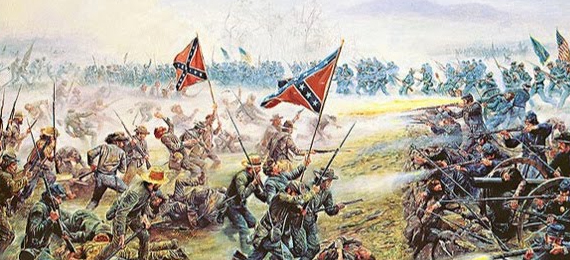
Imagine a very big neighborhood called America, made up of many smaller towns called states. All these states lived together under one roof. But over time, they started arguing. Not about toys or games, but about rules, money, and people’s freedom. Those arguments grew louder and angrier, until one day, they exploded into what we now call the American Civil War.
So, what was the cause of the Civil War?
The short answer is: deep disagreements that had been building for decades.
Two Sides, Two Very Different Ways of Living
Who was the President of the United States during the Civil War?
- A. 1923
- B. 1798
- C. 1861
- D. 1834
In the early 1800s, America was slowly splitting into two worlds.
The Northern States
- Had factories and cities
- Believed slavery should end
- Wanted one strong national government
The Southern States
- Depended on farming, especially cotton
- Used enslaved people as forced labor
- Believed states should make their own rules
These differences didn’t seem dangerous at first. But they kept rubbing against each other like stones in a shoe.
Slavery: The Biggest and Most Painful Issue
If someone asks what was the cause of the Civil War was, slavery must be at the center of the answer.
Southern states believed their economy couldn’t survive without enslaved labor. Northern states believed slavery was wrong and should not spread to new states.
Every time America tried to add a new state, the same argument returned:
- Would it allow slavery?
- Or would it ban it?
Each decision felt like a tug-of-war, pulling the country further apart.
States’ Rights vs. Federal Power
Another major disagreement was who gets to make the rules.
Southern leaders believed: “States should decide what’s best for themselves.”
Northern leaders believed: “The national government should make laws for everyone.”
This idea, called states’ rights, became a shield Southern states used to defend slavery, even when the rest of the country pushed back.
The Breaking Point: Abraham Lincoln’s Election
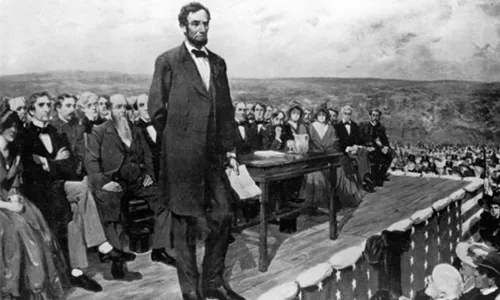
In 1860, Abraham Lincoln was elected President.
He promised:
- Not to allow slavery to spread
- To keep the country united
To many Southern states, this felt like a threat. They feared slavery would eventually be taken away. So they made a dramatic decision.
When Did the Civil War Really Begin?
After Lincoln’s election:
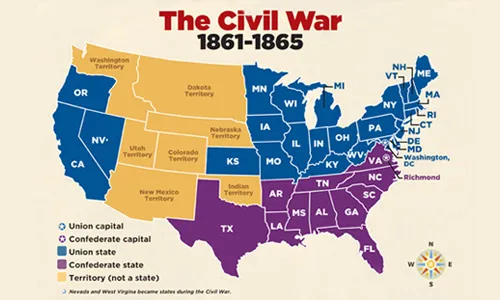
- Several Southern states left the Union
- They formed their own group called the Confederacy
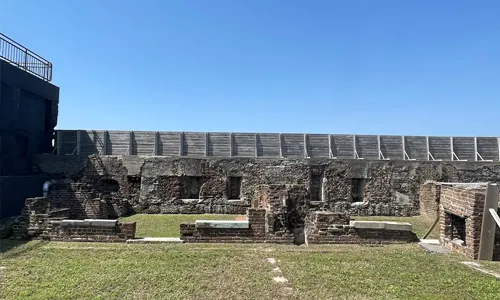
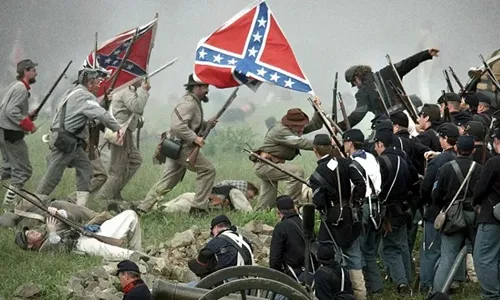
In 1861, fighting began at Fort Sumter.
At that moment, arguments turned into gunfire.
The Civil War had begun.
So, What Was the Cause of the Civil War?
In simple terms:
- Slavery divided the nation
- States’ rights fueled the arguments
- Economic differences widened the gap
- Political tensions finally snapped
The Civil War wasn’t caused by one single event. It was caused by years of unresolved conflict that America could no longer ignore.
Timeline: How Things Escalated
- 1820s–1850s: Arguments over slavery grow
- 1860: Abraham Lincoln elected
- 1861: Southern states secede
- 1861–1865: Civil War is fought
How Did the Civil War End?
After four long years of fighting, the Southern army grew tired and weak. In 1865, their leader, General Robert E. Lee, met the Northern general, Ulysses S. Grant, at a quiet place called Appomattox Court House. There were no loud cheers or celebrations. Instead, the leaders shook hands, and the fighting stopped. The Southern states returned to the United States, slavery was officially ended, and the country began the slow work of healing its wounds.
Important People of the American Civil War
| Name | Side | Who They Were | Why They Were Important |
| Abraham Lincoln | North (Union) | President of the United States | He wanted to keep the country together and believed slavery was wrong. He led the nation through its hardest time. |
| Jefferson Davis | South (Confederacy) | President of the Confederate States | He led the Southern states after they broke away from the U.S. and supported states’ rights and slavery. |
| Ulysses S. Grant | North (Union) | Top Army General | He helped the North win by never giving up and eventually accepted the South’s surrender. |
| Robert E. Lee | South (Confederacy) | Top Army General | A brilliant military leader who led the Southern army and later chose peace over more fighting. |
| Harriet Tubman | North (Union) | Freedom fighter and spy | She helped enslaved people escape to freedom and even helped the Union army secretly. |
| Frederick Douglass | North (Union) | Writer and speaker | He spoke bravely against slavery and advised President Lincoln. |
| Clara Barton | North (Union) | Nurse | She cared for wounded soldiers and later founded the American Red Cross. |
| William Tecumseh Sherman | North (Union) | Army General | He used powerful strategies that weakened the South and helped end the war faster. |
FAQs (For Curious Minds)
Was slavery the only cause of the Civil War?
No, but it was the most important one. Other causes supported or revolved around it.
Did all Americans agree on fighting the war?
No. Many people on both sides were afraid and unsure.
Did the Civil War end slavery?
Yes. Slavery was abolished after the war ended in 1865.
Why is the Civil War still talked about today?
Because its effects shaped modern America, from laws to civil rights.
The Civil War reminds us that when problems are ignored for too long, they don’t disappear. They grow louder. Understanding what was the cause of the Civil War helps us understand why unity, fairness, and dialogue matter even today 🇺🇸