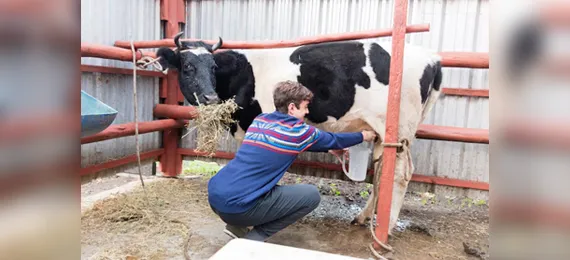
Ever wondered just how much milk flows from a single cow throughout her entire life? Prepare to be amazed! The average dairy cow is basically a four-legged milk factory that can produce enough milk to fill a small swimming pool during her productive years.
Lifetime Milk Production
The average Holstein cow will produce around 23,000 pounds of milk during each lactation period, but let’s dive deeper into what this means over an entire lifetime. One could expect the average jersey cow to produce 21,600 gallons of milk in her lifetime if given 12 lactations.
How Many Liters of Milk Can a Cow Produce in a Lifetime?
- A. 20,350 Gallons
- B. 18,750 Gallons
- C. 15,250 Gallons
- D. 10,950 Gallons
To put this in perspective, that’s enough milk to:
- Fill 345,600 standard milk cartons
- Provide a glass of milk daily for 59 years straight
- Make approximately 2,160 pounds of cheese
But the numbers vary dramatically depending on the breed, age, and farming conditions. Let’s break down exactly how much milk different breeds produce.
Milk Production by Breed
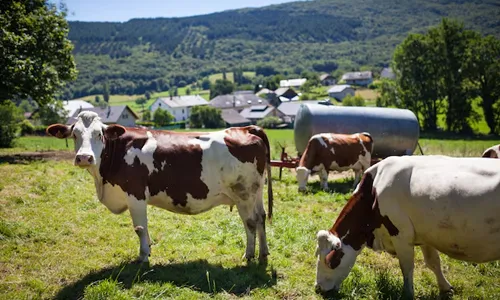
| Breed | Weight (lbs) | Daily Production | Yearly Production | Lifetime Production | Butterfat % | Years Producing |
| Holstein | 1,400-1,500 | 9 gallons | 2,900-3,100 gallons | 20,000-25,000 gallons | 3.60% | 7-8 years |
| Jersey | 900-1,000 | 8 gallons | 2,200-2,400 gallons | 21,600 gallons | 4.5-5.5% | 8-10 years |
| Guernsey | 1,100-1,200 | 6-7 gallons | 2,000-2,300 gallons | 16,000-18,000 gallons | 4.50% | 7-8 years |
| Brown Swiss | 1,300-1,400 | 7-8 gallons | 2,400-2,600 gallons | 18,000-20,000 gallons | 4.00% | 8-9 years |
| Ayrshire | 1,200-1,300 | 6-7 gallons | 2,100-2,300 gallons | 16,000-19,000 gallons | 4.00% | 7-8 years |
Note: Production varies based on genetics, nutrition, management, and environmental factors
Daily Milk Production
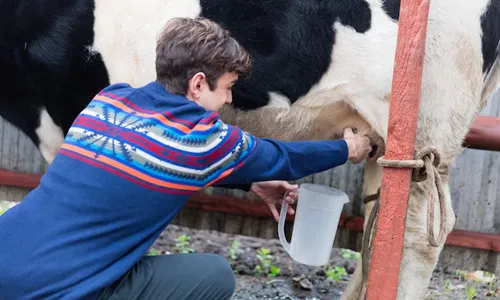
How much milk does a cow give per day? This depends heavily on the breed and individual cow. On average, a dairy cow can give up to 28 litres of milk/day (about 7.4 gallons), but top-performing Holsteins can produce even more.
Holstein Cows: These black and white champions are the marathon runners of the dairy world. A single Holstein averages about 9 gallons of milk per day, making them the highest producers.
Jersey Cows: Don’t let their smaller size fool you! A Jersey cow can produce about 68 pounds of milk a day (about 8 gallons) with a butterfat content of 4.5% to 5.5%. What they lack in volume, they make up for in quality.
How Do Cows Actually Produce It?
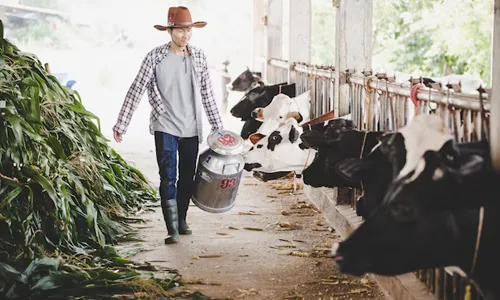
Here’s where it gets fascinating! Contrary to popular belief, cows don’t just naturally produce milk 24/7 like a magical fountain. The process is far more complex and interesting.
The Lactation Cycle
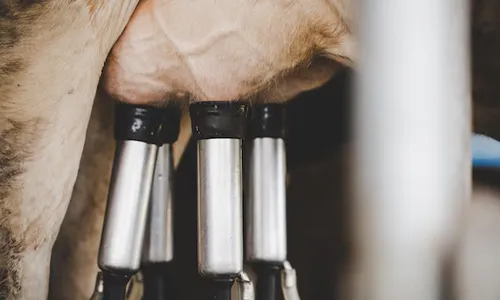
A cow’s milk production follows a precise biological cycle:
- Pregnancy: Cows must first become pregnant to trigger milk production
- Calving: After giving birth, milk production begins
- Peak Production: Occurs 40-60 days after calving
- Gradual Decline: Milk production slowly decreases over 10-12 months
- Dry Period: A 2-month rest before the next pregnancy
A reduction in milk yield occurs during late lactation and finally when yields drop to 8-9 litres/day the drying off period commences.
Frequently Asked Questions
Do cows have to be pregnant to produce milk?
Yes, absolutely! Just like humans and all mammals, cows must give birth to start producing milk. The milk is initially produced to feed their calves, but through selective breeding and farm management, dairy cows produce far more milk than their calves need.
How long do cows produce milk?
A typical lactation period lasts about 10-12 months. Holstein cow will produce around 23,000 pounds of milk during each lactation period and can give birth for the first time at just 23 months old. After this, cows have a “dry period” of about 2 months before calving again.
How do cows produce milk when not pregnant?
They don’t! This is a common misconception. Cows only produce milk after giving birth and during their lactation period. They must become pregnant again to continue the cycle, though they can continue producing milk from their previous pregnancy for several months.
Do cows give milk all the time?
No, cows follow a cyclical pattern. They produce milk for about 10 months after giving birth, then have a 2-month “dry” period to rest and prepare for their next calf. During the dry period, milk production stops completely.
How many gallons of milk does a cow produce?
This varies by breed and individual cow. A single Holstein averages about 9 gallons of milk per day, while smaller breeds like Jersey cows produce about 6-8 gallons daily. Annually, a good dairy cow produces 2,000-3,000 gallons.
Jersey cow milk production per day in litres
A Jersey cow can produce about 68 pounds of milk a day (about 8 gallons), which equals approximately 30 litres per day. Jersey cows are prized for their rich, creamy milk with higher butterfat content.
How much milk does a Holstein cow produce per day?
Holsteins are the superstars of milk production, known for producing the highest quantity of milk compared to other breeds. A single Holstein averages about 9 gallons of milk per day. Some exceptional Holsteins can produce up to 12 gallons daily at peak production.
How many years can a cow produce milk?
A dairy cow typically produces milk for 5-8 productive years, though some exceptional cows continue for 10+ years. One could expect the average jersey cow to produce 21,600 gallons of milk in her lifetime if given 12 lactations, which typically occurs over 8-10 years.
Why do cows always have milk?
This is a myth! Cows don’t “always” have milk. They only produce milk after giving birth and during their lactation period. However, on commercial dairy farms, cows are bred on a schedule so that different cows are at different stages of lactation, ensuring a constant milk supply from the herd as a whole.
Amazing Milk Production Facts
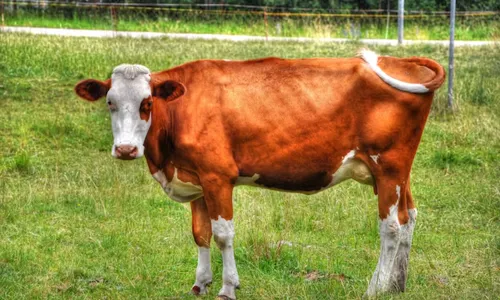
Record Holders
The world record for daily milk production belongs to a Holstein cow named Robthom Sue Paddy, who produced an astounding 216.89 pounds (about 25 gallons) of milk in a single day!
Quality vs. Quantity
While Holsteins win the volume game, Jersey cows produce the richest milk. Their milk contains 4.5-5.5% butterfat compared to Holstein’s 3.6%.
Global Impact
The top breed of dairy cow within Canada’s national herd category is Holstein, taking up 93% of the dairy cow population, have an annual production rate of 10,257 kilograms (22,613 pounds) of milk per cow.
Efficiency Champions
Modern dairy cows are incredibly efficient. They convert grass and feed into milk at a rate that would make any factory jealous, transforming simple plants into one of nature’s most complete foods.
The next time you pour a glass of milk, remember that it represents the incredible biological machinery of some amazing animals. Whether it’s a massive Holstein producing 9 gallons daily or a petite Jersey cow creating rich, creamy milk, these bovine superstars are truly remarkable creatures.
From the 20,000+ gallons a Holstein produces in her lifetime to the premium quality of Jersey milk, each breed brings something special to our tables. It’s no wonder that dairy farming has been a cornerstone of agriculture for thousands of years and continue to amaze us with their productivity and the essential nutrition they provide to the world. If you are a vegan, you’ve got oat milk with all essential nutrients.