
Two scoops of vanilla. A river of chocolate sauce. A cloud of whipped cream. And that iconic cherry on top. The ice cream sundae is one of America’s most beloved desserts — but the origin of the ice cream sundae is, frankly, one of the tastiest mysteries in food history.
Multiple cities claim to have invented it. Historians still argue about it. Two rival towns even wrote songs trash-talking each other over it. Yes, really. And buried underneath all this sweet drama is a wild story involving blue laws, rebellious little girls, small-town pharmacists, and a Unitarian reverend.
Ready to dig in? This one’s better than the dessert itself.
1. Where Did the Ice Cream Sundae Originate?
- A. USA
- B. China
- C. Africa
- D. Australia
Quick Scoop: The ice cream sundae originated in the late 1800s in the United States — but who made it first, and exactly where, remains hotly debated. At least four cities claim to be the true birthplace, each with its own compelling story.
What Exactly Is an Ice Cream Sundae?

Before we dive into the history, let’s clear up a common mix-up. An ice cream soda — the wildly popular drink of the late 1800s — combined ice cream with carbonated water and flavored syrup. An ice cream sundae drops the soda entirely and goes straight for the good stuff: ice cream topped with sauce, syrup, whipped cream, nuts, fruit, and that all-important cherry.
It’s a small but critical difference — and as you’re about to find out, that distinction between the soda and the sundae is precisely what sparked the whole origin story in the first place.
The Strange Law That Might Have Invented the Sundae
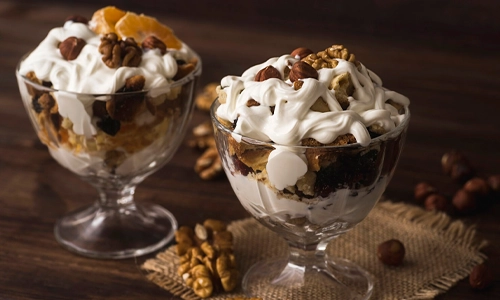
Here’s the plot twist nobody expects: the ice cream sundae may have been born out of rebellion against a law.
In the late 1800s, many American towns operated under blue laws — religion-based regulations that restricted all kinds of activities on Sundays. Some towns banned liquor sales. Others banned dancing. And in certain places, they even banned the sale of ice cream sodas on Sundays, because the fizzy, frilly treat was considered too frivolous for the Sabbath.
So what did enterprising soda fountain owners do? They got creative. They dropped the soda water — which was the legally prohibited part — and served just the ice cream with flavored syrup on top. No bubbles, no legal problem. And just like that, a new dessert was born.
Wild But True: Evanston, Illinois — a strict Methodist stronghold — banned the sale of soda on Sundays. Local soda fountain owners responded by inventing a ‘dry soda’: ice cream topped with syrup but without the carbonated water. They called it a Sunday. The name eventually changed to ‘sundae’ to avoid offending the church.
The Great Sundae War: Four Cities, One Dessert

The origin of ice cream sundae is so fiercely contested that historians have dubbed the dispute the ‘Sundae War.’ Four cities make the strongest claims — and each has a genuinely compelling story. Here’s the full breakdown:
| City & State | Who Did It | When | The Story | Evidence |
| Two Rivers, WI | Ed Berners | 1881 | George Hallauer asked Berners to drizzle chocolate sauce over vanilla ice cream. Berners sold it for 5 cents, Sundays only — then every day. | Wisconsin Historical Marker; Berners’ 1939 obituary in Chicago Tribune |
| Ithaca, NY | Chester Platt | April 3, 1892 | Platt served Rev. John Scott cherry syrup + a candied cherry on vanilla ice cream after Sunday church. Named it ‘Cherry Sunday.’ | April 5, 1892 newspaper ad in Ithaca Daily Journal; Platt & Colt ledger books (discovered 2007) |
| Evanston, IL | William Garwood / Newton Williams | Late 1800s | Blue laws banned soda on Sundays. A local soda fountain owner dropped the soda and served ice cream with syrup only — the ‘dry soda.’ | Local accounts; referenced by food historian Anne Cooper Funderburg |
| Cleveland, OH | Unknown druggist | Late 1800s | To get around blue laws, a druggist topped ice cream with fruit and called it a ‘Fruit Sunday’ — legal since it wasn’t technically a soda. | Referenced in Sundae Best (2002) by Anne Cooper Funderburg |
The fiercest battle? Definitely between Two Rivers and Ithaca. The two cities have traded barbs for over a century — Ithaca’s mayor once told the New York Times that his city had ‘the historical documents’ while Two Rivers did not. Two Rivers fired back by passing a city resolution demanding Ithaca ‘cease and desist’ with its ‘sundae slanders.’ Both cities even wrote competing songs about it. This is American food history at its most delightfully unhinged.
Ithaca’s Claim: The Cherry Sunday of 1892
Of all the origin stories, Ithaca, New York, has the most documented paper trail — which is why many historians give it the edge.
Here’s how the story goes: On Sunday, April 3, 1892, Reverend John M. Scott of the local Unitarian Church strolled into Platt & Colt Pharmacy after services. Chester Platt, the pharmacy owner, decided to do something a little special. Instead of plain vanilla ice cream, he dressed it up with cherry syrup and a candied cherry on top — served in a champagne saucer, no less. Accounts differ on whether it was Platt or Scott who came up with the name, but they called the new creation a ‘Cherry Sunday’ in honor of the day.
Two weeks later, Platt ran advertisements for the ‘Cherry Sunday’ in the Ithaca Daily Journal — the first known newspaper ad for an ice cream sundae, dated April 5, 1892. Those original ads are now stored in Cornell University’s Kroch Library. Even more compelling: researchers discovered the original Platt & Colt ledger books in 2007, which confirm that Platt was indeed selling ice cream and had all the necessary supplies on hand. The ledgers also revealed that employee DeForest Christiance — who later bought the business and kept the origin story alive — got a raise two weeks after they started selling sundaes (from $2 a week to $4.50). Someone was having a very good month.
Cornell Connection: Cornell University students witnessed the Cherry Sunday’s debut and helped make it famous — ordering the new treat, then spreading the word across the country during vacations and after graduation. Platt & Colt even ran six ads in the Cornell student newspaper within two weeks of the first sundae.
Two Rivers’ Claim: The Chocolate Sauce Moment of 1881
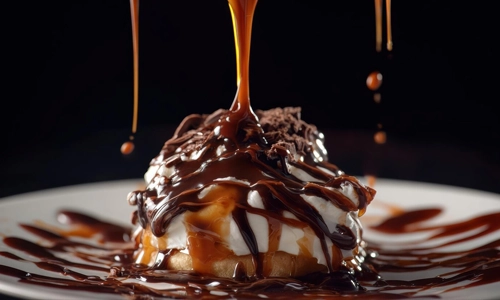
Two Rivers, Wisconsin, sets its claim a full decade earlier — 1881 — and their story has a completely different flavor (pun absolutely intended).
According to local lore and a Wisconsin Historical Marker, a customer named George Hallauer walked into Ed Berners’ soda fountain on a summer Sunday and made a bold request: he asked Berners to pour chocolate sauce — normally reserved only for ice cream sodas — directly over a dish of plain ice cream. Berners was skeptical. Chocolate sauce over plain ice cream? That seemed odd. But he did it anyway, and the result was a hit.
Berners started selling his chocolate ice cream creation every Sunday for a nickel. Then a young girl came in on a weekday and insisted she wanted ‘ice cream with that stuff on top.’ Berners said he only served it on Sundays. The girl, full of charm and determination, suggested they simply pretend it was Sunday. That opened the floodgates — and Berners started offering the dish every day of the week, in multiple flavors.
When Berners died in 1939, the Chicago Tribune ran his obituary under the headline: ‘Man Who Made First Ice Cream Sundae Is Dead.’ Today, Two Rivers has a working replica of Berners’ soda fountain in its Washington House Hotel Museum, where you can order your own Two Rivers sundae.
A Historical Wrinkle: Wisconsin birth records show Ed Berners was only 18 years old in 1881 — raising questions about whether he could have been running his own soda fountain at that age. Critics of the Two Rivers claim point to this inconsistency, while Two Rivers supporters maintain the story stands regardless of his exact age.
Why Is It Spelled ‘Sundae’ and Not ‘Sunday’?

Here’s one of the juiciest little mysteries in American food history — and the answer might be a combination of several things.
Theory 1: Respect for the Sabbath
Many historians believe the spelling changed from ‘Sunday’ to ‘sundae’ specifically to avoid offending religious communities who felt it was inappropriate to name a novelty dessert after the Lord’s day of rest.
Theory 2: A Glassware Salesman’s Handwriting
According to the Two Rivers version of the story, a glassware salesman placed an order for Berners’ signature canoe-shaped dishes with his company — spelling it ‘sundae’ with an ‘e’ instead of a ‘y.’ The alternate spelling stuck.
Theory 3: To Clarify It’s Available Every Day
Once sundae shops started serving the dish daily rather than just on Sundays, some proprietors changed the spelling to ‘sundae’ to signal it wasn’t a Sunday-only item anymore.
Theory 4: A Fruit Syrup Manufacturer Got There First
DeForest Christiance (Chester Platt’s employee) recalled in a letter that ‘one of the fruit syrup manufacturers came out with the name Sundae’ — suggesting a commercial supplier may have popularized the alternate spelling.
The most likely answer? It was probably a combination of all four factors working together over time. The Oxford English Dictionary itself notes that the exact origin of the spelling remains ‘uncertain.’
The Origin of Ice Cream Sundae, Year by Year
- 1881 — George Hallauer asks Ed Berners to pour chocolate sauce over ice cream in Two Rivers, WI. Berners sells it for 5 cents, Sundays only.
- 1889 — A Buffalo, NY drug store advertises fruit syrup and whipped cream on ice cream sodas — an early proto-sundae, predating Ithaca’s claim but without the word ‘Sunday.’
- 1892 — Chester Platt serves Reverend John Scott the first ‘Cherry Sunday’ at Platt & Colt Pharmacy in Ithaca, NY on April 3. Platt advertises it in the Ithaca Daily Journal on April 5 — the first known newspaper ad for a sundae.
- 1894 — Platt contacts a patent attorney seeking trademark protection for the word ‘Sunday’ for ice cream novelties. The attorney tells him federal trademark protection isn’t available for domestic sales.
- Late 1890s — Evanston, IL and Cleveland, OH develop their own sundae-adjacent creations as workarounds for Sunday blue laws.
- 1902 — A magazine for pharmacists called The Spatula describes the growing popularity of the ‘sundae,’ signaling the spelling shift is underway.
- 1909 — The Ice Cream Trade Journal lists dozens of named sundae varieties, from the Robin Hood Sundae to the George Washington Sundae.
- 1924 — Christiance runs an ad calling his Ithaca shop the ‘Origin of the Word Sundae.’
- 1939 — Ed Berners dies. The Chicago Tribune headlines his obituary: ‘Man Who Made First Ice Cream Sundae Is Dead.’
- 1973 — The Wisconsin State Historical Society erects an official marker in Two Rivers naming it the birthplace of the sundae.
- 2007 — Researchers discover Platt & Colt’s original ledger books in Cornell University’s archives, bolstering Ithaca’s documentary evidence.
Common Misconceptions About the Ice Cream Sundae’s Origin
| ❌ The Myth | ✅ The Truth |
| Sundaes were always called ‘sundaes.’ | Originally spelled ‘Sunday’ — the alternate spelling came later to avoid offending religious communities or to sidestep blue laws. |
| Ice cream sodas and sundaes are the same. | Nope! Ice cream sodas contain carbonated water. A sundae drops the soda and adds sauce or syrup directly to the ice cream. |
| One city definitely invented the sundae. | Historians still debate it! Multiple cities have legitimate claims, and the true origin may never be confirmed with certainty. |
| The sundae was an instant national sensation. | It was a slow burn — the sundae became a soda fountain staple by the early 1900s, spreading city by city over a decade. |
Did You Know?

- The classic sundae is traditionally served in a tulip-shaped, footed glass vase — now universally called a ‘sundae glass’ because of the association.
- The tin roof sundae — vanilla ice cream, chocolate sauce, and Spanish peanuts — was first made in the 1930s at the Potter Sundry soda fountain in Potter, Nebraska.
- The famous banana split is technically a variation of the sundae — invented in Latrobe, Pennsylvania in 1904.
- Marilyn Monroe was reportedly a big fan of the hot fudge sundae. Julia Child served a version with bourbon and instant coffee to her dinner guests.
- In 1909, the Ice Cream Trade Journal listed unique sundae varieties including the ‘Jennie Flip,’ the ‘Flora Dora,’ and the ‘Knickerbocker Sundae.’
- A Plainfield, IL druggist named Sonntag (German for ‘Sunday’) allegedly named his sundae after himself — and the German translation did the rest.
FAQs
Who invented the ice cream sundae?
That’s genuinely disputed! The strongest competing claims come from Chester Platt of Ithaca, NY (1892) and Ed Berners of Two Rivers, WI (1881). Ithaca has more documented evidence; Two Rivers has the earlier date.
Where did the ice cream sundae originate?
Multiple cities claim to be the birthplace, including Two Rivers, WI; Ithaca, NY; Evanston, IL; and Cleveland, OH. Historians have never conclusively settled the debate.
Why is it spelled ‘sundae’ not ‘Sunday’?
Most likely a combination of reasons: to avoid offending the church, to signal the dish was available every day (not just Sundays), and possibly because a glassware salesman popularized the alternate spelling.
When was the ice cream sundae invented?
The earliest documented claim is 1881 in Two Rivers, WI. The first newspaper advertisement for a sundae dates to April 5, 1892 in Ithaca, NY.
What was the original ice cream sundae?
The original versions were simple: vanilla ice cream topped with flavored syrup (chocolate or cherry) and, sometimes, a candied cherry. No elaborate toppings — just the bare-bones, glorious original.
Why was the ice cream sundae invented?
Partly as a creative workaround for blue laws that banned ice cream soda sales on Sundays. By removing the soda water, soda fountain owners could legally sell the treat on the Sabbath.
A Delicious Mystery

The origin of ice cream sundae is one of those rare historical debates where the journey is more fun than the destination. Was it Two Rivers in 1881? Ithaca in 1892? A blue law workaround in Evanston? An ingenious druggist named Sonntag?
The honest answer is: we don’t know for certain, and we may never know. But what we do know is that somewhere in late 19th-century America, someone made the brilliant decision to pour something delicious over a scoop of ice cream — and the world has been a better place ever since.
So next time you dig into a sundae, raise your spoon to all those anonymous inventors, stubborn soda fountain owners, and rebellious little girls who insisted on having chocolate sauce on a Tuesday. They all deserve a cherry on top.