It’s that time of year again! No, I’m not talking about pumpkin spice season—I’m talking about Daylight Saving Time Fall Back (DST). Yep, that magical, slightly confusing moment when we get to turn back the clock by one whole hour, making us feel like time travelers without a DeLorean. Some of us will spend that extra hour sleeping in, while others might binge-watch Netflix or wonder why their pets haven’t adjusted to the new schedule. But what’s going on with this quirky clock-switching phenomenon? Is it a harmless ritual, or are we all just a little bit dazed twice a year?
Let’s find out the fun facts, trivia, and common questions and answers about DST Fall Back, plus figure out why we’ve been messing with our clocks for over 100 years.
A Brief History of Daylight Saving Time
When does Daylight Saving Time Fall Back happen in the U.S.?
- A. Second Sunday of October
- B. First Sunday of November
- C. Last Sunday of November
- D. First Sunday of December
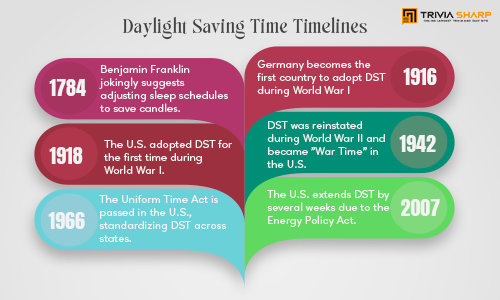
Believe it or not, Daylight Saving Time wasn’t invented by a bored clockmaker looking to pull a fast one on us. It started during World War I as a way to conserve fuel. Benjamin Franklin (yep, that guy with the kite and the lightning) jokingly proposed the idea of saving daylight in 1784, but it wasn’t until the Germans and Brits took it seriously in 1916 that the world started fiddling with the clock.
The U.S. got in on the action in 1918, and we’ve been adjusting our clocks every spring and fall since then—much to the delight and frustration of people everywhere. And while we may not be fighting the same wars, the battle against losing an hour of sleep in the spring and gaining one back in the fall continues. If you want more fun facts about Daylight Saving Time, stay tuned because there’s plenty more where that came from!
The Clock Shuffle Explained: When DST Starts, Ends, and Restarts
Here’s where things get tricky—knowing when to spring forward and fall back. Let’s simplify this time-travel adventure for you.
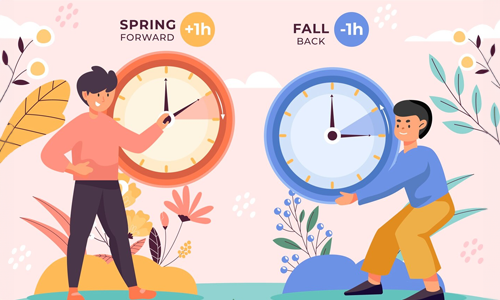
- Spring Forward
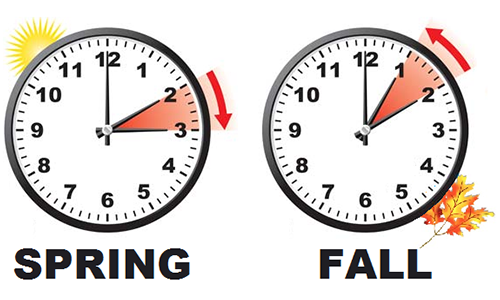
On March 10, 2024, at exactly 2:00 a.m., we lose one precious hour of sleep. One minute, it’s 1:59 a.m., and suddenly it’s 3:00 a.m.! The good news? You’ll get that hour back when…
- Fall Back
On November 3, 2024, at 2:00 a.m., you’ll gain that extra hour. It’s like a little gift from the clock gods, and suddenly, 2:00 a.m. turns into 1:00 a.m. again. Confused yet? Don’t worry; most of us are.
But that’s the schedule, folks—DST starts in March and ends in November, and we rinse and repeat the whole process every year. Still curious about how time zones impact DST? Take our Daylight Saving Time quiz to see how well you know your clocks!
Time Zones and DST: A Match Made in Confusion
If you thought DST was confusing, throw time zones into the mix, and it’s a whole new level of chaos. In the U.S., time changes hit people differently depending on their time zone. For example, folks in Eastern Time spring forward and fall back before those in Pacific Time do, which can make scheduling anything—like a Zoom call—a total headache.
And don’t even get me started on international time zones! Are you trying to determine whether your flight from New York to London matches a connecting flight to Tokyo after a DST switch? Yeah, good luck with that. You might as well hire a time-travel guide.
You should grab a coffee for more mind-bending Daylight Saving Time trivia and questions.
Does DST Help Us Feel Better or Just Tired?

Here’s the kicker—DST messes with our sleep cycles in a way that has more impact than you’d think. Sure, the Fall Back side of the deal gives us that extra hour of snooze time (cue the cheers!), but studies have shown that changing the clocks twice a year can mess with your circadian rhythm (fancy talk for your body’s natural sleep cycle). This can lead to:
- Sleep disruption (duh)
- Higher rates of heart attacks right after the spring-forward part
- Increased risk of car accidents due to tired drivers
- Lower productivity because let’s face it, nobody’s bouncing out of bed with extra energy after the time change
So, while we may gain an hour in the fall, the health and productivity risks tied to DST can be less rosy.
Is This About Saving Power?
Remember the old tale that Daylight Saving Time was introduced to save energy? Well, sort of. Back in the day (we’re talking about the early 1900s), the idea was that people would use less artificial lighting with more sunlight in the evening, thus conserving energy.
Fast forward to the modern era, and studies show that energy savings are minimal—so tiny that we’re only saving fractions of a percent of our electricity usage. It’s like finding loose change in your couch cushions. Sure, it’s nice, but it’s not exactly a game-changer. Plus, with all of us turning up our air conditioners or heaters during those darker evenings, the whole “energy savings” argument loses its spark.
Keep reading for more Daylight Saving Time facts and trivia—you’ll be surprised at what else you might discover.
Countries That Love (or Hate) DST
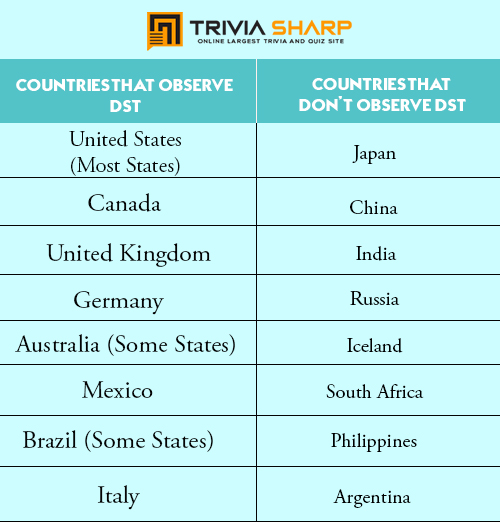
Alright, so who’s in on this twice-a-year clock-twisting phenomenon, and who’s over it? It turns out that around 70 countries in the world still follow DST, but not everyone’s on board.
The Lovers
Most of Europe, North America, and parts of the Middle East are totally in the DST game. The UK, Canada, and almost all of the U.S. (except for a few rebellious states—more on that later) still adjust their clocks twice a year, enjoying more evening daylight, at least in theory.
The Haters
Japan, India, and China say, “Nah, we’re good.” These countries don’t bother with DST at all. And in the U.S., Hawaii and most of Arizona also sit this out. It’s as if they said, “We have enough sunshine, thanks!” While the rest of us groan about the time change, these lucky ducks carry on as usual. No falling back or springing forward for them!
We are interested in more countries that do or don’t follow DST. Test your knowledge with our Daylight Saving Time trivia quiz!
Myths & Misconceptions
There’s a popular myth that DST was invented for farmers to give them more daylight hours to tend their crops. The truth? Farmers hate DST. Cows don’t care what time it is—they still need to be milked simultaneously, and shifting the clocks around doesn’t make their lives easier.
Another fun misconception is that DST gives you more daylight. Nope, the amount of sunlight stays the same—it’s just that you’re awake at different times to experience it. So, DST isn’t magically extending your day—it’s just messing with your internal clock.
Daylight Saving Time Fall Back Facts You’ve Probably Never Heard Of
You Might Dream More During Fall Back
Ever had a crazy, vivid dream on the night of Fall Back? If you have, you’re not alone. That extra hour of sleep can push your body into extended REM sleep, which is the phase when your brain goes into dream mode. And guess what? The longer you’re in REM, the weirder (and more memorable) your dreams can get. So next time you wake up after Fall Back, don’t be surprised if you recall some epic, out-of-this-world dream adventure.
World War II Almost Put an End to Daylight Saving Time
You probably know that Daylight Saving Time was introduced during World War I to save energy, but did you know it almost got scrapped during World War II? Yup! Some cities in the U.S. weren’t happy about how DST messed with work schedules for industries critical to the war effort. There was even a push to eliminate it to keep things simple. But the government eventually decided to stick with it, and here we are today. Crazy, right?
It Can Lower Crime Rates (Temporarily, At Least)
Here’s a fun one: crime rates tend to drop right after we “Fall Back.” No, seriously! The shift in daylight hours throws off criminals’ routines (yeah, they have routines, too). Things like burglaries or muggings dip for a brief period after the time change. Who knew criminals were that sensitive to clock changes? But don’t get too comfortable—the effect only lasts briefly before the bad guys get their bearings again.
The First Week After Fall Back = Safer Roads (But Watch Out Later)
Traffic Accidents Rate after Fall Back
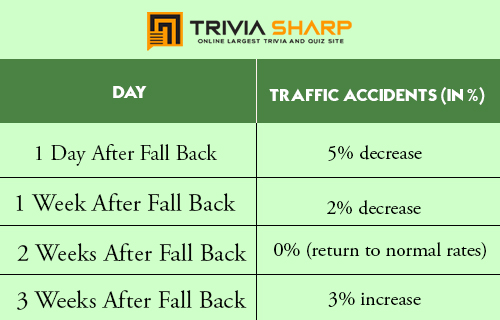
Ever feel a little more refreshed and alert after Fall Back? It turns out that an extra hour of sleep can make a big difference for drivers, and guess what—it leads to fewer traffic accidents during that first week. That’s right! Drivers are typically more focused and less likely to make mistakes. But there’s a catch. After that initial period, the earlier sunsets increase evening accidents—especially involving pedestrians. So enjoy that short window of safety while you can!
It Can Lead to Weird Legal Disputes
Get this—some countries that tightly regulate employment hours and contracts run into a bizarre issue during the fallback hour. Imagine this: if someone is working a shift that spans 1:00 a.m. twice (yep because the clocks fall back), technically, they’re on the job for an extra hour. In some places, employers are legally required to pay for that extra hour, even though the workers didn’t work longer. It’s led to some odd legal situations, especially in healthcare-related industries. Time law problems—who knew?
Pets are Not So Thrilled About FallBack

Poor things don’t know why their feeding or walking schedules suddenly change, and that extra hour can mess with their routines. If your dog gives you a side-eye for making them wait longer for breakfast after Fall Back, now you know why! You should gradually adjust your pet’s routine before the time change to avoid them getting anxious or restless. You’re welcome, Fido!
Early Computers Were Completely Confused by DST
If you think it confuses you, wait until you hear what it did to early computers. Back in the day, computers couldn’t handle DST changes automatically. Users had to adjust clocks manually, and if you forgot? Chaos. Some systems would subtract or add an hour at the wrong time, messing up essential processes. This time-twisting disaster led to more sophisticated systems, like Network Time Protocol (NTP), to keep computers in sync. Now your laptop doesn’t need to freak out when the clocks change—thank goodness!
Who Benefits & Who Suffers from DST?
- Winners
Night owls who enjoy that extra hour of sleep in the fall. Also, coffee shops, because, let’s face it, people need extra caffeine to adjust.
- Losers
Early birds, parents with small children, anyone with pets (they don’t adjust to time changes!), and people who forget to change their clocks.
Think you can name all the winners and losers? Test yourself in our Daylight Saving Time quiz to find out who wins and loses in this time-twisting game!
The Laws of Daylight Saving Time
In the U.S., states can opt out of DST (like Arizona and Hawaii did) but can’t make it permanent without Congress’s approval. Enter the Sunshine Protection Act, which aims to make DST the default year-round. This bill has been floating around, and while it hasn’t passed yet, the idea of never having to “spring forward” or “fall back” again sounds pretty dreamy, right?
FAQs About Daylight Saving Time
1. Does Every Country Use Daylight Saving Time?
Nope! About 70 countries do, but most of the world has ditched it—especially places like Japan, India, and China.
2. Why was Daylight Saving Time Created?
Originally, DST was introduced during WWI to save energy by maximizing daylight hours. Now, its usefulness is up for debate.
3. Why Doesn’t Arizona Follow DST?
Arizona figured they’d got enough sunlight already and decided DST wasn’t worth the hassle. Plus, who wants more sun in the desert?
4. How Does DST Affect Health?
Messing with your sleep schedule can increase stress, disrupt your circadian rhythm, and lead to higher accident risks—especially after the spring-forward change.
5. Will We Ever Stop Changing the Clocks?
It’s possible! Some states want to make DST permanent, but it’ll take congressional approval. So maybe one day, we’ll be done with all this clock-switching madness.
So, are we all-time wizards or just playing tricks on ourselves? Daylight Saving Time Fall Back is one of those quirky traditions that either unites us or leaves us scratching our heads. Whether you love it, hate it, or completely forget about it, there’s no denying it adds a little flavor to our yearly routines. So, go ahead—enjoy that extra hour of sleep in November! Don’t forget to change your clocks (unless you’re in Arizona).
Want more fun facts like these? Follow us for more interesting trivia, and take our quiz to see how much you know about Daylight Saving Time. Are you a time expert, or are you still trying to determine if it’s 1 a.m. or 2 a.m.?