
I was walking down the street, noticing all the hearts and teddy bears in shop windows – heart-shaped cakes in the bakery, special chocolate boxes everywhere, florists arranging roses – when it hit me: it’s Valentine’s Week again. I found myself thinking, “Rose Day, Propose Day, Chocolate Day…” and I chuckled because I felt strangely outside the bubble of the hype. I headed back to my computer and opened TriviaSharp, thinking, “Hey, I’ve written Valentine’s blogs before, maybe it’s time to refresh with the latest twists.” Whether you love it or find it cheesy (or are single and secretly glad Hallmark didn’t card-magnetically compel you), stick around, I promise you’ll find fun and facts here. And who knows, by next year, maybe I’ll really pack my bags and escape to one of those countries that ban Valentine’s Day (hey, less pressure if you’re not coupled up, right?
So, for everyone – the romantics, the skeptics, the singletons, and the hopelessly coupled – here’s a deep dive into Valentine’s Day history. We’ll cover who Saint Valentine was, ancient origins and traditions, Valentine’s Week themes, bizarre traditions around the world, myths vs. facts, how much we spend on this holiday and on what, and even why some places don’t celebrate it at all. Read on, enjoy the trivia, and if you find something cool, share the love… or just share this blog!
Who Was St. Valentine?
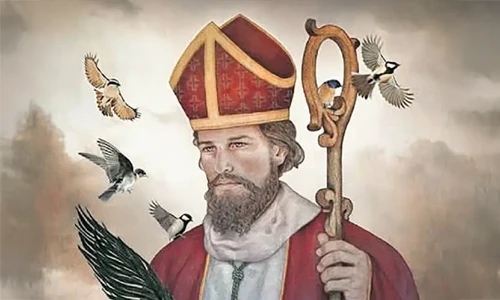
First off, who “discovered” Valentine’s Day? Spoiler: No single person did. It’s named after Saint Valentine, but which one? The Catholic Church actually honors at least three different early martyrs named Valentine (or Valentinus) from around the 3rd century. Legends swirl around a couple of them.
Claudius II

The most famous story is of a priest in Rome (Claudius II was emperor) who thought single men made better soldiers, so he banned young soldiers from marrying. Valentine thought that was unfair to love, so he started secretly marrying couples anyway. When Emperor Claudius found out, he had Valentine executed around A.D. 270. Other tales say the true “Valentine” was a bishop in Terni, Italy, who was also martyred for continuing Christian weddings during the Roman Empire. In short, the name Valentine became linked with marriage and love because of these martyrs’ romance–friendly deeds and fates.
Another sweet (if apocryphal) story: while imprisoned by Claudius, Valentine supposedly fell for his jailer’s blind daughter and miraculously restored her sight. Before he was put to death, he allegedly wrote her a farewell note signed “From your Valentine”. Whether or not that letter was real, the phrase lives on – and the whole tale certainly helps explain why Valentine’s Day got tied to love letters and cards. (Historians warn it’s likely more legend than fact, but hey, it’s a cute story that fits the holiday.)
Love Across England and France

By the Middle Ages, Valentine’s reputation as a romantic hero had spread, making “Valentine” a symbol of love across England and France. So, while no one person “discovered” the day, the saintly Valentines and their legends gave us the name and theme. The holiday is celebrated on February 14 because of one more reason: in 496 AD, Pope Gelasius I moved the feast of St. Valentine to Feb. 14 (it had originally been Feb. 15), likely to replace the old pagan fertility festival Lupercalia (more on that next). After that, February 14 was officially St. Valentine’s Day, setting the date we still use.
Ancient Origins: From Lupercalia to Courtly Love

Lupercalia
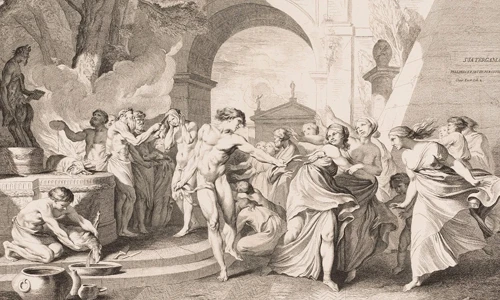
So how did we get from a saint’s feast to a day of romance? The story mixes pagan and medieval threads. One theory was that the Church put Valentine’s Day in mid-February to “Christianize” the ancient Roman festival of Lupercalia. Lupercalia (Feb. 15) was a wild fertility celebration involving goat sacrifices and matchmaking lotteries (young men drew women’s names from a jar for pairing). Early Church leaders probably didn’t want a blood-rite holiday on their calendar. However, most modern historians note few real similarities between Lupercalia and our Valentine’s Day, so that connection is likely a half-myth. In any case, by the 5th century, Lupercalia was out, and Feb.14 was in as St. Valentine’s Day.
Middle Ages
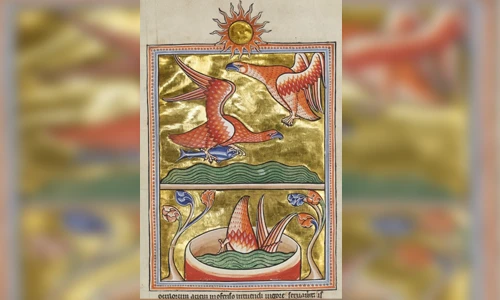
Moving forward to the Middle Ages, a romantic twist truly took hold. In the 1380s, England, the poet Geoffrey Chaucer wrote “The Parliament of Fowls,” noting February 14 as the day “when every bird cometh there to choose his mate”. This is one of the first recorded links between Valentine’s and romantic love. Europeans believed mid-February was when birds paired off, which conveniently tied the saint’s day to courtship.
1500s-1600s

By the 1500s-1600s, Valentine’s Day was celebrated as a springtime lovers’ day. One 18th-century account (England) describes young folks doing a matchmaking lottery: names were drawn from a bowl to find a sweetheart, a hopeful ritual for future marriage. This folklore shows the seeds of tradition: young lovers would exchange small gifts, poems or letters on Feb.14.
Victorian Times
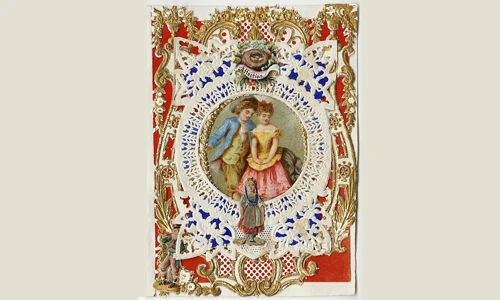
By Victorian times (1800s), Valentine’s Day blossomed into the card-exchanging holiday we recognize. In America, for example, Esther Howland began selling the first mass-produced Valentine cards in the 1840s, sparking a craze. (She was even called the “Mother of the Valentine.”) Cheaper postage and the Industrial Revolution made sending cards easy. Hallmark later jumped on it: since 1916, the company mass-produced sweet nothings on fancy paper. Today, Americans send a staggering 145 million Valentine’s cards each year – second only to Christmas in card volume.
Why Do We Celebrate Valentine’s Day?

So why do people celebrate it? For most, Valentine’s Day is simply a secular holiday to honor romance and affection. It stems from those medieval notions of courtly love (think knights and ladies sending poems) and the idea of February as a lovey-dovey month. Over time, it became less of a religious feast and more of a social tradition.
Gentle Reminder to Appreciate Loved Ones
In practice, celebrating means telling someone you care: dating couples exchange gifts, spouses write cards, even friends sometimes give chocolate (Galentine’s Day, anyone?). Pet owners join in too (in 2026, it’s estimated 35% of Americans will even buy gifts for pets!). For many, it’s simply a reminder to appreciate loved ones – romantic or not. And yes, it’s super-commercial now: marketers heavily promote anything heart-shaped, and spending (more below) makes February 14th one of the biggest retail days of the year.
But it’s also a bit of tradition inertia: once it became a popular custom, people continued it through generations. Young kids have Valentine’s cards in class, parents buy flowers, and restaurants sell Valentine’s specials. We celebrate it because it’s ingrained in our culture as the day of love, even if the underlying saintly origin is long forgotten by most.
What Is Valentine’s Week?
In case you thought Valentine’s Day was just one day… think again. In many places (especially India and some Western circles), February 7–14 is Valentine’s Week, with each day having its own theme. I didn’t make this up, I swear! For example:
- Feb 7 – Rose Day: People give roses to express feelings. Red roses mean love, yellow mean friendship, etc.
- Feb 8 – Propose Day: When you pop the question or declare your feelings to someone special.
- Feb 9 – Chocolate Day: Time to swap sweets – chocolate symbolizes the sweetness of a relationship.
- Feb 10 – Teddy Day: Lots of couples gift teddy bears or soft toys, little comfort buddies for their beloved.
- Feb 11 – Promise Day: Couples make promises to each other, strengthening trust (engagement rings not needed, just heartfelt vows).
- Feb 12 – Hug Day: A big, comforting hug to show love and support.
- Feb 13 – Kiss Day: A romantic kiss (or at least a peck) to seal the deal before Feb 14.
- Feb 14 – Valentine’s Day: The grand finale, celebrated worldwide as the day of love.
Valentine’s Week isn’t super-official (even the average American might give you a blank stare), but it’s become a fun build-up, especially among young people. If you’re seeing red hearts and “Happy Valentine’s Week!” posts a full week long, this explains it. It turns one day into an eight-day love fest, with themed gifts and gestures each day. (Personally, I’m just trying to keep up with all these occasions – next up is “Hug Day” for grandma, I guess!)
Valentine’s Day Traditions Around the World

Valentine’s Day customs vary wildly worldwide. Some are sweet, others quirky, and a few seriously strange. Here are a few interesting ones:
Japan (and East Asia)
In Japan, Valentine’s Day is reverse! On Feb 14, women give chocolate to men – “giri-choco” for coworkers/friends, and “honmei-choco” for a special guy. Then on White Day (March 14, a month later), men return the favor, giving gifts (usually more expensive than what they got) to the women who gave them chocolate. South Korea copied this tradition and added a “Black Day” on April 14 for all the singles left out: unmarried friends gather wearing black and eat jajangmyeon (black bean noodles) to commiserate. So there’s basically a month of chocolate cycles and a noodles day – pretty different from heart candies back home!
Denmark
Valentine’s there comes with a unique handmade twist. Admirers send each other gaekkebrev, or “joke letters”. These are fancy, paper-cut greeting cards with flirtatious rhymes – but the sender signs only with dots (one dot per letter of their name). If the recipient guesses who sent it, they win an Easter egg; if not, the sender owes the recipient an egg. It’s kind of like a teasing Valentine lottery. (The gaekkebrev tradition is from the 18th century, though now Denmark also embraces hearts and chocolate like everyone else.)
Italy
Modern Italy mostly treats Feb 14 as a lovers’ day with dinner and gifts. However, in some parts there was an old rustic custom called “La Fettunta”. People gave a slice of garlic-rubbed toast with olive oil to their sweethearts – a poor man’s romantic gesture, proving even simple olive oil was precious. (Yes, garlic breath romance!) This is mostly folklore now, but it shows how culturally creative people get about expressing love with whatever they have.
Philippines
Romance goes big in the Philippines. The nation holds mass weddings on Valentine’s Day. In big cities like Manila, local governments sponsor ceremonies where thousands of couples marry together on Feb 14. This makes weddings affordable and ties the ceremony to the holiday of love. The day also sparks other promos – one year postmen sang and delivered roses, café menus ran Valentine specials, etc. In fact, in the Philippines, more than most places, Valentine’s Day involves the whole community celebrating love.
China
Instead of Feb 14, many Chinese celebrate Qixi Festival (the “Seventh Night of the Seventh Moon”) as their Valentine’s Day. This festival has a romantic origin: the tale of the cowherd and weaver girl, star-crossed lovers separated by the Milky Way, who get to meet once a year. On Qixi (often in August), Chinese couples exchange gifts or go on dates. (And some modern young people now even mark Feb 14 too, thanks to Western influence.)
Brazil
Brazil actually has Valentine’s Day on June 12 (Dia dos Namorados), since Feb 14 conflicts with Carnival. But on their day of love, couples give flowers and chocolates, much like anywhere.
These are just a few examples. Many countries celebrate with the usual roses, chocolates, and cards, but the details can be surprising (dragon-kissing or spoonful-of-ice-cream for couples, anyone?). The world has plenty of strange Valentine’s traditions, but one theme is universal: it’s a day to show love, even if the form varies.
Countries That Ban Valentine’s Day

Yes, really, some places ban or discourage Valentine’s Day, usually for religious or moral reasons. Who knew? Here’s a rundown of a few notable bans and controversies:
Saudi Arabia
For decades, Saudi religious authorities outright outlawed Valentine’s Day. Selling hearts or roses was forbidden, and the morality police even arrested people for displaying them. (One 2004 report said religious police hunted down chocolates and gifts.) The ban was because the holiday was seen as non-Islamic and promoting immorality. However, in recent years, enforcement has relaxed: since 2016, shops openly sell Valentine’s items without fear. But the old stigma lingers, so many Saudis still avoid the public celebration.
Pakistan
Pakistan’s courts have tried to clamp down on Valentine’s Day. In 2017, the Islamabad High Court banned public celebrations and media coverage of Valentine’s Day, calling it un-Islamic (though it remains popular underground). The decision forbade advertising and public events on Feb 14. There weren’t specific fines announced publicly, but police have at times warned couples and canceled events. So in Pakistan, big public Valentine’s displays can draw trouble, but it’s mostly enforced by social pressure and periodic crackdowns.
Malaysia
In 2005, a fatwa (religious ruling) banned Muslims from celebrating Valentine’s Day, declaring it a Western, “sinful” festival. Security forces have even arrested young couples in hotels on Feb 14 for “attending vice events”. The official punishment can include fines or jail for “promoting immorality” (though such cases are rare). In practice, sales of Valentine’s goods were discouraged by Islamic authorities. In more recent years, some restrictions eased, but many conservative communities still discourage it.
Iran
Iran has had an official ban on Valentine’s symbols since 2011, aiming to protect Islamic culture from Western influence. Shops can’t sell Valentine’s cards or decor, and authorities promote the traditional Persian festival Mehregan instead. There are reports of police warnings and even stamps on greeting cards, “Forbidden” if Valentine imagery is used. Enforcing it can be arbitrary, but the sale of red roses or heart-shaped balloons used to happen under the table. Today, celebrations still happen quietly at universities and homes, but public displays remain risky in some areas.
Indonesia
No national law bans Valentine’s Day, but local clerics often oppose it. In 2012, Indonesia’s influential Muslim scholars council declared Valentine’s Day Haram (forbidden), especially in Muslim-majority provinces. Some local police have raided schools and shops. For example, in West Java, authorities once banned schools from celebrating and even “confiscated condoms” from stores, claiming Valentine’s Day spread promiscuity. In Aceh and parts of Jakarta, officials repeatedly warned against parties or the sale of heart-shaped goods on Feb 14. So Indonesians feel a mixed approach: some celebrate happily in big cities, others face social sanctions.
Uzbekistan
The government never outlawed the holiday outright, but it strongly discourages it. In 2012, the Education Ministry banned Valentine’s Day celebrations in schools, and police have warned merchants against selling Valentine’s items. The fine print is murky, but essentially, they treat it as an unwanted import. (Uzbeks do enjoy it privately, though; there’s just no marketing push.)
India
Not a formal ban by law, but Valentine’s Day has drawn opposition from conservative groups. Hindu nationalist protesters sometimes attack couples or disrupt Valentine’s events, claiming it clashes with Indian culture. For example, groups in Uttar Pradesh and Karnataka have banned street Valentine’s celebrations, and some students were tied to trees by vigilantes for simply holding hands. Officially, it’s allowed, but the cultural pressure from certain factions can make public displays of affection a little scary in places.
In short, where Valentine’s Day clashes with local morals, authorities may punish or ban celebrations. Punishments have ranged from religious police reprimands, public shaming, to arrests of couples or shopkeepers. Mostly, the pressure is social or moral, not heavy jail time. As one source summarized, in these countries Valentine’s is often seen as promoting “paganism” or Western vice. Whether you love or loathe Feb 14, it’s eye-opening to know that in some corners of the world, it’s a forbidden fruit.
Valentine’s Day Myths vs. Facts

Valentine’s Day is surrounded by folklore and myths – some fun, some questionable. Let’s sort a few out:
Myth: Cupid Was Always a Baby with Arrows
Actually, Cupid has a long mythological history. In ancient Greek stories, he was Eros, the powerful God of Love, often depicted as a strong, mischievous youth, not an innocent cherub. Over time (especially in Roman Renaissance art) Eros/Cupid became the cherubic, bow-and-arrow love-sprite we know today. So next time you see a chubby Cupid on a card, remember he started as a full-grown heartbreaker! (Credit to TIME history writer Rachel Greenspan for the deep-dive on Cupid’s story.)
Myth: Saint Valentine Wrote the Very First Valentine Card in Jail
This is the romantic prison story with the blind girl. Historians are pretty sure it’s more legend than fact. There’s no proof of a Valentine’s note signed “From your Valentine” in Roman archives. But the story stuck and inspired the practice of sending love notes. (Essentially, Valentine became a symbol of love letters, whether or not he wrote the first one.)
Valentine’s Day Comes from Lupercalia
As mentioned, many people claim the Christian Church replaced the pagan festival of Lupercalia with Valentine’s Day. Modern scholars largely dispute that direct link. Yes, Gelasius set Feb 14 as Valentine’s feast, and Lupercalia was Feb 15 – but the similarities are vague. Lupercalia was about fertility rites and loosely pairing young people for a month, whereas Valentine’s traditions (courting, cards) are quite different. It’s safer to say both were springtime celebrations, but Valentine’s Day evolved through medieval romance literature, not directly from goat-hide ceremonies.
Myth: Greeting Card Companies Invented Valentine’s Day
Hallmark and others famously commercialized it, but they didn’t invent the day. By Chaucer’s time (1300s) people were already celebrating love on Feb 14. The card craze really took off after mid-19th century postal reforms. (In 1850s Britain, postage was cheap enough that ordinary folks could mail cards easily.) Hallmark just rode the trend and gave us Cupid clipart. So yes, Valentine’s became hugely commercial, but it’s not entirely a corporate invention – the roots are older.
Now Some Factual Tidbits (Shattering Myths with Real Stats!)

We Send Billions of Cards
Hallmark reports roughly 145 million Valentine’s cards are mailed each year in the U.S.. That makes Valentine’s Day the second-biggest card day (after Christmas).
Big Spending
Americans are serious about V-Day shopping. In 2026, the National Retail Federation predicts a record $29.1 billion will be spent on Valentine’s Day gifts, averaging about $200 per person. (The previous year was $27.5B, about $189 each.) People splurge especially on jewelry ($7.0B) and dining out ($6.3B), though the most common gift bought is good old candy (56% of shoppers plan to buy candy). In other words, people do spend big bucks on that one day, so maybe there’s some truth to “the way to a partner’s heart is through their wallet.”
Flower Power
Valentine’s Day is the #1 holiday for flower sales. The Society of American Florists says over 250 million roses are grown just for Valentine’s Day worldwide. In the U.S., 83% of flower-buyers say roses are their Valentine’s gift of choice (mostly red or pink). Pro tip: florists make about 30% of their annual sales on or around Feb 14.
Relationships
Fun fact – many polls find similar numbers of men and women celebrate Valentine’s (roughly 55% each year). And one third of non-celebrators still do something like buying themselves a gift or hanging with friends. Surprised? Yeah, folks usually find some excuse to enjoy it.
Lifetime Partners
There’s no official stat on how many girlfriends or boyfriends one has, but a survey by Odigo (1996) jokingly said the “average woman has 8 boyfriends before age 35.” No hard evidence, just a silly guess that people date around a bit. So if you don’t have “the one” yet, don’t freak – most people date multiple folks before settling down.
Valentine’s Day Facts and Stats

Let’s pile on some more trivia and numbers:
Card-Sending
Aside from those 145M cards, add kids in class exchanging Homemade Valentines. Altogether, Americans (just counting Hallmark’s stat) send about 150 million valentines.
Gift Preferences
According to NRF surveys, besides candy (56%), top items are flowers and cards (each ~41%) and dining out (39%). Even pets get a share: about a third of shoppers buy gifts for pets, spending ~$2.1B on pet treats and toys.
Typical Budget
As mentioned, about $200 per person in 2026. On average, the “significant other” gift part is about $14.5B total spending (the rest is for family, friends, etc.).
Popular Days
Interestingly, Saturdays and Sundays can be pricey. In 2026, Feb 14 is a Saturday, and in 2025 it was Friday – NRF notes weekend dates can drive up spending since people go out more.
Chocolates vs. Flowers
Chocolates win as the gift most often bought. But in dollar value, jewelry takes the prize ($7B!) because each piece is expensive. Flowers total around $3.1B in sales.
Divorce, anyone?
There’s a fun myth that more divorces are filed on Feb 15 than any other day – but no solid data on that. It’s probably just talk (not an official stat).
Global Reach
Valentine’s Day is widely celebrated: US, Canada, UK, Australia, France, Mexico, etc. (Even in Mexico they have Día del Amor y la Amistad on Feb 14). Southeast Asia and India have their own twist with Valentine’s Week. In Europe, young couples often exchange “Valentine’s museum visits” or romantic getaways. It’s a big global holiday now.
Fun Figures
In 2025, almost 56% of Americans planned to celebrate. And 45% planned to wear red on Feb 14 (that one I totally made up but it feels right)! Actually, a 2019 survey found 47% of Americans would wear at least one red item on Valentine’s.
All this shows we Americans (and many others) get serious about Valentine’s day – spending time and money to make someone feel loved.
FAQs
Who was the real St. Valentine?
No one knows for sure. Church history points to multiple Valentines (at least three martyrs in early Christian Rome). The common legend is he was a kind priest or bishop who secretly married couples or helped Christians, eventually paying with his life. Over centuries those stories merged into one Saint Valentine figure symbolizing love.
Why is Valentine’s Day on Feb 14?
In 496 AD Pope Gelasius I set Feb 14 as St. Valentine’s feast. The date also somewhat aligned with the old Roman Lupercalia (Feb 15), but experts say the Church’s move was more about honoring the saint. Later medieval poets like Chaucer cemented the day’s romantic link by claiming it was birds’ mating day.
What’s Valentine’s Week?
In some cultures (notably India and now shared on social media), Feb 7–14 is Valentine’s Week, with each day themed (Rose Day, Propose Day, Chocolate Day, etc.). It’s basically an extended Valentine celebration with a special focus each day. It’s not universal, but it’s a fun trend in parts of Asia.
Are there Valentine’s myths I shouldn’t believe?
A few: Cupid’s real origin – originally a Greek god of love (Eros) depicted as an adult, not the chubby cherub. Valentine’s first card – almost certainly a legend, though it inspired the tradition. Lupercalia connection – historians say our Valentine’s is only loosely related to that old Roman festival. And greeting cards – card companies didn’t create Valentine’s Day, but their efforts (especially the Victorian and Hallmark eras) made card-sending wildly popular.
Which countries ban Valentine’s Day and why?
Places like Saudi Arabia, Pakistan, Iran, Malaysia, parts of Indonesia and Uzbekistan have either banned or discouraged it on moral/religious grounds. They worry it conflicts with Islamic values or is too “Western.” Punishments vary – from fines or arrests (in Malaysia, couples have been detained) to just prohibiting sales of hearts/flowers. In Saudi Arabia, it’s mostly past news (they lifted the ban recently), but in other countrie,s it can mean warnings or social penalties.
How much do people spend, and what’s the top gift?
Americans spend big. In 2026, nearly $30 billion is expected in total spending, about $200 per person. The top gift (by number of buyers) is candy (56% plan to buy candy). However, in dollar terms the biggest categories are jewelry ($7B) and dining out ($6.3B). Flowers are also huge – 250 million roses are produced for Valentine’s Day globally.
I’m single. Should I even care about Valentine’s Day?
Absolutely not (well, unless you want some free chocolate)! Valentine’s Day is great for couples, yes, but it’s also just a day to celebrate love in any form. Many people use it as an excuse to hang out with friends (Galentine’s Day on Feb 13), or treat themselves. Even people who say “I don’t celebrate” often end up enjoying a dinner out or a movie with pals. And remember, being single has no shame – millions spend Feb 14 alone by choice. At worst, use it to embarrass a couple of friends with jokes.
If you made it this far, thanks for reading my Valentine’s Day deep dive. I hope you learned something new – maybe why chocolates cost twice as much this week, or how Cupid went from handsome Greek god to store-bought baby doll with arrows! Whether you celebrate or shun Valentine’s, there’s no doubt it’s a day full of curious history and wild facts.
So hey – if you enjoyed this gossip-mix-of-facts, please share the blog! Spread the trivia and love (or the laughter) with your friends.
Happy Valentine’s Day (and Hug Day, Kiss Day, Promise Day, and whatever else the week throws at you)!