You’ve likely encountered questions about art and history, but how deep does your knowledge go into the incredibly rich and diverse world of Native American Artists? Far from a single style, indigenous art spans centuries, cultures, and mediums, reflecting profound stories, deep spirituality, and striking innovation.
Let’s embark on a journey to uncover the brilliance of Native American artistry, from timeless paintings to vibrant contemporary expressions and powerful musical voices.
Iconic Native American Painters & Paintings
When we talk about Native American paintings and paintings by them, we delve into a spectrum from ancient petroglyphs to modern masterpieces. Early forms often depicted spiritual narratives, daily life, and significant events on hides, pottery, or rock.
Who is known as the ‘Picasso of the American Indian’?
- A. Fritz Scholder
- B. R.C. Gorman
- C. T.C. Cannon
- D. Oscar Howe
In the 20th century, a new wave of famous painters emerged, blending traditional motifs with contemporary techniques. Their powerful native paintings speak volumes about identity, history, and resilience.
Here are some pivotal figures in Native American painting:
T.C. Cannon (Kiowa/Caddo)
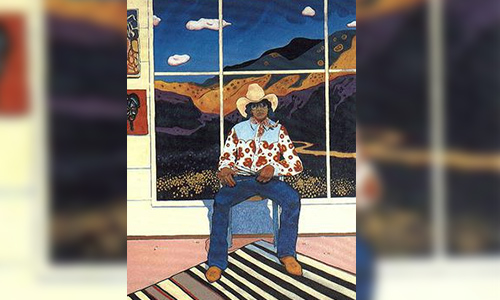
A revolutionary artist known for his bold, often satirical portraits that challenged stereotypes and blended Pop Art influences with traditional Native imagery.
Fritz Scholder (Luiseño)
Famous for his impactful, expressionistic paintings that redefined “Indian art” for a modern audience, often using stark colors and challenging conventional depictions.
R.C. Gorman (Navajo)
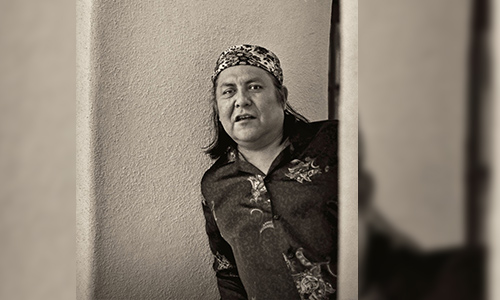
Celebrated for his elegant, distinctive depictions of Navajo women, often in flowing lines and warm, earthy tones, earning him the title “Picasso of the American Indian.”
Helen Hardin (Santa Clara Pueblo)
Known for her intricate, abstract paintings that combined traditional Pueblo designs with modernist elements, often exploring themes of spirituality and womanhood.
Oscar Howe (Yanktonai Dakota)
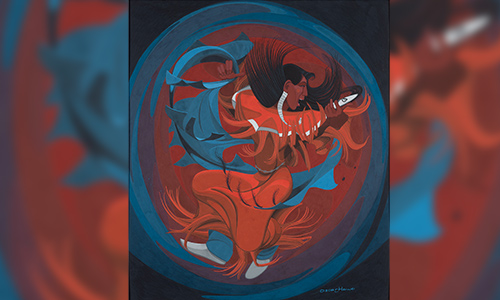
A modernist painter whose dynamic, abstract compositions challenged traditional Native American art styles, advocating for artistic freedom and breaking barriers for Indigenous artists.
Pablita Velarde (Santa Clara Pueblo)
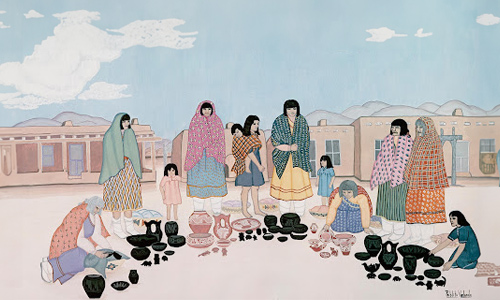
A pioneering female painter known for her detailed gouache paintings depicting Pueblo life, ceremonies, and mythology, often using earth pigments.
Diverse Indigenous Art Forms
The term Indigenous artists encompasses far more than just painters. Native American creativity flourishes in an astonishing array of mediums, showcasing incredible skill and cultural depth.
Maria Martinez (San Ildefonso Pueblo)
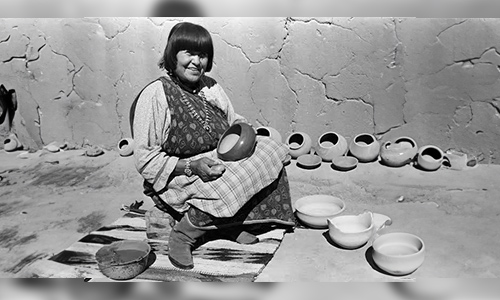
A world-renowned potter, famous for revitalizing traditional Pueblo pottery techniques, especially her iconic black-on-black firing method.
Allan Houser (Chiricahua Apache)
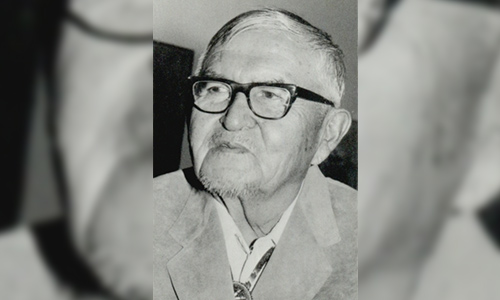
Considered one of the greatest sculptors of the 20th century, his monumental works in stone and bronze blend modernist abstraction with Native American themes of dignity and spirit.
Joyce Growing Thunder Fogarty (Fort Peck Assiniboine/Sioux)
A celebrated beadwork artist known for her exquisite, museum-quality pieces that blend intricate traditional patterns with contemporary designs, often for regalia.
Preston Singletary (Tlingit)
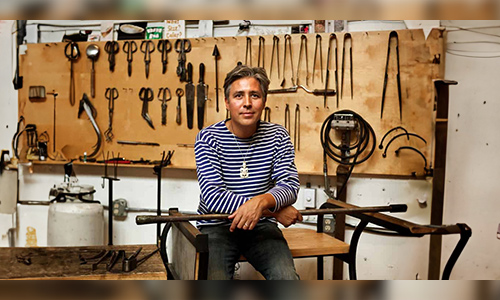
A master glass artist who merges traditional Tlingit formline design with contemporary glassblowing techniques, creating stunning sculptures that tell cultural stories.
Native American Voice Artists Today
Today’s Contemporary Native American artists are pushing boundaries and engaging with global dialogues, while remaining deeply rooted in their heritage. These Indigenous artists tackle complex themes of colonialism, environmentalism, identity, and sovereignty through a fascinating mix of traditional methods and modern media.
Jaune Quick-to-See Smith (Salish/Kootenai)
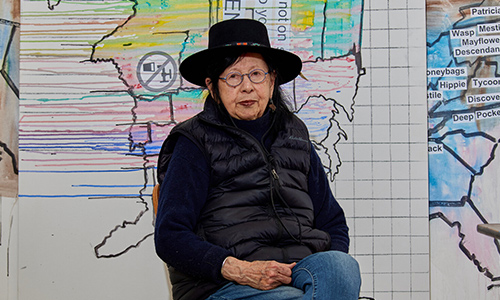
A prominent contemporary artist who uses painting and collage to explore themes of cultural identity, consumerism, and the Native experience in America.
Jeffrey Gibson (Mississippi Band of Choctaw/Cherokee)
Known for his vibrant, multidisciplinary works that combine traditional Native American craft (like beadwork and quilting) with contemporary art forms, often celebrating queer Indigenous identity.
Wendy Red Star (Crow)
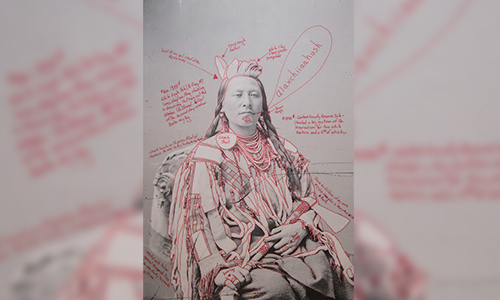
A visual artist who uses photography, sculpture, and performance to humorously and incisively critique historical representations of Native Americans and explore her own Crow identity.
Cannupa Hanska Luger (Mandan, Hidatsa, Arikara, Lakota)
A multi-media artist known for his provocative works tackling themes like cultural appropriation, environmental justice, and Indigenous resilience through ceramics, video, and social practice.
Native American Singers & Musicians
The artistic expression of Native peoples extends powerfully into sound. Native American singers and Native American musicians carry on ancient traditions while also innovating across contemporary genres.
Buffy Sainte-Marie (Cree)
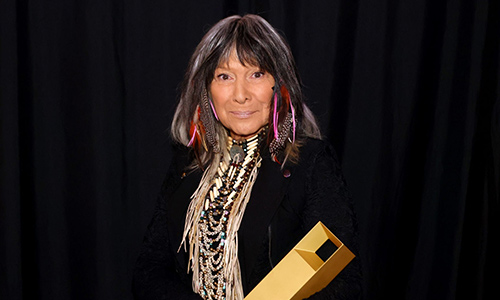
A legendary folk singer-songwriter and social activist whose powerful music has advocated for Indigenous rights and social justice since the 1960s.
Joy Harjo (Muscogee (Creek) Nation)
The first Native American U.S. Poet Laureate, she is also an accomplished saxophonist and musician, blending jazz, poetry, and traditional storytelling in her performances.
Supaman (Apsáalooke)
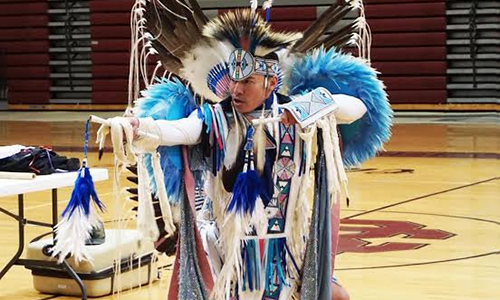
A mesmerizing hip-hop artist known for his dynamic stage presence, beatboxing, and unique blend of traditional Native American music with modern rap, often incorporating cultural regalia.
The Halluci Nation (formerly A Tribe Called Red, various Indigenous members)
A groundbreaking electronic music group that fuses traditional Powwow drum and chant with electronic dance music, creating powerful and politically charged soundscapes.
Where to Experience Indigenous Art: Exhibitions & Galleries
To truly appreciate the scope of Native American art, visiting dedicated spaces is a must:
- Native American art exhibitions are regularly held at major institutions like the National Museum of the American Indian (NMAI) in Washington D.C. and New York City.
- Many Indigenous art galleries in the US specialize in showcasing contemporary and historical works, often run by Native communities or supporting Native artists directly. The Heard Museum in Phoenix, Arizona, is another premier destination, as is the Gilcrease Museum in Tulsa, Oklahoma, with its extensive collections.
Native American artists are not just part of history—they’re shaping the present and future of art. From traditional stories to bold modern ideas, their work shows strength, creativity, and deep cultural meaning. They preserve heritage, challenge norms, and help us see the world in new ways. So next time you think about art or culture, remember how Native American artists continue to inspire and make a lasting impact.