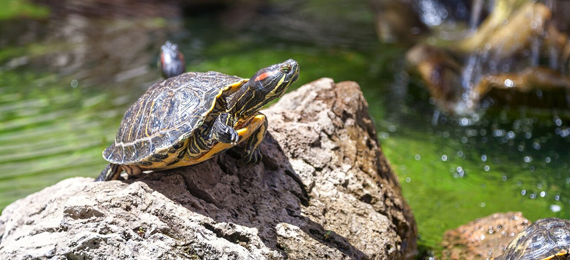
Do you know what sea turtles are? They are large reptiles with streamlined shells, a non-retractable head, and limbs. They are incredible animals that inspire affection and interest. Since they spend their entire lives in the sea, they are mysterious and trigger curiosity. Scientists have spent decades trying to uncover the mysteries and facts about sea turtles. We have gathered the most interesting and top 20 facts about sea turtles. We hope you find them fascinating!
20 Amazing Facts about Sea Turtles
Are you interested in knowing the facts about sea turtles!! Let us learn about it.
1. How Many Species of Sea Turtles Are There in the Sea?
There are nearly 6.5 million sea turtles in the world. They are categorized under seven species namely: leatherback, green, flatback, kemp’s ridley, loggerhead, olive ridley, and hawksbill. All of these are on the verge of extension.
Which sea turtle loves algae to eat?
- A. Green sea turtle
- B. Kemp’s ridley
- C. Leatherback
- D. Loggerhead
2. Do Sea Turtles Drown?
Yes, of course!! Sea turtles will drown, as they have lungs just like the other reptiles. Sea turtles cannot survive in the ocean by holding their breath for long periods.
3. Can You Remove Sea Turtles From Their Shells?
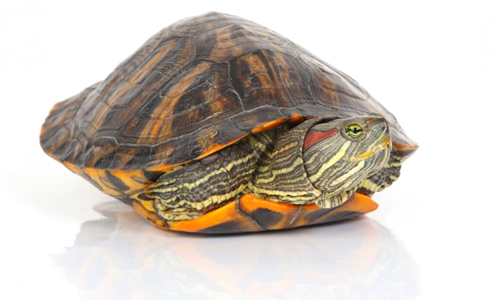
This is one of the major facts that you probably didn’t know about the sea turtles. And the answer to the question is NO! The turtle shells are attached to the rib cage and the spinal cord of the turtle is connected with the blood vessels, tissues, and muscles. So you cannot pull the turtle outside of its shell without injuring or killing it as the shell is a living part of the turtle.
In addition, sea turtles cannot retract their head and flip inside their shells when they are threatened.
4. What Do Sea Turtles Eat?
Depending on the sea species and age, the food for the turtles may change. Sea turtles can be completely herbivores or carnivores, while some may be omnivores in nature. They are likely to hang near the coral reefs, attack fish schools, and mow the ocean surface when hungry. But mostly, they eat jellyfish and sea squirts as their usual snack.
5. Kemp’s Ridley Turtles are Now Making Their Home in Texas
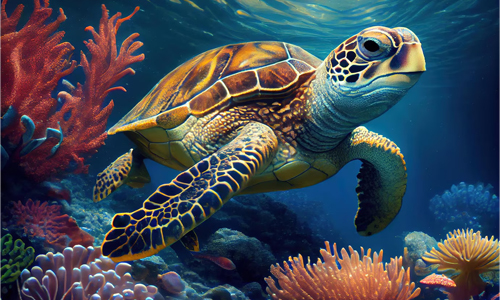
The species called Kemp’s Ridley turtles started to make their home in Texas. A secondary nesting location was created for the Kemp’s ridley sea turtles on the Texus’s Padre Island’s National Seashore to increase the population. Nearly, 20,000 eggs were transferred from Mexico and released in Texas.
6. How do Sea Turtles Reproduce?
Sea turtles will copulate in the ocean!! Male turtles have claws on their flippers to hold on the females while mating. Female turtles can store sperm for more than one mating cycle and many of them are monogamous. They mate only once and lay eggs in batches within a couple of weeks.
7. Why do Sea Turtles Have Slow Metabolism?
Usually, turtles have a slow metabolism and sea turtles are the slowest of them. The average sea turtle can live for more than 50 years and it will get mature only in the ages of 20 to 30. Though their lifespan is similar to human beings, the inability to retract their head makes them easy prey to killer whales and tiger sharks.
8. How do Sea Turtles Find Their Way?
Sea turtles used to travel worldwide by using an internal GPS-type mechanism that assesses the movement of their magnetic field of the earth. They use this information to migrate during seasonal changes and during the breeding season.
9. Where Do Sea Turtles Lay Their Eggs?
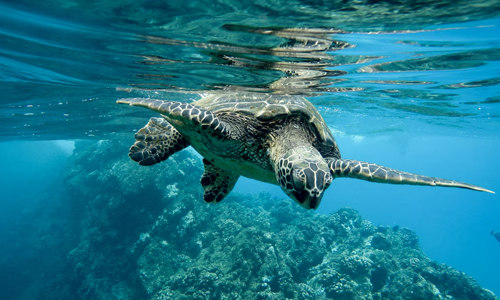
The turtles will lay around 100 eggs in a nest and create up to 6 to 7 nests in one season. Out of 100 eggs, only 10 baby turtles can survive. These nests are deep dunes near the sea shores. The infantile life of sea turtles is an absolute mystery to oceanographers who research these turtles. Thus, all the eggs emerging out of a particular nest could be the same gender creating a deficit for the future reproductive cycles.
10. Sea Turtles Overlived the Dinosaurs
Sea turtles are often compared to dinosaurs due to their scaly, appearance. In reality, sea turtles were all around at the same time as dinosaurs!! You know, that sea turtles evolved 110 million years ago and have changed very little over the years. This means that they coexisted with the dinosaurs for almost around 45 million years.
11. Sea Turtles are Long Distance Swimmers
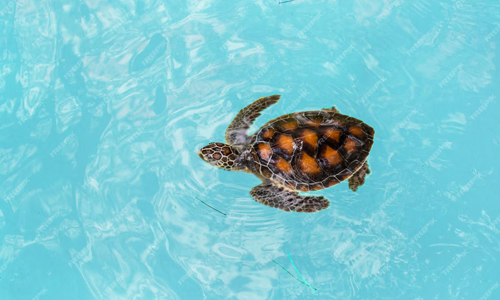
Sea turtles have been documented as migrating to vast areas. One was tracked and found that it was traveling more than 9000 miles from Baja California to Japan.
12. Sea Turtles Are Still Threatened by Poaching
Poaching remains a significant threat to sea turtles all around the world. According to the new study, more than 1.1 million sea turtles have been illegally killed and in some cases, they are trafficked from 1990 to 2020. And then, scientists have begun to use fake sea turtle eggs to track poaching. They put decoy eggs outfitted with tracking chips into the real turtle nests, allowing researchers to track the locations of the stolen eggs.
13. Sea Turtles Eat a Lot of Plastics
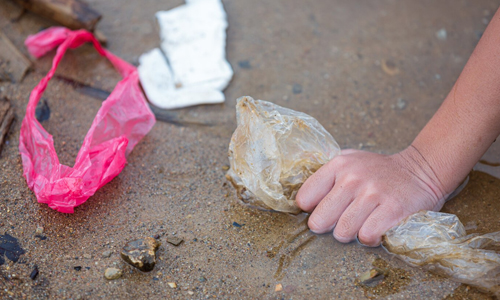
Plastics in the ocean pose a significant threat to sea turtles, concerning a 2013 study showing that leatherback and green sea turtles are at the greatest risk of becoming sick or dying from eating plastics. There are also increasing reports of sea turtles that have become ill and stranded on the beach due to their ingestion of plastic, and the dead turtles are found with their entire digestive tracts packed with pieces of plastic bags.
14. Volunteers Help Save Sea Turtles
Since 1987, the National Save the Sea Turtle Foundation has been working tirelessly to provide educational programming, promote public awareness of Florida’s marine ecosystems, and support sea turtle research efforts both locally and internationally. Sea turtle conversation projects around the world rely on volunteers to help patrol nesting beaches and move eggs to the protected corrals.
15. Sea Turtles Use Earth’s Magnetic Field to Navigate
The female sea turtle returns to the beach from the place she hatched when it is time to lay her eggs. Some species travel vast distances in the 10 to 20 years between hatching and the first nest. So scientists planned and generated the magnetic fields in the lab and demonstrated that sea turtles can detect the Earth’s magnetic field and use it as an orientation cue.
16. Sea Turtles Get Tumors
Some species of sea turtles only develop small tumors that are not life-threatening, while others develop debilitating numbers of tumors, large tumors, or tumors that cause blindness or interfere with other vital functions. Fibropapillomatosis is a chronic and often lethal tumour-forming disease in the sea turtle. Tumors can shrink and go away in some affected turtles.
17. Scientists Used Manicure Supplies to Track Sea Turtle Hatchling
Scientists don’t know much about the early stages of sea turtle life. Given a hatchling’s small size and rapid growth, the usual ways of attaching tracking tags don’t work. However, researchers found that a neoprene-silicone attachment on an acrylic base coat—just like that used for fake fingernails—kept tags on for an average of 70 days, long enough to clear up a lot of the mystery of those lost years.
18. Food for Green Turtles
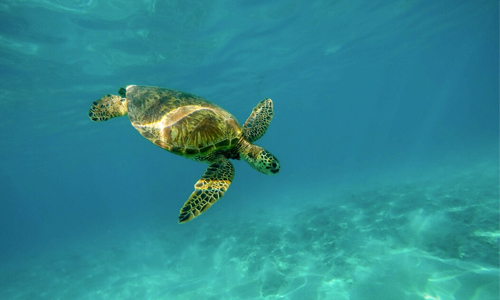
Green sea turtles used to eat green color grasses, as it is their favorite food to eat. Green sea turtles are herbivores in nature although while hatching they are omnivores. Mostly, they will eat grasses and algae.
19. How Long Can Sea Turtles Stay Underwater?
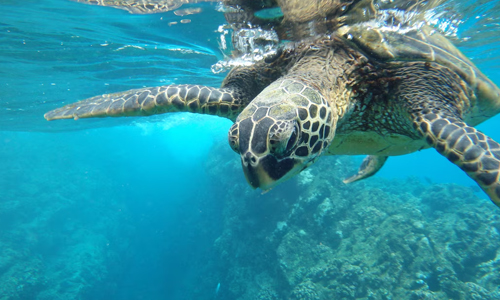
If the sea turtles are active they will swim into the ocean surface to breathe each and every minute. But if it is at rest, they can remain underwater for more than 2 hours without breathing.
Also read: https://www.triviasharp.com/8-mysteries-of-the-ocean/
20. Incubation Time of Sea Turtles
Sea turtles will dig the nest and lay their eggs, and it usually takes from one month to three months, after that the mother turtle will drag herself back to the ocean. The sea turtle lays up to 100 eggs and they incubate them in the warm sand for about 60 days.
How long do Sea Turtles Live?
In the wild, these Sea Turtles can live to be anywhere from 50 to 100 years old.
- Challenges with Tracking: Scientists find it difficult to track each single turtle till it dies as sea turtles pretty much live the whole of their lives in the ocean.
- Long Lifespan: Such a short lifetime is often too brief for research projects to cover the whole duration of a sea turtle’s life cycle.
I hope this blog helps you know the facts about sea turtles and their characteristics.