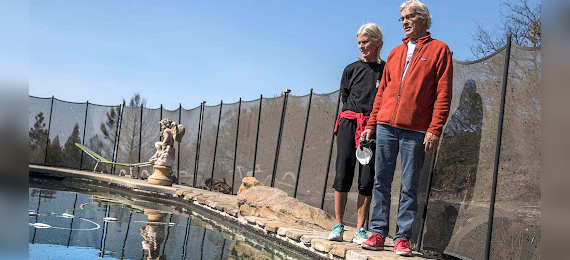
A few years ago, you might’ve seen news of a couple who miraculously survived a California wildfire by spending six harrowing hours submerged in a swimming pool. But what really happened? How did they stay safe amid flying embers and triple‑digit heat? Let’s unpack the full story, the survival strategy, the science, and the remarkable presence of mind that saved their lives.
1. Facing the Inferno: A Split-Second Survival Decision
In October 2017, as flames from the Tubbs Fire engulfed Santa Rosa, 70-year-old John and 65-year-old Jan Pascoe realized escape routes were blocked. With their home surrounded by a wall of fire, they made a life‑or‑death judgment call: take shelter in a neighbor’s pool
Decision-making under extreme stress: Jan dialed 911 before diving in, stating their exact location and intention. Emergency dispatchers simply advised: “Get anywhere safe.” They chose their pool—instantly.
What is the biggest danger of staying in a pool during a wildfire?
- A. Getting electrocuted
- B. Hypothermia
- C. Inhaling superheated air or toxic smoke
- D. Sunburn
2. The Pool as Refuge: Why It Worked
Why a Pool?
- Water serves as an excellent heat sink: absorbing and carrying away heat, preventing immediate scalding.
- It also offered protection from smoke; submerged, they avoided inhaling toxic fumes and embers.
Their tactic: stay underwater as long as possible, surfacing only to breathe, wading in just four feet of water
Scientific Breakdown
- Water below the surface stays significantly cooler than surrounding air during a fire.
- Smoke rises; partial submersion filters out most toxic particles.
- Wet clothes (in their case, T‑shirts) provided additional protection for their faces when they surfaced.
3. Staying Alive: The Physiology of Survival
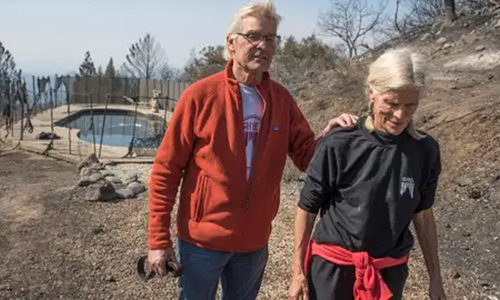
Hypothermia Risk?
Six hours in cool water isn’t without danger—especially for seniors. Yet the stack of protective factors—wearing clothes, staying close together (body heat), and the pool’s thermodynamics—helped prevent lethal exposure.
Smoke Inhalation Avoidance
Staying underwater reduced their intake of superheated air and toxins. When surfacing, wet T‑shirts acted as primitive respiratory filtration. This likely prevented lung damage that kills more wildfire victims than burns.
4. Calm Amid Chaos: Emotional & Mental Fortitude
Presence of Mind Under Threat
They switched off panic. Jan reminded herself not to hyperventilate. They focused on survival: counting time by moon position, holding onto loved ones, and quietly enduring together.
Emotional Resilience
They whispered about love and family, clung to each other, and maintained hope that flames would pass. Their level-headed approach likely saved them from fatal panic.
5. The Aftermath: Total Loss & Precious Lives
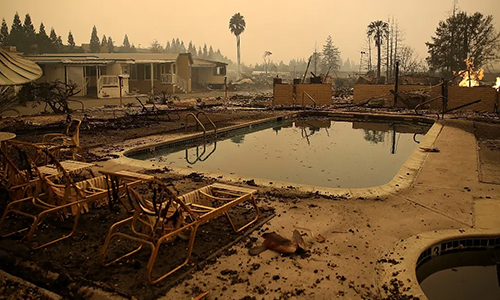
By dawn, their home and vehicles were gone—but they emerged alive. Their phones had melted in the heat; their cat fled and was never found. Still, the swimming pool saved their lives and gave them a second chance.
6. Survival Lessons from Their Ordeal
- Pools—thermal refuge: submerged water offers cooling and smoke protection.
- Wet fabric helps: acts as makeshift filtration when you need to breathe.
- Stay calm: hyperventilation or panic kills quicker than external heat.
- Buddy system works: mutual warmth and support boost chances of survival.
- Last-resort option: pools are risky in flashover zones, but may work in desperate times.
Disclaimer: The content above is intended for informational and educational purposes only. While this story is based on a real event, we strongly advise against attempting any similar survival tactic. Wildfires are unpredictable and extremely dangerous — always follow official evacuation orders and rely on trained emergency personnel for guidance. Your safety is priority.