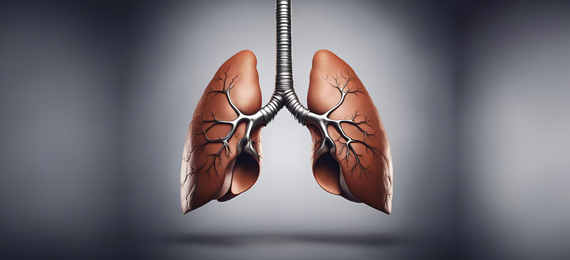
Iron lung—the name itself gives the chill. During the polio outbreak, people of Europe and North America suffered so cruelly without proper medication. Scientists came up with a new invention called the Iron Lung, which was modeled to do the job of the human lung. Unlike a respiratory system, it won’t work from inside the body but rather the person goes inside the huge iron lung device to stimulate breathing. Interesting right? Read to know how an iron lung works.
Table of Contents
- What is an Iron Lung?
- How Does an Iron Lung Work?
- Who Invented the Iron Lung?
- Evolution of the Iron Lung
- Who is the Last Person to Use an Iron Lung?
What is an Iron Lung?
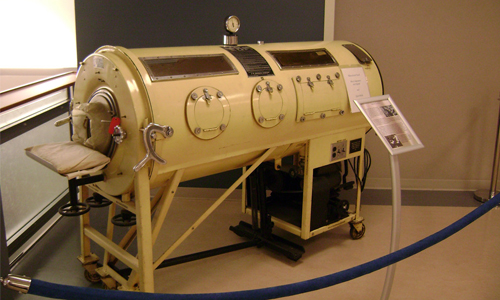
Iron Lung is an alternative medical device specialized to treat breathing complications. It is an enormous device that can enclose a person’s whole body. An iron lung could help a person when their lung is paralyzed or unable to function properly.
Which disease is treated with Iron Lung?
- A. Cancer
- B. Fever
- C. Typhoid
- D. Polio
How Does an Iron Lung Work?
An Iron Lung works just like a human lung. The whole process is based on the air pressure. The patient will be placed on the sliding bed, inserted into the chamber, and enclosed to their head. The rubber tube on the device stops the air escaping from the device. When the electric motor is powered up, the bellows create air pressure inside causing the lungs to deflate, and the person to exhale. On the contrary, when the pressure decreases the lungs will inflate making the person inhale the air.
This Iron lung is necessary for those who are unable to breathe. The treatment will continue to keep the patient alive.
Iron Lung Historical Events
In 1952, Poliomyelitis(which no longer exists), a deadly disease became a pandemic across Europe and North America. The major symptoms of polio are muscle stiffness and paralysis. Many died due to the severity of Polio. This machine was invented to treat the disease and help the sufferers. This medication is advised only for people who are diagnosed with conditions such as polio and botulism.
Who Invented the Iron Lung?
The initiative was taken by an English Scientist John Mayow in 1670. He decided to invent an external negative pressure ventilation featuring a bellow and a bladder to pull in and expel the air. Many inventions were introduced following this one. Dr Woillez of Paris created a hand-operated bellow-driven ‘Spirophore’ in 1876. Later, an airtight wooden box was designed by Dr Stueart to treat polio. Stueart’s device is enclosed at the waist and shoulders with clay and activated by motor-driven bellows.
1. Drinker and Shaw
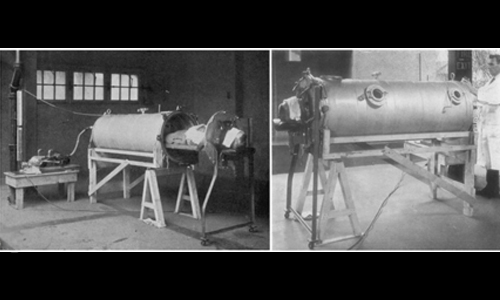
However, the popular version of the iron lung was invented in 1927 by Philip Drinker and Louis Shaw from Harvard University. In the beginning, the device was referred to as a ‘Drinker respirator.’ It consists of a large chamber enclosed by the body, bellows at the foot, and a rubber seal at the opposite end to stop the air leakage. The drinker machine is activated by an electric motor and it is used to treat patients who suffer from paralytic polio and conditions raised as a result of coal gas poisoning.
2. Emerson
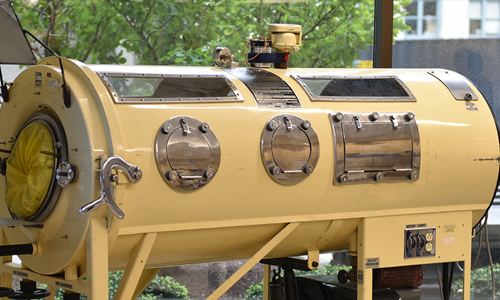
In 1931 came the updated version of this medicine device Iron Lung. John Haven Emerson created an advanced and cost-effective device with newly added features. Emerson’s iron lung has a sliding bed, a tank with windows that would help the attendants to reach and carry other procedures, and a leather bellow to avoid sounds. In the late 1930s, the Emerson respirator became common in almost every hospital.
Evolution of the Iron Lung
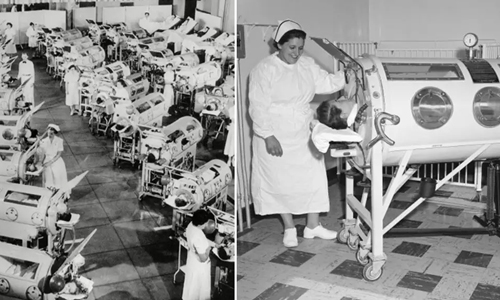
Since its invention using the iron lung has become more challenging for everyone. As the expensive device cost $1500 to $2000, it was unreachable for a commoner. Besides the machine was super heavy weighing 500 pounds, so shifting them was a nightmare.
Many scientists developed new ideas to make the respirator machine easily accessible. When Australia faced the polio outbreak, they couldn’t afford Iron lungs, Edward Both, an Engineer invented a prototype in one day using plywood as they couldn’t ship the respirators fast.
However, the Iron Lung become widespread in the late 1930s. In the U.S. alone 1 in 200 people suffered permanent lung and muscle damage and required a permanent Iron lung to breathe. Later, with the invention of the polio vaccine, the requirements for iron lungs were reduced.
Who is the Last Person to Use an Iron Lung?
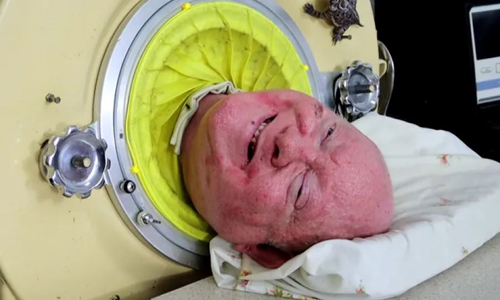
Paul Alexander, who was affected by polio at 6 in 1957 used the Iron lung till he died on March 11, 2024. Martha Lillard who was diagnosed with polio after Paul, is the only person who still living with the help of iron lung.
Is It Still Used Today?
After the polio vaccine invention, the cases dropped and so did the usage of iron lungs. This invention has disappeared now.
Also, don’t forget to read the top 5 deadliest diseases in the world.
FAQ :
1. How long do you stay in an iron lung?
The duration of staying in an iron lung varies; some polio patients use it temporarily, while others, like Paul Alexander, have used it for decades due to severe respiratory paralysis.
2. How do you breathe in an iron lung?
In an iron lung, breathing occurs as the machine creates a vacuum around your chest, causing it to expand and draw in air. Releasing the vacuum then expels the air.}
3. Were iron lungs painful?
Iron lungs were not typically painful, but they could be uncomfortable and restrictive. Patients often experience discomfort due to long-term immobility and confinement.
4. Are iron lungs still used today?
Iron lungs are rarely used today, replaced by modern ventilators. However, a few patients with specific conditions, like polio survivors, may still rely on them.
5. What has replaced the iron lung?
Modern ventilators and positive pressure devices have replaced the iron lung, offering more efficient and less restrictive breathing support for patients.