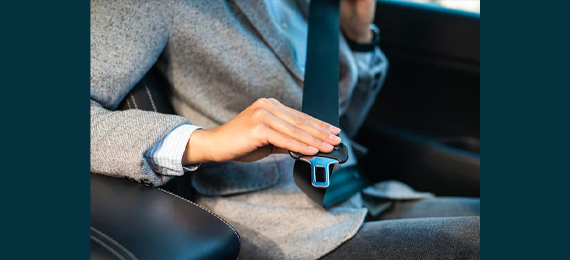
A seat belt, also called a safety belt, is one of the most important features of a vehicle. Every vehicle is designed with a safety belt to secure the driver and passengers during collisions or sudden stops. A seat belt reduces the risk of death, injury, and traffic collisions by minimizing the force of secondary impacts with interior surfaces. It helps keep occupants correctly positioned for the maximum effectiveness of airbags. A seat belt acts as an opposing force, preventing the driver and passengers from falling out or crashing into the car’s interior (or going through the windshield). Seat belts are considered primary restraint systems (PRSs) because of their vital role in safety.
History Behind the Belts
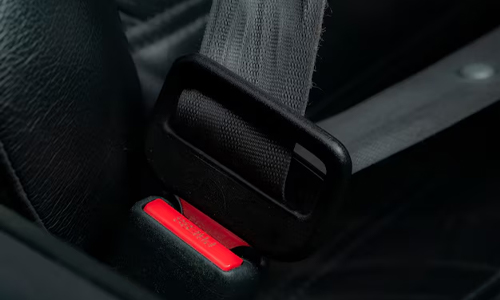
Seat belts were invented in the early 19th century by an English engineer named George Cayley, who designed a lap belt for his glider to secure passengers during flight. In 1885, Edward J. Claghorn of New York patented the “Safety Belt,” which resembled a modern-day harness.
Who invented seat belts?
- A. Eli Whitney
- B. George Cayley
- C. Nikola Tesla
- D. Charles Goodyear
Later, in 1946, C. Hunter Shelden, a neurologist at Huntington Memorial Hospital in Pasadena, California, made significant contributions to the automotive industry. In the early 1950s, Shelden proposed the idea of retractable seat belts after treating many head injuries in the emergency room. He further investigated early seat belt designs, noting their primitive construction and role in injuries and fatalities.
Seat Belts in Cars
Nash was the first American car manufacturer to offer seat belts as a factory option in their 1949 models. While seat belts were installed in 40,000 cars, many buyers did not want them and requested their removal. Later, in 1966, Congress passed the National Traffic and Motor Vehicle Safety Act, which required all automobiles to comply with safety measures. However, Nash reported significant sales resistance to seat belts, stating that in one year, “only 1,000 had been used” by customers.
In 1955, Ford also offered seat belts as an optional feature. Despite their efforts to emphasize the importance of seat belts, they were not widely popular—only 2% of Ford buyers opted to pay for them in 1956.
3-Point Seat Belts
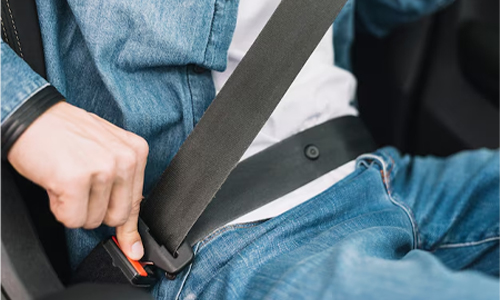
In 1959, Nils Bohlin, a Swedish engineer, invented the three-point seat belt for Volvo. Later, Volvo left the patent open, allowing all manufacturers to use it for free. Today, the three-point seat belt is a requirement in all cars, trucks, and buses.
The First Compulsory Law

The first compulsory seat belt law was enacted in 1970 in the state of Victoria, Australia, requiring drivers and front-seat passengers to wear seat belts. This legislation was bolstered by the introduction of Hemco seat belts, designed by Desmond Hemphill, which were used in the front seats of police vehicles to reduce injuries and fatalities. Later, mandatory seat belt laws were introduced in the United States in the 1980s. However, they faced opposition from some consumers, with a few even cutting the seat belts out of their cars.
The Use of Seat Belts
In 2021, the use of seat belts increased among all the people in the world, especially in the United States, by 90.4 per cent. This means that 9.6% of people, or 27.4 million people, do not wear seat belts.
How Are They Made
The belt part of a seat belt in vehicles is referred to as “webbing.” In modern seat belts, the webbing has a high tensile strength of about 3,000–6,000 lbs, providing the durability to resist tearing during high-speed collisions.
These seat belts also feature snag-proof selvages reinforced with strong polyester threads. The primary material used to make seat belts is polyester, which is preferred over nylon. Nylon was commonly used in early seat belts and is still occasionally used for lap belts. However, it was largely replaced by 100% polyester due to its superior UV resistance, lower extensibility, and higher stiffness. Polyester offers high tensile strength, resistance to abrasion, and the ability to withstand car crashes. Nylon, on the other hand, is more prone to stretching and wear and tear.
Seat belts are typically 46 or 48 mm wide and feature a 2/2 herringbone twill weaving pattern to maximize thread density. This weave includes about 300 warp threads for every 46 mm of webbing, equating to approximately 150 ends per inch.
Investigators have found that the webbing of a seat belt can help determine whether a vehicle occupant was wearing the seat belt during a collision. The webbing material often retains traces of the occupant’s clothing. Materials like nylon can sometimes become permanently fused or melted into fabric due to the heat generated by friction during an accident.
Vinyl was also a commonly used material for seat belts and safety ropes in the past and continues to be used in some applications.
Seat Belts Are Made up of Three Main Elements:
- Retractor: Locks the system’s webbing
- Buckle: Serves as the anchoring point
- Webbing: Made from materials that combine high strength and some elasticity. Modern seatbelt weaves also feature snag-proof selvages reinforced with strong polyester threads.
Types of Seat Belts
1. Lap
The lap belt, also known as a two-point seat belt, is the most basic type of seat belt and is attached around the waist. A two-point belt, consisting of a simple strap, was first used on March 12, 1910, by pilot Benjamin Foulois, an aviator with the Aeronautical Division of the U.S. Signal Corps. The Irvin Air Chute Company created a seat belt for professional race car driver Barney Oldfield when they introduced a safety harness in 1923.
A lap belt consists of a strap that goes over the waist. It was the most common type of seat belt before legislation required three-point belts and can still be found in older cars. James J. patented the automatic retractable safety belt, which was a significant advancement in seat belt technology. Later, President Lyndon Johnson signed two bills in 1967 requiring safety belts in all passenger vehicles starting in 1968.
Until the 1980s, three-point seat belts were commonly available only in the front seats of cars. However, since September 1, 2001, all cars sold in the U.S. are required to have lap-and-shoulder belts in the center rear seat. Today, lap belts are exceedingly rare in modern cars but remain standard in commercial airlines.
2. Sash
A sash or shoulder harness belt runs diagonally across the chest and is typically buckled near the center of the vehicle. It is a semi-separate type of seat belt that was installed alongside lap belts in many vehicles in the North American market, starting with the National Highway Traffic Safety Administration (NHTSA) Federal Motor Vehicle Safety Standard 208 on January 1, 1968.
Later, in the mid-1970s, three-point belt systems, such as Chrysler’s “Uni-Belt,” began to replace the separate lap and shoulder belts in American-made cars. Similar systems had already been featured in European vehicles, including those manufactured by Volvo, Mercedes-Benz, and Saab, for several years.
3. A Three-Point Seat Belt
This belt is the standard seat belt in most cars and combines the lap and shoulder belts into a Y-shape. The three-point belt was developed by Nils Bohlin, who worked on ejection seats for Saab. Like the separate lap-sash belt, the three-point belt spreads the energy of the moving body over the chest, pelvis, and shoulders. Volvo introduced its first production of the three-point seat belt in 1959. Their first car, the Volvo PV 544, was delivered to a dealer on August 13, 1959. The first car model to feature the three-point seat belt was the Volvo 122, also in 1959. Volvo created new car seat belt designs with safety in mind.
4. Belt in Seat
This is an automatic seat belt that slides in and out of place when a driver enters or exits the vehicle. The Belt-In-Seat (BIS) is a three-point harness. The first car to use this system was the Range Rover Classic, which installed BIS on the front seats in 1970. Other cars, like the Renault Vel Satis, also used this system in their front seats. General Motors also installed these seat belts to protect small vehicle occupants. BIS belt types have been used by automakers in convertibles and pillarless hardtops, where there is no B-pillar to affix the upper mount of the belt. Chrysler and Cadillac are known for using this design. The BIS system today needs to be installed and connected to the vehicle’s electrical system to function properly.
5. A 4,5, And 6 Point Seat Belts
A four-point seat belt is a common seat belt found in racing cars and other road sports. It is similar to a five-point seat belt but without a strap between the legs.
A five-point belt is similar to a four-point belt, but the lap portion is connected to a belt between the legs, without shoulder belts. These belts are found in child safety seats and in racing cars.
A six-point belt has two belts between the legs. In NASCAR, the six-point harness became important after the death of Dale Earnhardt, who had a fatal crash while wearing a five-point belt.
6. A 7- Point Seat Belt
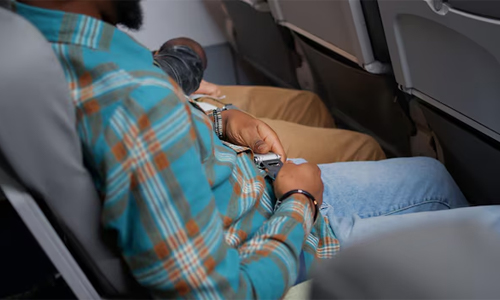
Aerobatic aircraft use a combination harness consisting of a five-point harness with a redundant lap belt that is attached to different parts of the aircraft. These provide redundancy for negative-G maneuvers, which can lift the pilot out of their seat. The pilot must unlatch two harnesses if it is necessary to parachute from a failed aircraft.
The Technology Used in Seat Belts
The safest car in the world comes with the best seat belt and other safety features. Various technologies offer different levels of protection to help keep passengers safe during a crash. Here are a few used in seat belts.
Pretensioners
Pretensioners are preemptively tightened belts that prevent the occupant from jerking forward in a crash. They reduce the amount of slack and hold the occupant securely in the front seats. Pretensioners are triggered by sensors in the car that use exploding gas to retract the belt. They also lower the risk of submarining, which occurs when the passenger slides underneath a loosely fitted seat belt. Mercedes-Benz first introduced pretensioners on the 1981 S-Class.
Load Limiters
Load limiters control the force exerted on the passenger’s chest, allowing some of the webbing to extend slowly. This helps to manage the impact energy and prevent severe injuries.
Retractors
The purpose of retractors is to provide the occupant with the convenience of moving freely while keeping the seat belt secure. This system locks the seat belt during a crash to limit movement. Retractors house the seat belt material on a rotating spool, also known as webbing. When a person pulls the seat belt, it automatically releases the webbing to allow movement and comfort.
Inflatable Seat Belts
An inflatable seat belt was invented by Donald Lewis and tested at the Automotive Products Division of Allied Chemical Corporation. These seat belts have a tubular inflatable bladder within an outer cover. In the event of a crash, the bladder inflates, increasing the area of the restraint that contacts the occupant and shortening the length of the belt to tighten around the passenger. This system also provides support for the head during a crash. In 2013, Ford began offering inflatable seat belts on select models like the Explorer and Flex.
Pre-Pre Tensioner Mechatronic Integration (PPMI)
This technology helps position the passenger ideally, reduces pre-crash excursion, and prevents belt slack before a crash. PPMI also minimizes chest deflection in the event of a collision.
Automatic Seat Belts
These seat belts automatically move into position around the passenger once the adjacent door is closed and the engine is started. This system was developed to counteract the underuse of manual seat belts, particularly in the United States. Volkswagen introduced a passive seat belt in 1972. Later, Volvo attempted to develop a passive three-point seat belt. In 1973, Volkswagen announced that they had functional passive seat belts, and in 1975, they released their first commercial featuring automatic seat belts.
Manual Belts with Automatic Motorized Shoulder Belts
A manual lap belt with automatic motorized shoulder belts was later introduced. In this system, when the doors open, the shoulder belts move from a fixed point near the seat back along a track mounted in the door frame. However, the lap belt must still be fastened manually. This system was used in American-market vehicles such as the Hyundai Excel and Volkswagen Jetta.