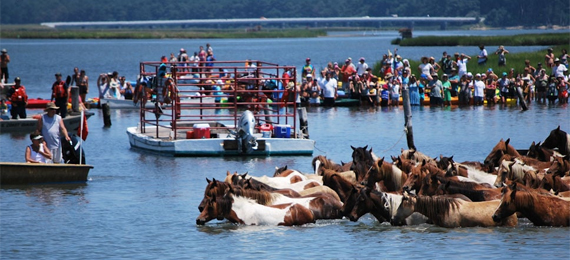
Wondering what is Pony Penning? It is an annual festival held in Chincoteague, Virginia on Wednesday and Thursday of July. The event was conducted by the Chincoteague Volunteer Fire Department.
Interesting, right?
This blog disclosed the most interesting things that you don’t know about pony penning.
What is the primary purpose of the Pony Penning event?
- A. To race the ponies
- B. To raise funds for local businesses
- C. To control the wild pony population
- D. To showcase equestrian skills
But before getting started, let me start with the purpose of pony pen.
What is Pony Penning?
It is an annual event that takes place on Chincoteague Island and Assateague Island in Virginia, USA. The event centers around the wild ponies that inhabit Assateague Island, and it has become a beloved tradition for both locals and tourists. The festival contains two popular events such as a Wild Pony Swim on Wednesday and a Pony Auction on Thursday.
Purpose of the Pony Penning
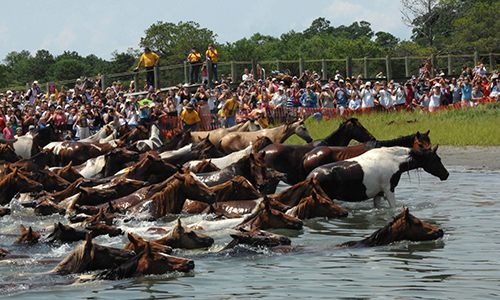
The primary purpose of the Pony Penning event is to manage and maintain the wild pony population on Assateague Island, ensuring the health and sustainability of both the ponies and their habitat. The event helps to control the herd size to prevent overgrazing and ensure the ecological balance of the island.
Here’s a detailed look at the purposes of the event:
1. Preventing Overpopulation
The annual roundup helps control the size of the pony herd. Without population management, the ponies could overgraze the vegetation on Assateague Island, leading to environmental degradation and health problems for the ponies themselves.
2. Supporting the Chincoteague Volunteer Fire Company
The auction of the ponies is the main fundraiser for the Chincoteague Volunteer Fire Company. The proceeds support the fire company’s operations and community services, including emergency services and public safety initiatives on Chincoteague Island.
3. Maintaining Tradition
It is a centuries-old tradition on Chincoteague Island, reflecting the island’s history and culture. The event helps preserve this unique aspect of the local heritage and fosters a sense of community pride.
4. Educational Experience
The event serves as an educational opportunity for visitors and locals to learn about the history of the ponies, the island’s ecosystem, and the importance of conservation efforts.
5. Boosting Local Economy
Pony Penning draws thousands of tourists to Chincoteague Island each year, providing a significant boost to the local economy. Businesses, including hotels, restaurants, and shops, benefit from the influx of visitors.
6. Promoting Awareness
The event also raises awareness of Chincoteague Island and its natural beauty, encouraging more tourism throughout the year.
7. Health Monitoring
The roundup allows for the health monitoring of the entire pony herd. Veterinarians and experts can check the ponies for signs of illness, injury, or malnutrition and provide necessary care.
8. Maintaining Ecological Balance
By controlling the pony population, the event helps maintain the ecological balance on Assateague Island, ensuring that the environment remains suitable for the ponies and other wildlife.
Must Read: Most Dangerous Animals in the World
35 Interesting Facts You Didn’t Know About Pony Penning
1. Swim Across the Channel
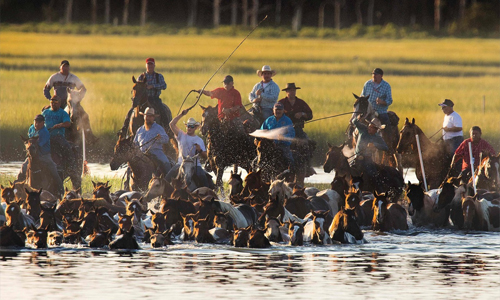
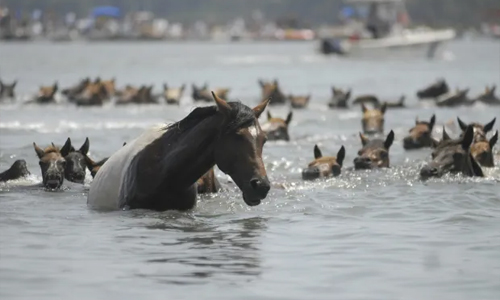
The highlight of Pony Penning is the famous “Pony Swim,” where the wild ponies are rounded up and swim across the Assateague Channel to Chincoteague Island. The swim usually takes place at low tide to make it easier for the ponies to cross.
2. Two Herds of Chincoteague Ponies
The Chincoteague pony also called the Assateague horse lives on Assateague Island which is part of two states namely Maryland and Virginia. Each state has its herds of Chincoteague ponies. The Virginia herd is managed by the Chincoteague Volunteer Fire Company (CVFC) whereas the Maryland herd is owned by the National Park Service.
3. Chincoteague Volunteer Fire Company
The event is organized and managed by the Chincoteague Volunteer Fire Company, which owns the ponies. Proceeds from the event go toward funding the fire department and other community services.
4. Pony Auction
After the swim, a portion of the foals (young ponies) are auctioned off to raise funds for the fire company. The auction helps control the pony population and supports local community projects.
5. Chincoteague Ponies Weren’t an Official Breed until 1985
The Chincoteague Ponies were not an official breed until 1985. The Chincoteague Pony Association was formed in 1994. The registry is used for the pony penning auction.
6. The Ponies’ Bloodline
Despite their small size, the Chincoteague ponies are believed to have descended from Spanish horses that survived a shipwreck off the Virginia coast in the 1600s. This unique origin story gives the ponies a special historical significance.
7. The Swim Timing is Strategic
The exact timing of the Pony Swim is not set in stone and is determined based on the tides. The ponies are made to swim at slack tide, the period when the tide is neither coming in nor going out, to ensure the easiest and safest crossing for the ponies.
8. Not All Ponies Swim
While most of the ponies swim across the channel, a small number of them are transported by trailer if they are too young, old, or otherwise unable to make the swim safely.
9. Pony Auction Buyers Can Donate Foals Back
Some buyers choose to purchase ponies at the auction and then donate them back to the Chincoteague Volunteer Fire Company. These ponies, known as “Buy Backs,” are returned to Assateague Island to replenish the herd.
10. Pony Penning Was Once Used to Collect Taxes
In the early days, before it became a tourist event, Pony Penning served as a way for local authorities to collect taxes. The ponies were rounded up, and owners had to pay taxes on them or lose them to the auction.
11. The Ponies’ Saltwater Diet
The ponies drink from freshwater ponds, but their diet includes a large amount of salt marsh plants, which are high in salt content. This diet leads to their characteristically rounded bellies, often mistaken for them being overweight.
12. Pony Penning Weather Rituals
Locals often engage in weather-related rituals, such as burning sage or other practices, in the days leading up to Pony Penning to ensure favorable conditions for the swim and events.
13. The Original Penning Was a Community Necessity
Before it became a tourist attraction, Pony Penning was a necessary community event to manage livestock, control the pony population, and prevent the herds from growing too large, which could lead to overgrazing and other ecological issues.
14. Saltwater Cowboys Are Not All Locals
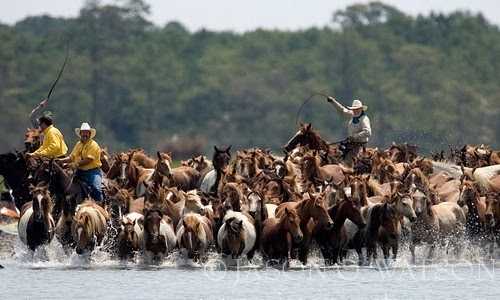
While many Saltwater Cowboys are Chincoteague locals, some come from other areas to participate in the event, continuing a family tradition or fulfilling a lifelong dream of joining the roundup.
15. A Secret “Fall Roundup
In addition to the summer Pony Penning, there is a lesser-known fall roundup, called the “Pony Drift,” where the ponies are rounded up for health checks and to manage the herd, but without the public fanfare of the summer event.
16. The Ponies’ Hooves are Adapted to Marsh Life
The Chincoteague ponies have developed hard, tough hooves over generations, which help them navigate the marshy, often rough terrain of Assateague Island without the need for horseshoes.
17. The Role of Pony Scouts
There are dedicated volunteers, often called “Pony Scouts,” who monitor the herd throughout the year, ensuring the ponies are healthy and safe. Their work is critical, yet largely unseen by the public.
18. The Auction Isn’t Just About the Ponies
In addition to ponies, the auction sometimes includes other items, such as memorabilia, art, and even sponsorship opportunities, to raise additional funds for the Chincoteague Volunteer Fire Company.
19. Unrecorded Donations
Many of the funds raised through Pony Penning and the auction are quietly donated back to the community, funding local projects, scholarships, and emergency services that benefit Chincoteague residents year-round.
20. The Mystery of the Yearling Ponies
Some yearling ponies, particularly those deemed unsuitable for auction, remain on Assateague Island, leading to speculation and local lore about their eventual fate and the dynamics within the wild herd.
21. Unseen Preparations
The preparations for Pony Penning start months in advance, involving intricate planning, coordination with local authorities, and even rehearsals for some parts of the event, all of which are largely unseen by the public.
22. Cultural Significance to Native Americans
Historical accounts suggest that the Chincoteague ponies held cultural significance to Native American tribes in the region, who may have used them for trade or ceremonial purposes long before European settlers arrived.
Also Read: 5 Scariest Tribes You Don’t Want to Meet
23. Ponies’ Roles in Ecosystem Management:
The ponies play an essential role in maintaining the island’s ecosystem by grazing on specific plants, which helps control vegetation and supports the overall health of the habitat.
24. A Local Secret
Some locals know of hidden spots around the island where you can see the ponies year-round without the crowds, offering a more intimate and personal experience with these wild animals.
25. Legend of the “Phantom Ponies
There are stories among locals about “phantom ponies”—ponies that seem to disappear into the marshes or that are rarely seen by visitors, adding an air of mystery and legend to the event and the ponies themselves.
26. Saltwater Cowboys
The ponies are herded by a group of skilled horsemen known as the “Saltwater Cowboys.” These volunteers are responsible for rounding up the ponies, guiding them during the swim, and ensuring their safety throughout the event.
27. Misty of Chincoteague
The event gained national attention thanks to the popular children’s book “Misty of Chincoteague,” written by Marguerite Henry in 1947. The story is based on real ponies and has introduced generations of readers to Pony Penning.
28. Maryland Horse Population Is Controlled by a Contraceptive Vaccine
During the popular Pony Penning Day, the Maryland horse population was controlled using a contraceptive vaccine but in Virginia, breeds are auctioned off to control the population.
29. Marguerite Henry Owned Misty
The mind-blowing fact is Ms. Henry requested Mr. Beebe to sell Misty to her because she wanted her as the inspiration for her novel. In the end, Henry agreed to keep Misty for 10 years. After that, she was returned to the Beebe farm. Misty died in 1972 at the age of 26.
30. Pony Veterinarian
A team of veterinarians is always present during Pony Penning to monitor the health and well-being of the ponies. They ensure that the animals are fit for the swim and provide care if any issues arise.
31. Misty Is Not a Wild Pony
Misty was born on July 20, 1946, at Beebe Ranch on Chincoteague Island, Virginia and she was not wild on Assateague Island as mentioned in the book.
32. They Are Called Assateague Ponies
The ponies on Assateague islands are sometimes called Assateague ponies notably, the Maryland herd is known as the “Assateague herd,” since Chincoteague is part of Virginia.
33. Adoption of Tradition by Other Areas
While Chincoteague’s Pony Penning is the most famous, the concept of pony penning has been adopted by other coastal areas in the U.S., although none have gained the same level of recognition.
34. Influence on the Local Economy
It has a significant economic impact on Chincoteague Island. The influx of tourists for the event supports local businesses, including hotels, restaurants, and shops.
35. No One Knows for Sure Where Ponies Came From
Believe it or not, nobody knows how the Chincoteague pony arrived on the island over 400 years ago. One theory says that ponies are survivors of a Spanish galleon shipwreck and the second theory says that they were brought by settlers.
Wrapping Up
Hence, Pony Penning remains one of the most unique and beloved traditions on the Eastern Shore, drawing attention to the beauty and resilience of the wild ponies and the community that cares for them.