You might already know certain facts about pandas. However, these intriguing animals are associated with many fascinating facts you might not know about. They were once normal bears that evolved into super cute balls of admiration due to China’s dense bamboo forests and climate. This blog has compiled a list of 60 more interesting facts about pandas!
The panda is also known as the “giant panda,” or “panda bear.” Like other animal species, they have certain special characteristics that make them unique. Let’s learn more about them by starting with their appearance and features.
60 Fun Facts about pandas
Read along to learn more about the animals’ features, habitats, habits, and modes of communication.
Pandas have dark brown or black eyes.
- A. True
- B. False
Overall Appearance
Although you might know how pandas look from books, pictures, and other sources, you might not know the details of their body parts. So let’s look at the appearance of these creatures in detail!
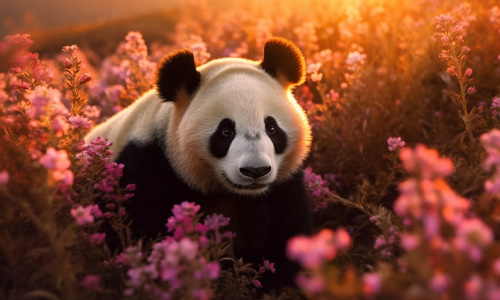
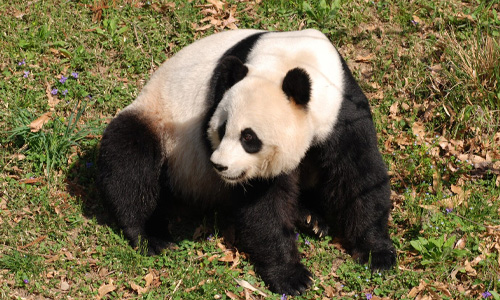
- Pandas are cute animals whose bodies are covered with white and black fur. They have black or dark brown eyes, which are surrounded by rings of black fur.
- The giant panda’s height and weight depend on the availability of food and living conditions. On average, they are 60-90 cm tall on all fours and weigh around 220 pounds.
- These animals are native to China, but unlike other animals in the country, people don’t hunt them for use in Chinese medicine.
- Here’s one of the most amusing facts about pandas. Newborns are pink and appear just like a stick of butter. Did you know that newborn pandas are around 1/900th the size of their mothers?
- Babies have a set of 24 teeth, whereas adults have 42.
- The animals have large noses and short tails.
Habitat
- Pandas usually live in the temperate forests of southwest China.
- They also thrive in the mountainous regions of China, especially where bamboo is in plenty because it is their main source of food.
- They spend most of their days eating bamboo!
- You can find lots of panda bears in the Yangtze Basin.
- You can see red pandas in Tibet, Nepal, and India. These types are more related to raccoons than to giant pandas.
Feeding Habits
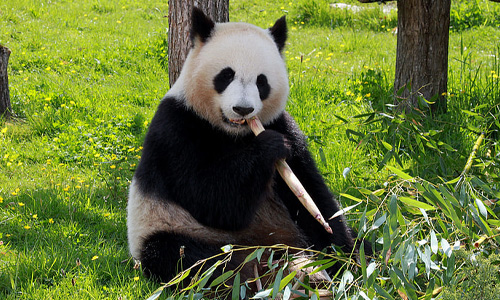
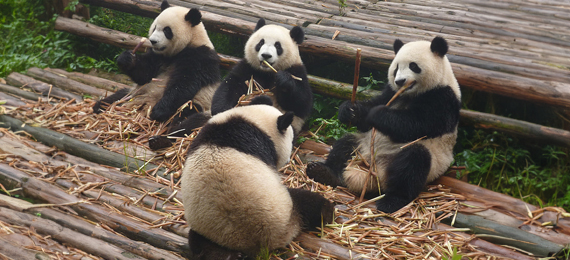
- As mentioned earlier, pandas mostly feed on bamboo. They consume about 26 to 84 pounds of bamboo a day! This is required to meet their daily energy needs.
- They eat almost all parts of the bamboo plant like the roots, stems, shoots, and leaves.
- They have an additional pad on their front paws. This pad serves as a thumb, and the animals use it to hold the stem of a bamboo plant.
- They are mostly herbivores, but sometimes, based on the availability of food, they can be carnivores too! They can feed on fish, pikas, other rodents, and smaller mammals. So they have a strange mix of herbivorous and carnivorous traits. In other words, pandas are omnivores. However, they are officially classified as carnivores!
- These creatures eat large quantities of food very fast. They spend around 12 hours a day eating. No wonder they are fat!
- The types of bamboo that these animals consume include black bamboo, arrow bamboo, and water bamboo.
- At times, they eat fruits and vegetables, such as carrots, ginseng, etc.
- Captive animals are usually fed cornbread and “panda cakes.” During summer, they are fed apples with ice so that their bodies remain cool.
- In some situations, pandas make smaller, injured animals their prey.
- Panda cubs drink the milk from their mothers for about 6 months from birth. Then, they begin eating bamboo.
- However, mothers have only small quantities of breast milk. Therefore, panda cubs are usually fed a combination of milk and powdered milk, both mixed with some vitamins.
- Red pandas, which are different from the usual giant pandas, feed on leaves, wild fruits, and moss. They also consume arrow bamboo, birds, their eggs, and insects.
- Red pandas also feed on pumpkins and apples.
Nature and Behavior
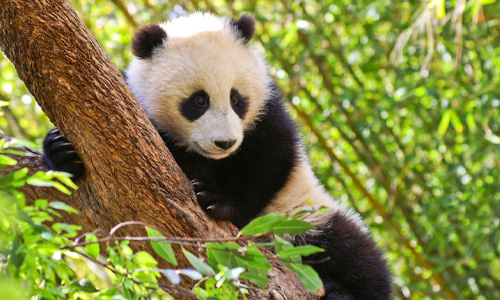
- Pandas are intelligent and cunning creatures, unlike their dumb and innocent depiction on social media.
- Though human attacks are unusual, these animals are known to strike and bite their opponent to death in case of a fight. Thus, pandas in captivity can never be released into the wild.
- They are usually solitary and mingle only during mating season in the wild.
- Pandas in captivity live together, yet don’t make meaningful relationships with each other, or with their caretakers.
- Thus, all those funny videos of panda love you might have watched on TV are just impulsive acts and are not due to actual bonding.
- They might look quite cuddly and friendly. However, you cannot just hold or cuddle these animals as you wish because they might assume you are dangerous. On the contrary, pandas themselves, like other bears, are dangerous animals. So they will try to defend themselves when you go too close to them or their cubs!
- They don’t have any natural predators once they grow up. Panda cubs usually find refuge in tall trees to escape from jackals and other wild cats.
- Every adult panda has a well-defined territory.
- The adult female does not have the habit of tolerating other females within her territory.
- When in danger, the creatures protect themselves using their physical strength. Their strong jaws and teeth also come in handy while defending themselves.
- Here’s one of the fascinating facts about pandas. They can stand on their hind legs, and can even somersault!
- The animals drink fresh water from streams and rivers. However, they don’t need too much water because the bamboo they eat contains enough water content.
- They can climb trees and swim too!
- They love to play in the snow.
- Unlike many other animals, they don’t hibernate. In winter, they switch over to locations with warmer temperatures.
Mating and Babies
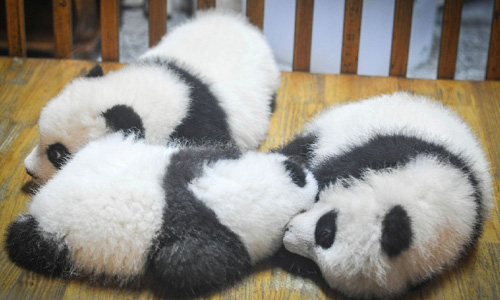
- The animals mate in March and April. Their diet leaves them with very little energy to move or mate. It’s said that females are fertile only for 2 or 3 days a year, which makes breeding highly difficult.
- Male pandas are known to climb trees as a mating ritual to impress their female counterparts.
- When females are ready to mate, they make chirping noises to attract any nearby males.
- The gestation period of a panda ranges from 90 to 180 days. An average pregnancy lasts 135 days. These vast variations in the gestation period occur because a female’s fertilized egg keeps floating in her uterus for quite some time. Only after this period, does the fertilized egg get implanted and becomes ready for development.
- The female gives birth to just one cub in the said fertility period.
- Cubs are comparatively tiny at birth, weighing about 100-200 grams.
- In the event of a twin birth, the mother gets annoyed taking care of two cubs due to the low-nutrient diet and ends up killing one baby!
- After giving birth to her offspring, the mother usually stops eating. Its focus is more on feeding and protecting her cub. It’s said that a mother can stop eating for as long as a month after she delivers the baby!
- Baby pandas are born blind.
- The males are not that involved in caring for their cubs.
- Giant pandas can also experience “pseudopregnancies,” where, instead of giving birth, the female’s hormones and behavior return to their normal state.
How Do They Communicate?
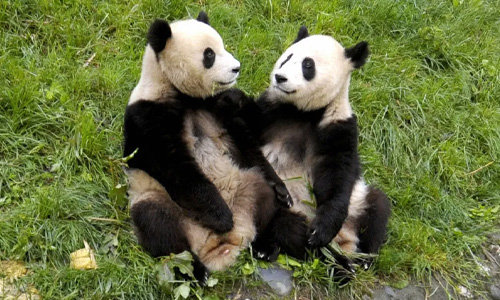
- A panda’s face does not show any expressions.
- Pandas communicate among themselves by:
- Chirping
- Bleating
- Honking
- Barking
- Chomping
- Growling
- Huffing
- They also communicate via scent-marking their territories. They generally squat, perform a leg-cock, or a head-stand to scent mark.
- Recent research suggests that these animals form communities of 7 to 15 among themselves. This is yet another amusing fact about pandas.
Are They Endangered?
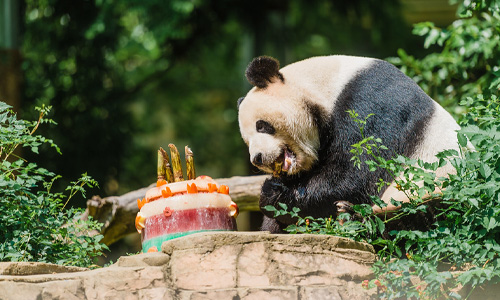
- In 1984, the animals were on the list of “endangered species.” However, scientists and researchers have been working together with panda caretakers in zoos and sanctuaries to increase their numbers.
- Still, pandas are on the list of “vulnerable species.” They are also marked as species of conservation. Therefore, zoos and sanctuaries in China and other countries have taken up the responsibility of protecting these animals.
- Strict rules on deforestation in locations where the animals thrive are being enforced.
Can You Keep Them as Pets?
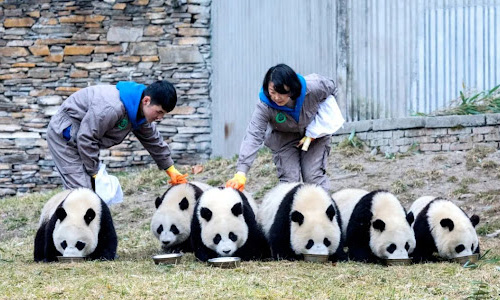
- Since pandas are considered vulnerable species, you cannot trade them. In other words, trading these creatures is illegal.
- If a person is caught with a live panda bear, they could be fined. In worst-case scenarios, they could be sent to prison.
- Though they look cuddly, the animals are potentially dangerous (as mentioned earlier). They are held in captivity in some places for breeding and conservation purposes. To sum up, we can say that pandas must be left in the wild, and cannot be kept as pets.
FAQs About Pandas
1. How many giant pandas live in the wild today?
About 1,864 giant pandas remain in the wild.
2. Are giant pandas still endangered?
No — they were downgraded from endangered to vulnerable by the IUCN due to successful conservation efforts.
3. What do pandas eat? Is it only bamboo?
Their diet is over 99% bamboo, though occasionally they eat small animals, eggs, or carrion.
4. How much bamboo can a panda eat per day?
A panda can consume up to 50 pounds (approx 22-25 kilograms) of bamboo leaves, shoots, and stems each day.
5. How long do pandas live in captivity vs. in the wild?
In the wild, pandas typically live around 18-20 years, but in captivity with proper care they can live into their early 30s.
6. Why do pandas have black and white fur?
The distinctive black-and-white coloring helps them in camouflage—white to blend with snow or rocky landscapes, black to hide in shadows. It may also play roles in communication and regulating body temperature.
7. What is a “pseudo-thumb” in pandas?
Pandas have an extra “thumb” (actually an enlarged wrist bone called a pseudo-thumb) that helps them grip and strip bamboo effectively.
8. Do pandas hibernate like other bears?
No. Unlike many bears, giant pandas do not hibernate. During winter, they move to lower elevations where food (bamboo) is available.
9. How do pandas communicate with each other?
They use a combination of vocalizations (bleats, honks, chirps, etc.), scent marking, and body language.
10. Where are giant pandas found in the wild?
Wild pandas are native to mountain ranges in southwestern China — mainly in Sichuan, but also Shaanxi and Gansu provinces.
Conserve (Forests) and Preserve (Pandas)!
All of us must take measures to protect pandas. By helping with forest conservation and reporting any illegal trading of these animals, we can safeguard them as much as possible. Now, refresh your memory on the facts about pandas by answering the Quiz on this page!