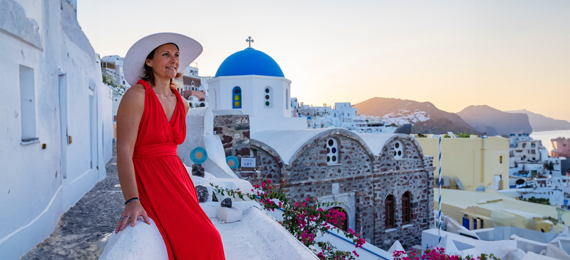
Mykonos is an attractive island and a popular tourist destination in Greece. It is known for its beautiful white-painted houses, buildings, and blue-domed churches. Mykonos follows strict color codes for its buildings. Though this might sound strange, this very feature adds beauty and uniqueness to the island. Read along to learn some unknown facts about Mykonos Island and its history.
Mykonos History

Many of us love reading or listening to stories from Greek mythology. Often, we are intrigued by its mythical creatures and the wars they fought. The “Gigantomachy,” a period of intense conflict between the Olympian Gods and the Giants over who would control the universe, was pivotal in Greek mythology. As the strongest of all mortals and the son of Zeus, Hercules engaged the Giants in battle. Hercules was successful in removing them from Mount Olympus’s fortress during the conflict. He took them to Mykonos, where he slaughtered them and buried them behind the massive island cliffs. It’s believed that the enormous rocks strewn over Mykonos are the Giants’ petrified remains!
The war between the Olympian Gods and Giants was to take control of the universe.
- A. True
- B. False
Interesting Facts about Mykonos
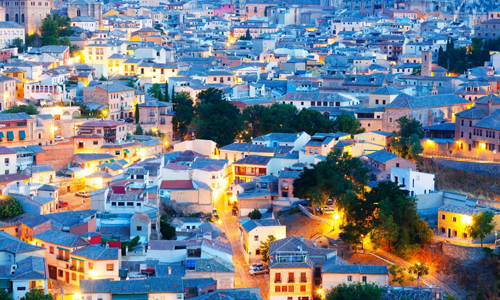
- Mykonos is also known as “The Island of the Winds.”
- Mykonos got its name from its first ruler, “Mykons,” who was typically the grandson of the Greek God of light and music, Apollo.
- Years back, the island was a famous pirate hub. Pirates would meet on the island, drink, and have fun together.
- The 19-meter-tall Armenistis lighthouse, which was built in 1891, is one of the most beautiful sights in Mykonos.
- A location in Mykonos named Alefkandra is known as “Little Venice” because of its similarities to the Italian city. In the 1950s and 1960s, Little Venice had a school where fishing was an important part of the curriculum!
- Many movies, including “The Bourne Identity,” “The Greek Tycoon,” and “Shirley Valentine,” have been filmed on the island.
- There are lots of donkeys and pelicans on the island. Years ago, donkeys were used by people in Mykonos as a mode of transportation.
- Have you heard of “Mykonos Biennale?” The island hosts an array of programs, events, and art projects every odd year. It is usually held for a week at the end of June, or the beginning of July.
- Mykonos is located between the islands of Paros, Naxos, Tinos, and Syros. Around 2 million tourists visit the island each year.
- The island boasts over 600 churches even though its area is pretty small. “Panagia Paraportiani” is the most popular church, which has been photographed more than any other church on the island. Also read: Ten Awesome Photography Facts.
- There are numerous locations that buzz with life in Mykonos. The island is famous for its bars, bistros, cafes, and tavernas, which attract tourists year-round.
- The island has more than 40 beaches, many of which contain secluded coves and bays.
- You can enjoy the mild climate of Mykonos, with over 300 days of sunshine.
- Taxis are pretty hard to find, so tourists often use other modes of transportation.
- There are lots of maze-like streets on the island, where you can easily get lost. So, in case you are planning a trip to the island, be extremely careful!
Petros, the Pelican
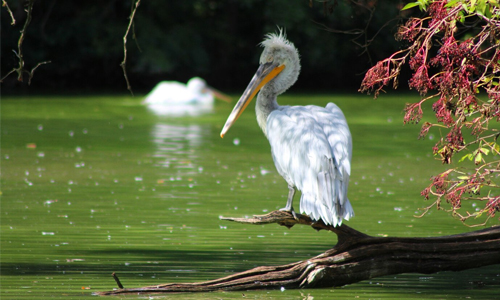
Are you wondering what a pelican has to do with Mykonos? Well, it’s a pretty long story… but let’s give you its short version!
Once, an injured pelican was found by a fisherman on the shores of Mykonos. It was nursed back to health by the fisherman. Soon, many people on the island began pouring their love on the bird, which they later named, “Petros.” The darling bird became the pet of the entire island and was considered the “mascot” of Mykonos. People from far and near started visiting the bird. Many celebrities have even taken photos by posing with Petros!
Sometime later, Petros died in an accident. However, more pelicans were brought into the city, and one of them was named by the local people “Petros” in honor of the original pelican.
Why Are the Houses in Mykonos Painted Blue and White?
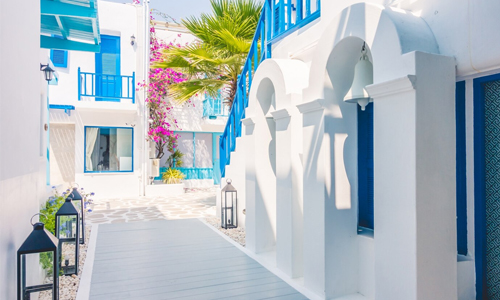
Years ago, Greece, where Mykonos is located, experienced a wood shortage. So, houses were constructed out of volcanic rocks that absorbed a lot of heat and cast a very black shadow. Greeks began painting the houses white to make them heat-resistant since white reflects heat. As far as blue is concerned, it could be easily obtained from the cheap powder called, “loulaki.”
Thus, a decree requiring all homes to be painted in white and blue was introduced in 1967 by the military dictatorship that ruled Greece at the time. This law also supported their political objective of making the landscape look uniform. White and blue quickly acquired popularity and started attracting many tourists.
Why Are Many Doors and Windows Painted Red or Green?
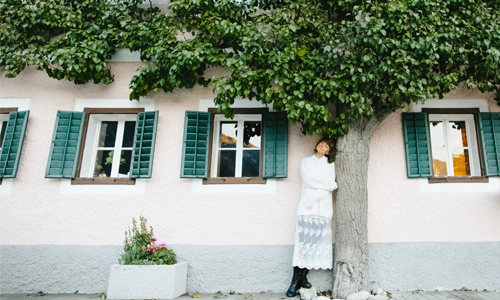
If you have already visited Mykonos, you might have taken lots of pictures of the island. Apart from white and blue, what other colors do you find in those pictures?
You can see that the doors and windows of most houses and buildings are painted red or green. In the olden days, a tradition, where painting the doors and windows according to people’s occupations, was followed in Mykonos. For instance, a farmer’s home had green doors and shutters, whereas a sailor’s had blue paint.
This age-old tradition is still being followed today. Therefore, you get to see white, blue, red, and green in abundance in Mykonos!
Mind-Blowing Mykonos
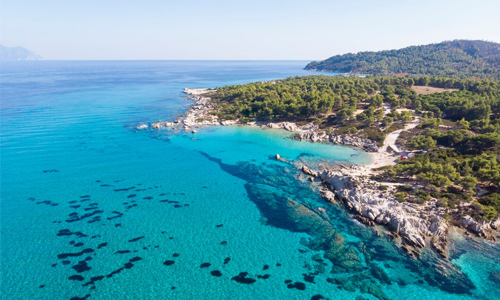
We hope this blog on Mykonos has stirred your desire to visit it. Plan your vacation well ahead and explore this beautiful island. Its scenic beauty and serenity are sure to enthrall you. Being conscious of the dress codes and traditions of any new location (that you have not visited before) will help you adapt to the place. After all, “When in Rome, be a Roman” holds good for any location, including Mykonos!