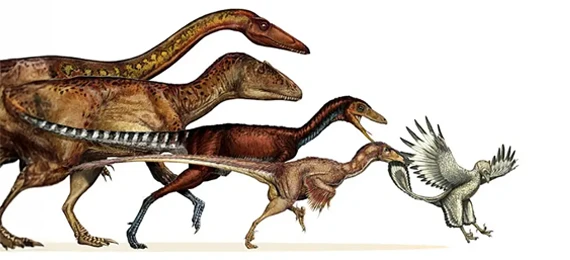
Here’s a fun fact that’ll mess with your head for the rest of the day: Dinosaurs never went extinct.
Wait, what? Before you start looking nervously at your pet parakeet, let me blow your mind properly. That chicken nugget you had for lunch? You basically ate a dinosaur. That annoying pigeon pooping on your car? Dinosaur. The majestic eagle soaring overhead? Also a dinosaur. Every. Single. Bird. Is. A. Dinosaur.
I know what you’re thinking: “This person has lost their mind.” But stick with me, because the connection between birds and dinosaurs is so wild, so scientifically proven, and so absolutely bonkers that by the end of this article, you’ll never look at a robin the same way again.
What is the closest living relative to the Tyrannosaurus Rex?
- A. Crocodiles
- B. Lizards
- C. Chickens
- D. Ostriches
Birds ARE Dinosaurs
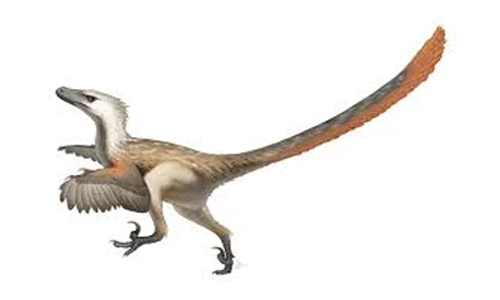
Let’s get the big reveal out of the way first: Birds aren’t just related to dinosaurs. They literally ARE dinosaurs.
Scientists discovered that birds evolved from small carnivorous dinosaurs during the Late Jurassic period, made possible by fossils from China, South America, and other countries. This isn’t some fringe theory cooked up by a bored paleontologist—this is backed by mountains of fossil evidence, DNA analysis, and basically every reputable scientist who studies this stuff.
Think of it this way: If dinosaurs were a family tree, birds are just one branch that survived. All the other branches (T. rex, Triceratops, Stegosaurus, etc.) died out 66 million years ago when that asteroid hit. But one group of dinosaurs—small, feathered, bipedal theropods—said “nah, we’re good” and evolved into the 10,000+ species of birds we have today.
The clade Dinosauria is now represented by approximately 11,000 living species of birds, making them the most successful dinosaur group to ever exist!
Your Chicken is More T. rex Than You Think
Now, here’s where things get absolutely wild. Remember Jurassic Park? Remember how they tried to clone dinosaurs from ancient DNA? Well, reality is somehow even crazier than fiction.
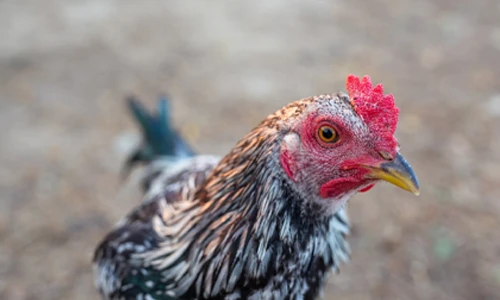
In 2003, scientists analyzed a 68-million-year-old T. rex fossil and compared it to the DNA of 21 modern animal species—and guess what? The proteins found in T. rex DNA were most similar to those of the chicken.
Let that sink in. The terrifying apex predator that haunted your childhood nightmares? Its closest living relative is the thing you order from KFC.
Scientists literally proved that chickens and Tyrannosaurus Rex share genetic material. Not just a little bit—researchers discovered unfossilized collagen protein inside a T. rex bone, and when they compared it to modern animals, chickens were the closest match.
Next time you’re at a petting zoo holding a chicken, you’re basically petting a tiny, adorable descendant of the most fearsome predator to ever walk the Earth. That chicken is looking at you with the same eyes (literally—the eye structure is similar) that T. rex used to hunt prey 68 million years ago.
But Wait—How Did THAT Happen?

Okay, so the obvious question is: How did massive, terrifying dinosaurs turn into… seagulls stealing your beach fries?
The answer is actually one of evolution’s coolest magic tricks: shrinking.
Birds adapted pre-existing dinosaur features to new uses, and research suggests that a few simple changes—including adopting a smaller body size—were key to their evolution.
Here’s the wild timeline:
- 150 million years ago: Some small carnivorous dinosaurs started developing feathers (probably for warmth, not flying initially)
- They got smaller: While most dinosaurs were getting bigger, one group went the opposite direction
- Feathers got fancier: What started as fuzzy insulation evolved into complex flight feathers
- Arms became wings: Those tiny T. rex arms everyone makes fun of? Imagine them actually being useful
- Bones became hollow: Lighter = easier to fly
- 66 million years ago: BOOM. Asteroid hits. Every non-bird dinosaur dies. Birds survive because they are small, adaptable, and can fly to find food
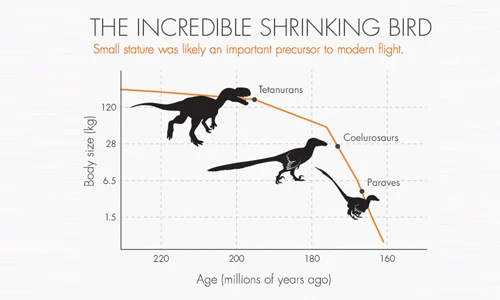
Bird evolution was complicated, with many bird characteristics evolving multiple times in dinosaurs across numerous families, and the ability to fly was most likely an unexpected result of another evolutionary adaptation.
So basically, the dinosaurs that survived the apocalypse were the scrappy little underdogs—like a prehistoric underdog sports movie, except it took millions of years and involved way more feathers.
The Evidence is EVERYWHERE (And It’s Insane)
Scientists aren’t just guessing about this stuff. The evidence connecting birds and dinosaurs is so overwhelming that it’s basically impossible to deny. Let me hit you with some mind-blowing facts:
1. Feathered Dinosaurs Were Everywhere
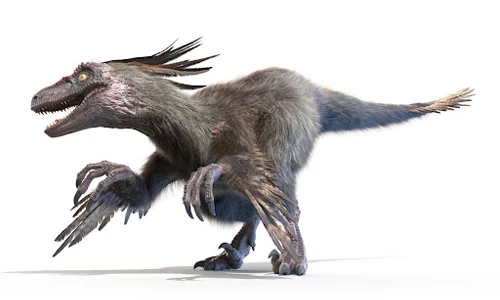
We used to think dinosaurs had scales like lizards. WRONG. Fossils from China have revealed that tons of dinosaurs had feathers—including many that never flew! Velociraptors? Feathered. T-Rex? Probably had some feathers, at least as babies. That image of scaly reptilian dinosaurs from old movies? Totally inaccurate.
2. The Wishbone Connection
You know that wishbone you pull apart at Thanksgiving? That’s called a furcula, and it’s a feature that was once unique to theropod dinosaurs (the group that includes T. rex and Velociraptor). Birds inherited it directly from their dinosaur ancestors. So every time you make a wish on a wishbone, you’re holding a 150-million-year-old dinosaur trait!
3. They Move the Same Way
Watch a chicken walk. Now watch a T. rex animation. See the similarity? That head-bobbing, bipedal strut? That’s dinosaur locomotion, baby! Birds retained a basic body plan characterized by being bipedal (two legs), digitigrade (walking on their toes), and possessing a distinctive hip structure.
4. Hollow Bones
Both birds and many dinosaurs have hollow bones with internal struts for strength. This wasn’t initially for flight—large dinosaurs like the massive sauropods had hollow bones too. It was just an efficient way to build a skeleton, and birds inherited this design.
5. The Breathing System
Birds have the most efficient respiratory system of any vertebrate, with air sacs that allow constant airflow through their lungs. Guess what? Fossils show that many dinosaurs had the EXACT same system. This super-efficient breathing probably helped dinosaurs grow to enormous sizes.
6. Brooding Behavior
Fossils show dinosaurs sitting on nests of eggs, just like modern birds. Some dinosaur fossils have even been found arranged in the exact same brooding posture that chickens use today. They were basically prehistoric hens!
The Archaeopteryx: Evolution’s Smoking Gun
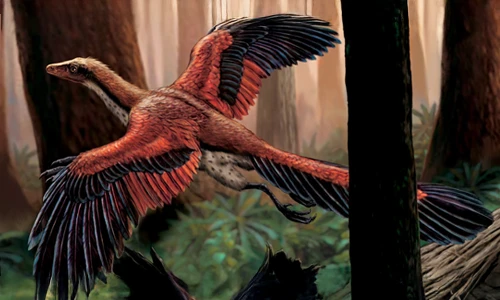
If you want to see the dinosaur-to-bird transition in action, meet Archaeopteryx—the rockstar fossil that basically proved Darwin right.
Discovered in Germany in 1861, Archaeopteryx is like nature’s own “Before and After” photo. It had:
- Feathers and wings (like a bird)
- Teeth in its beak (like a dinosaur)
- A long bony tail (like a dinosaur)
- Claws on its wings (like a dinosaur)
- The ability to fly… probably (like a bird, but not as well)
It’s literally a dinosaur caught in the act of becoming a bird. Scientists call it a “transitional fossil,” but I prefer to think of it as evolution’s awkward middle school phase—a weird mix of features that doesn’t quite fit in anywhere, but absolutely proves that the transition happened.
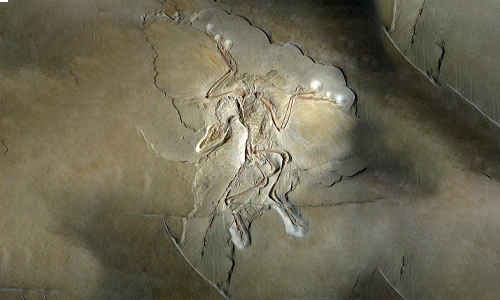
And here’s the kicker: Archaeopteryx isn’t even a direct ancestor of modern birds! It’s more like a cousin that shows us what the transition looked like. Many characteristics of birds evolved multiple times in different dinosaur families, meaning the path from dinosaur to bird was more like a tangled web than a straight line.
Modern Science Keeps Proving It (In Insane Ways)
The evidence just keeps piling up, and some of it is absolutely bonkers:
Recent Discoveries
- A 2024 study revealed that modern bird groups appeared within just a 5-million-year window after the dinosaur extinction 66 million years ago, with early birds experiencing rapid increases in population size, evolution speed, and brain size.
- Scientists have discovered dinosaur fossils with preserved feathers that reveal detailed color patterns—we now know the exact colors of some dinosaurs!
- A newly discovered fossil called Navaornis represents an intermediate step in evolution between the first bird-like dinosaurs like Archaeopteryx and living birds, showing the development of bird intelligence.
The DNA Revolution
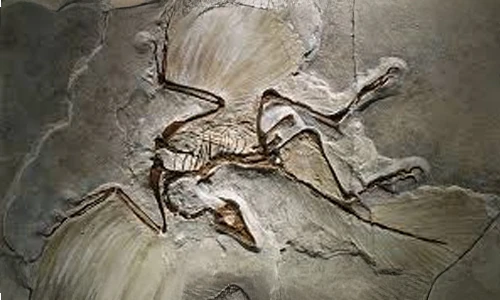
Protein fragments from a 68-million-year-old old rex bone most closely match samples from a chicken, providing further evidence of the evolutionary relationship between dinosaurs and birds. This is straight out of Jurassic Park, except it’s REAL.
Scientists can’t extract full DNA from fossils (it degrades too quickly), but they can analyze proteins, and those proteins tell an unmistakable story: birds and dinosaurs are family.
So Every Bird is a Dinosaur? EVERY Bird?
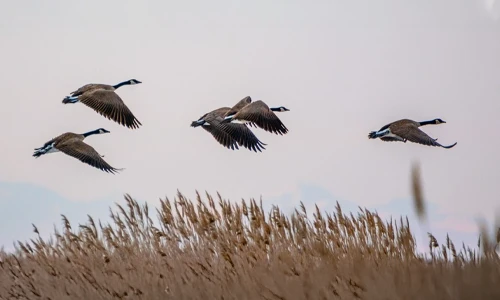
Yes. Every. Single. One.
- Hummingbirds? The tiniest dinosaurs alive today
- Penguins? Aquatic dinosaurs (and they’re terrifying if you think about it)
- Ostriches? Basically Velociraptor-sized dinosaurs
- Crows? Highly intelligent dinosaurs that can solve puzzles and hold grudges
- Chickens? Domesticated dinosaurs that we eat by the billions
The scientific classification is crystal clear: Birds belong to the clade Dinosauria. In taxonomy (the science of classifying living things), you can’t evolve OUT of your group. Mammals are still vertebrates. Humans are still apes. And birds are still dinosaurs.
That means dinosaurs never went extinct. They’re literally everywhere. There are more dinosaur species alive today (around 10,000-11,000 bird species) than there were non-bird dinosaur species during the Mesozoic Era!
The Weirdest Implications That’ll Break Your Brain
Once you accept that birds are dinosaurs, everything gets wonderfully weird:
- Dinosaurs Have Conquered Every Continent, Including Antarctica! Penguins are Antarctic dinosaurs. Mind. Blown.
- Dinosaurs Are the Most Successful Vertebrates on Land. There are roughly twice as many bird species as mammal species. Dinosaurs are WINNING the evolutionary game.
- Some Dinosaurs Can Fly Backward. Hummingbirds are the only vertebrates that can truly fly backward. Take that, mammals!
- Some Dinosaurs Can Talk Parrots and corvids (crows, ravens, etc.) can learn to mimic speech and use tools. Intelligent dinosaurs are living among us!
- You Can Legally Own Dinosaurs as Pets. Got a parrot? You have a pet dinosaur. Got chickens in your backyard? You’re farming dinosaurs. This is the timeline we live in.
- Dinosaurs Are Delicious. Every time you eat chicken, turkey, duck, quail, or any other poultry, you’re eating dinosaur meat. Congratulations, you’re basically the Flintstones, but in real life.
- The Closest Living Relative to T. rex is Probably in Someone’s Kitchen Not in a museum. Not in a zoo. In someone’s KITCHEN, laying eggs for breakfast.
But What About Other Reptiles?
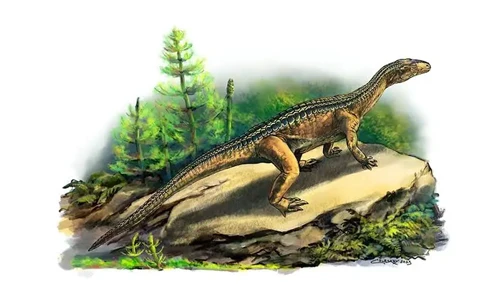
Here’s another brain-bender: Birds are more closely related to crocodiles than crocodiles are to lizards.
Wait, what?
Yeah! Birds and crocodiles share a more recent common ancestor than crocodiles share with other reptiles. Both birds and crocodiles belong to a group called Archosauria (the “ruling reptiles”), which split off from other reptiles way back in the Triassic period.
So if you’re doing a family reunion for the Archosaur clan:
- Birds show up (dinosaurs)
- Crocodiles show up (crocodile-line archosaurs)
- Pterosaurs RSVP “no” (they’re extinct and were cousins, not direct family)
- All the non-bird dinosaurs are tragically deceased
- Lizards and snakes aren’t even invited (different family)
The reptile family tree is WAY more complicated than anyone teaches in school!
The Greatest Survival Story Ever Told
66 million years ago, a six-mile-wide asteroid slammed into the Gulf of Mexico with the force of 10 billion nuclear bombs. The impact threw up so much debris that it blocked out the sun for years. Temperatures plummeted. Acid rain fell. Massive wildfires consumed entire continents.
Three-quarters of all species on Earth went extinct, including every dinosaur larger than a small dog.
But some dinosaurs survived. The small ones. The feathered ones. The ones that could fly to find food, nest in different areas, and adapt to a rapidly changing world.
Those survivors experienced rapid increases in population size, evolution speed, and brain size in the 5 million years following the extinction. They diversified like crazy, filling ecological niches left empty by their extinct relatives.
And now? Now their descendants are EVERYWHERE. Cities, forests, deserts, oceans, mountains, tundra—you name it, there’s a dinosaur there.
The Terminology Can Be Confusing (So Let’s Clear It Up)
Okay, I know I’ve been saying “birds ARE dinosaurs,” but let me clarify the terminology because it trips people up:
- Non-Avian Dinosaurs: The extinct ones we think of as “traditional” dinosaurs (T. rex, Triceratops, etc.)
- Avian Dinosaurs: Birds! This is the scientific term for birds when you want to specify they’re part of the dinosaur group
- Dinosauria: The entire clade (group) that includes both avian and non-avian dinosaurs
So when someone says “dinosaurs are extinct,” what they really mean is “Non-avian dinosaurs are extinct.” The avian dinosaurs (birds) are doing just fine, thank you very much!
It’s like saying “The Beatles broke up” when, in fact, Paul McCartney is still making music. Technically, the original group ended, but not everyone in it disappeared.
Frequently Asked Questions (That’ll Blow Your Mind Even More)
Are chickens really related to T. rex?
Yes! Chickens and T. rex share protein sequences, making chickens the closest living relative to T. rex among modern animals.
Why do we call birds “birds” and not dinosaurs?
Tradition! The word “bird” existed long before we discovered that birds are dinosaurs. Scientifically, all birds are dinosaurs.
Did ALL dinosaurs have feathers?
Not all, but many did! Feathers evolved in theropod dinosaurs and were surprisingly common, even in species that didn’t fly.
Are pterosaurs (flying reptiles) birds, too?
Nope! Pterosaurs were flying reptiles, but not dinosaurs. They’re extinct cousins that evolved flight separately through convergent evolution.
What was the first bird-like dinosaur?
Archaeopteryx is the most famous, but fossils suggest bird-like features appeared even earlier in small theropod dinosaurs around 150 million years ago.
Can we bring back non-avian dinosaurs using bird DNA?
Probably not. DNA degrades too quickly. After 6.8 million years, DNA is basically unreadable. 66 million years? Forget about it.
Do birds have the same brain structure as dinosaurs?
Similar but evolved! Birds have highly developed brains for their size, showing rapid evolution after the extinction event.
Are crocodiles dinosaurs, too?
No, but they’re close cousins! Crocodiles are archosaurs like dinosaurs, but they’re on a different evolutionary branch.
Why didn’t other dinosaurs survive like birds did?
Small size, flight ability, and metabolic advantages gave bird ancestors better survival odds when the asteroid hit and resources became scarce.
What makes birds special among dinosaurs?
Birds are the ONLY dinosaur lineage that survived the mass extinction 66 million years ago, making them evolution’s ultimate success story!
You Live in a World Full of Dinosaurs
Here’s the truth that sounds like science fiction but is a 100% scientific fact:
Dinosaurs didn’t go extinct. They’re in your backyard, on your roof, at your bird feeder, and possibly on your dinner plate.
Every crow, every eagle, every penguin, every hummingbird, and yes, every chicken is a living, breathing, modern dinosaur. They’re not “like” dinosaurs or “related to” dinosaurs—they straight-up ARE dinosaurs, just as much as T. rex was a dinosaur.
The apocalypse that ended the Age of Dinosaurs 66 million years ago didn’t actually end the dinosaurs. It just gave one group of scrappy, feathered underdogs the opportunity to take over the world in a completely new way.
And take over they did. Birds are now the most diverse group of land vertebrates on the planet, with species ranging from two-inch hummingbirds to nine-foot ostriches, living in every possible environment from the Arctic to the Sahara.
So the next time you see a bird—any bird—take a moment to appreciate what you’re actually looking at: a living dinosaur, a survivor of the worst catastrophe in Earth’s history, a direct descendant of the creatures that ruled the world for 165 million years.
Dinosaurs aren’t extinct. They just got smaller, smarter, and learned to fly.
Pretty cool when you think about it, right? Now go outside and look at the dinosaurs in your neighborhood with fresh eyes. Trust me, you’ll never see them the same way again.