Imagine this.
You’re holding a chocolate lava cake.
It looks normal on the outside… but when you break it open… HOT gooey chocolate flows out.
Now here’s a wild thought:
What is the main reason Earth’s core is still hot?
- A. Rain
- B. Sunlight
- C. Wind
- D. Leftover heat from formation and radioactive decay
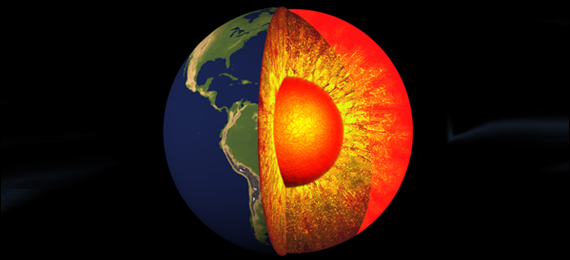
Earth is kind of like that lava cake.
Cool on the outside…
but deep inside? SUPER HOT!
So the big question is:
Why is Earth’s Core Hot?
Let’s go on a little underground adventure to find out.
First… What Is Earth’s Core?
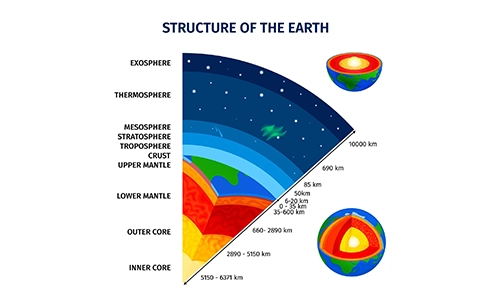
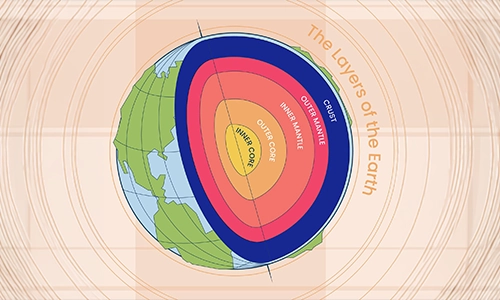
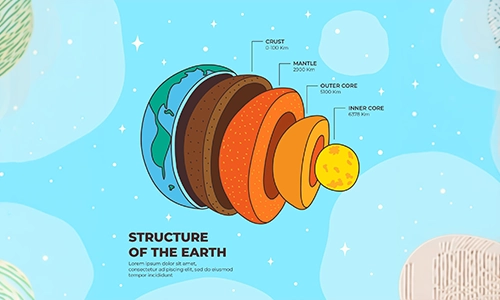
Think of Earth like a giant onion with layers.
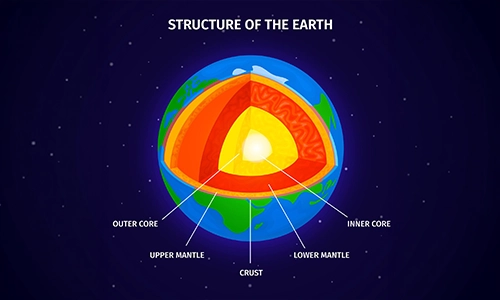
From outside to inside:
- Crust (where we live)
- Mantle (hot, thick rock)
- Outer core (liquid metal)
- Inner core (solid metal, super hot!)
The core is the very center of the Earth, and it’s hotter than the surface of the Sun!
Yes, really.
So… Why Is It Hot?
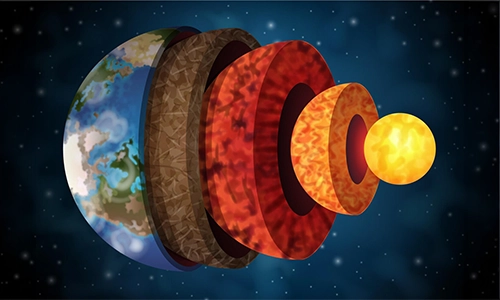
There are 3 main reasons, and we’ll explain them in the easiest way possible.
1. Earth Was Born SUPER Hot
Let’s go back billions of years ago…
When Earth was forming, it was like a giant space construction site.
Rocks, dust, and space chunks were crashing into each other nonstop.
- BOOM
- CRASH
- SMASH
All that crashing created a LOT of heat.
Imagine rubbing your hands together really fast. They get warm, right?
Now imagine planets smashing together. That’s a LOT more heat!
Some of that heat is still trapped deep inside Earth today.
2. Heavy Metals Sank to the Center
When Earth was young and soft (like melted chocolate), heavy materials like iron and nickel sank to the center.
As they moved down…
- They created friction (rubbing heat)
- And squeezed together tightly
This made the center even hotter.
Think of it like this:
If you squeeze something really hard in your hands, it warms up.
Now imagine squeezing something as big as a planet.
3. Tiny Particles Are Still Producing Heat
Inside Earth, there are tiny particles called radioactive elements.
They slowly break apart over time.
When they do, they release heat.
It’s like tiny invisible heaters hidden inside the Earth!
These little “heat-makers” are still working even today, keeping the core hot.
How Hot Is It?
The inner core can reach about 5,000–6,000°C (9,000–10,800°F)
That’s about as hot as the surface of the Sun. So yes…Earth has a burning hot heart.
Why Doesn’t the Heat Reach Us?
Good question!
If Earth is so hot inside… why aren’t we melting?
Because the heat has to travel through thick layers:
- The mantle (very thick rock)
- The crust (our surface)
These layers act like a giant blanket, slowing the heat down.
That’s why we only feel heat in places like:
- Volcanoes
- Hot springs
- Geysers
What Would Happen If Earth’s Core Cooled Down?
This is where things get serious.
If the core cooled down:
- Volcanoes might stop
- Earthquakes could reduce
- BUT… Earth’s magnetic field might disappear
And that magnetic field protects us from harmful space radiation.
So a hot core is actually good for life on Earth.
Fun Real-Life Example
Think of Earth like a boiled egg
- Shell = crust
- Egg white = mantle
- Yolk = core
Now imagine the yolk is burning hot instead of soft.
That’s basically Earth.
Quick Recap (Super Simple!)
- Heat from when Earth was formed
- Heavy metals sinking and creating pressure
- Tiny radioactive elements producing heat
FAQs
Why is Earth’s core hot even after billions of years?
Because heat is trapped inside and radioactive elements keep producing more heat.
Is Earth’s core hotter than lava?
Yes! Earth’s core is much hotter than lava.
Can we reach Earth’s core?
No. It’s too deep and too hot for humans to reach.
What is Earth’s core made of?
Mostly iron and nickel.
Is Earth’s core solid or liquid?
The outer core is liquid, and the inner core is solid.