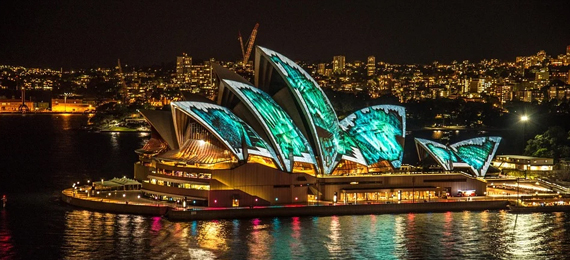
The Sydney Opera House is one of the most recognizable buildings in the world, but most people only know its postcard-perfect view. Behind those iconic white sails lies a story filled with engineering miracles, heartbreak, drama, and unbelievable trivia. This masterpiece isn’t just a performing arts center — it’s a global cultural icon, a World Heritage Site, and a building that pushed the limits of 20th-century architecture.
Here are 100+ Sydney Opera House facts that will surprise you, impress your friends, and make you look at this landmark with brand-new curiosity.
100+ Sydney Opera House Facts
How many pipes does the Concert Hall organ have?
- A. 5,000
- B. 7,800
- C. 10,154
- D. 11,909
History & Construction
- The Sydney Opera House design was selected from 233 global submissions.
- Its architect, Jørn Utzon, was unknown before winning the competition.
- Construction began in 1959 and was expected to take 4 years.
- Instead, it took 14 years to complete.
- The project was originally budgeted at $7 million.
- The final cost blew up to $102 million.
- It officially opened on October 20, 1973.
- Queen Elizabeth II inaugurated the building.
- Utzon never saw the completed building in person.
- He resigned mid-project due to political conflicts.
- After his resignation, local architects completed the interiors.
- Danish architect Jørn Utzon was inspired by orange slices for the roof shells.
- The “sails” are actually based on a sphere sliced into pieces.
- It took over 12 attempts to perfect the roof geometry.
- More than 10,000 construction workers worked on the project.
- The building used 622 miles (1,000 km) of tension cables.
- The roof tiles were tested repeatedly for glare impact.
- The construction involved precast concrete segments—a rare innovation at that time.
- The Opera House is considered one of the largest concrete shell structures ever built.
- The building suffered multiple delays due to weather and engineering challenges.
Architecture & Design
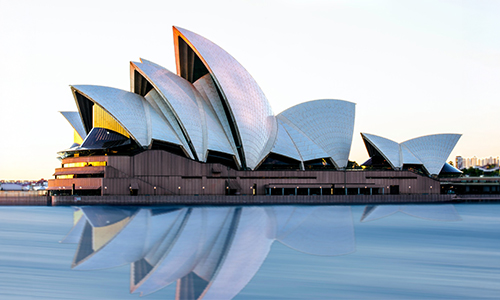
- The structure features over 1 million roof tiles.
- These tiles were manufactured in Sweden.
- The tiles self-clean when it rains due to their glaze.
- The building contains multiple performance venues, not just one.
- The largest venue is the Concert Hall, seating 2,679 people.
- The shells are made from 2,194 pre-cast concrete sections.
- Each shell weighs up to 15 tons.
- The building sits on 580 concrete piers sunk deep into the harbor.
- The windows are made with custom-tinted glass to manage heat.
- The total site covers 4.4 acres.
- Its longest point measures 600 feet (183 m).
- The building contains over 6,000 square meters of glass.
- The “sails” reach up to 67 meters high, as tall as a 22-story building.
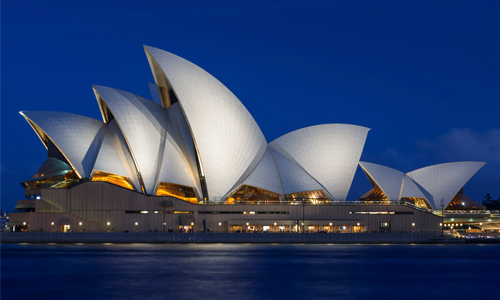
- The Opera House’s color is not pure white — it’s cream and matte-finish.
- The building is angled to align with the sun for aesthetic effect.
- It features a massive electrical system equivalent to a small town.
- The shell design has inspired art, fashion, and even sports stadiums.
Inside the Opera House
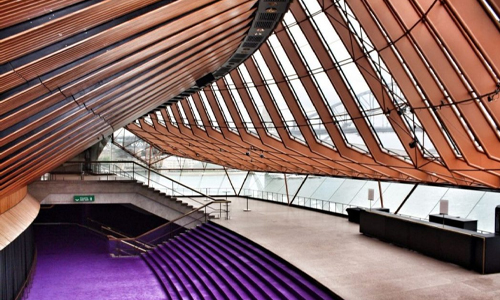
- The building has over 1,000 rooms.
- There are five main theatres.
- It also includes recording studios.
- There are rehearsal rooms used by world-famous performers.
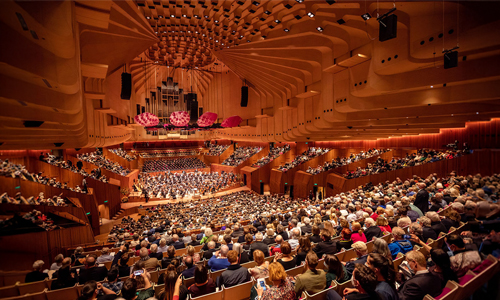
- The Concert Hall houses the world’s largest mechanical organ.
- The organ has 10,154 pipes
- It took over 10 years to build the organ alone.
- A huge central chandelier dominates the main hall.
- The drama theater seats 544 people.
- The opera theater seats 1,507 people.
- The building includes a library and archives.
- There are backstage tunnels beneath the venue.
- The Opera House also houses restaurants and cafes.
- The Green Room is exclusively for artists and staff.
- A dedicated recording room was built for the Sydney Symphony Orchestra.
Performances & Cultural Impact
- It hosts over 1,800 performances per year.
- More than 11 million people visit annually.
- About 350,000 people take guided tours each year.
- The first performance ever held there was Prokofiev’s War and Peace.
- The first pop concert featured Paul Robeson, performing for workers.
- The Opera House is home to Opera Australia.
- It is also home to Sydney Theatre Company.
- And the Sydney Symphony Orchestra.
- Some of the world’s greatest artists have performed here.
- It’s one of the most photographed buildings in the world.
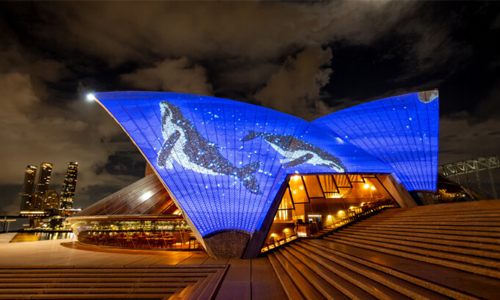
- The venue showcases 21st-century multimedia shows and projections.
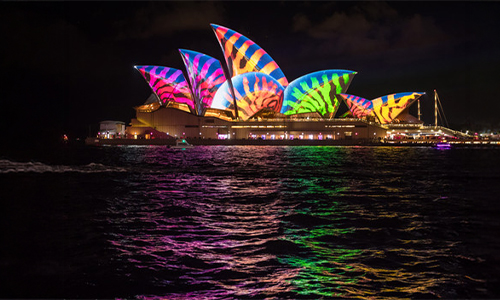
- The sails often light up for global awareness events.
- Fireworks shows frequently use the Opera House as a backdrop.
Records & Recognition
- It became a UNESCO World Heritage Site in 2007.
- It is one of the youngest buildings to ever receive that honor.
- The building appears on Australian currency.
- It’s considered one of the top man-made wonders of the modern world.
- The building is worth over $7 billion according to estimates.
Fun & Weird Facts
- It hosts weddings and private parties.
- The venue has its own bar and restaurant scene.
- The Opera House employs over 500 permanent staff.
- More than 350 types of jobs operate within the site.
- The sails have been lit up in the colors of the Australian flag many times.
- It’s a popular spot for marriage proposals.
- Many Hollywood movies have filmed scenes here.
- The building can withstand category 5 cyclones.
- A baby was once accidentally born during a tour.
- The building uses seawater heating and cooling systems.
- A colony of bats once lived near the site.
- More than 25,000 light bulbs are replaced every year.
- It served as a mass COVID vaccination center.
- The backstage area includes a bar for performers.
- The Opera House rooftop is closed to the public for safety reasons.
Sydney Opera House & Technology
- It has one of the most advanced acoustics systems in the world.
- A 2016 renovation updated the audio and visual technology.
- The projection mapping system is world-class.
- It uses renewable energy for part of its operation.
- Digital concerts are now streamed globally.
- The Opera House is part of virtual tourism experiences.
- It offers VR tours to selected audiences.
- The building is maintained using 3D scanning technology.
- Regular acoustic upgrades ensure world-class sound.
Harbor & Location Facts
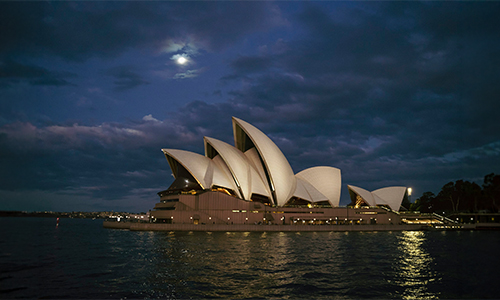
- It sits on Bennelong Point, named after Aboriginal leader Bennelong.
- The site used to be a tram depot before construction.
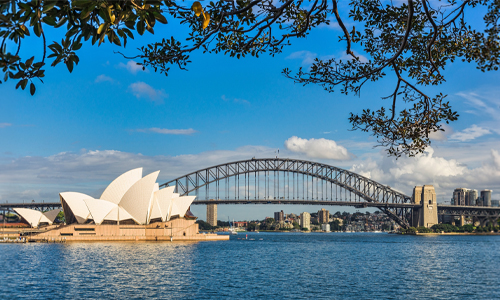
- The Opera House faces the Sydney Harbour Bridge.
- The harbor winds affect sound during outdoor performances.
- The forecourt hosts large outdoor concerts.
- The location was chosen for its visibility from all angles.
- The building reflects sunlight differently throughout the day.
- Ferry horns and harbor sounds are often heard in the background.
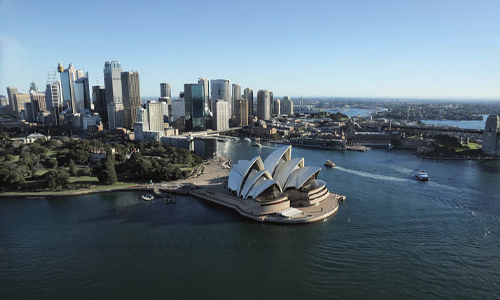
- The site provides 360-degree panoramic views of Sydney.
Legacy & Influence
- It’s considered a symbol of modern Australia.
- It appears in countless travel documentaries.
- Schools worldwide use it as an example of engineering excellence.
- The building has inspired over 50 architectural replicas worldwide.
- The structure is a top honeymoon destination.
- It remains Australia’s most visited landmark.
- Even Google Maps features virtual inside tours.
FAQ
1. Why is the Sydney Opera House so famous?
Because of its unique design, cultural impact, and status as a UNESCO World Heritage Site.
2. How many tiles are on the Sydney Opera House roof?
Over 1 million specially crafted ceramic tiles cover the iconic sails.
3. Who designed the Sydney Opera House?
It was designed by Danish architect Jørn Utzon.
4. How long did it take to build?
Fourteen years — much longer than originally planned.
5. How many people visit it each year?
More than 11 million people visit annually.